

Commercial Wind Development on Pennsylvania State Game Lands Review Guidelines PowerPoint PPT Presentation
1 / 10
Title: Commercial Wind Development on Pennsylvania State Game Lands Review Guidelines
1
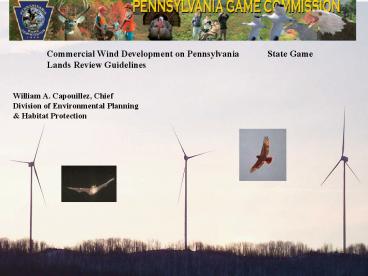
Commercial Wind Development on Pennsylvania
State Game Lands Review Guidelines
William A. Capouillez, Chief Division of
Environmental Planning Habitat Protection
2
Approximately 1.4 million acres of Pennsylvania
is State Game Lands
42 projects currently proposed/active in PA 6
proposed for Game Lands in 2006
3
State Game Lands are largely used for
- Hunting/trapping other recreational activities
- Wildlife Habitat Management
- Promote Wildlife Population Diversity
- Protect, Propagate, Manage and Preserve the game
and wildlife of Pennsylvania
4
Wind-Energy Projects are an Incompatible use of
Game Lands
- 150 yard safety zone 14.6 acres impact per each
tower location - Additional impact of Footprint of
wind-development infrastructure - Loss of intended use of Game Lands
5
Potential Impacts Criteria
- Interior/indenture
- Propagation area
- Important Bird area
- Important Mammal area
- Threatened/Endangered species
- Historical area
- Migratory flyway
- Critical/unique wildlife habitat
- Forest fragmentation
- Federal/state funded purchase
- Partnership habitat enhancement work
- View shed impact
- Recreation use impacts, hiking, hunting,
trapping, shooting ranges, etc. - Wildlife food plot
- Bisects land and access opportunity
- Farm-share crop agreement
- Other Right -of -Ways already approved
6
Guidelines for ReviewInitial Stage
- Questionnaire for Internal Review
- Document presence/absence of Potential Impact
Criteria - Agree to further review OR provide a documented
negative response with particulars - Do not encourage analytical testing, unless
warranted
7
Guidelines for ReviewProtect/Minimize/Monitor
IF WARRANTED
- Ensure an Alternative Analysis is completed and
an Environmental Impact Assessment - Develop a well-coordinated monitoring plan for
potential wildlife impacts, particularly bats and
birds - Refer to USFW Interim Guidelines to Avoid and
Minimize Wildlife Impacts from Wind Turbines - Adjust/revise as needed to protect and minimize
impacts, (as the States wildlife Agency, set the
example)
8
Guidelines for Review
Situational Awareness to Warrant Land-Exchange
- Abandoned mine area/Brown fields
- Small indenture (part of an already large
existing project) - Envelopment of existing Game Lands
- Pre-determined few probable adverse impacts noted
- Begin Land-Exchange negotiation
9
Final End Result
- Identify acceptable replacement lands (minimum
11 with higher recreation and habitat values,
greater management opportunity, better
accessibility, etc.) - Keep remaining recreational opportunities, limit
wildlife habitat impacts, except/reserve timber,
oil/gas, minerals - Ensure strict monitoring/compliance with ability
to further minimize known adverse impacts (USFW
guidelines, PGC BMPs, E.I.S. w/public review and
involvement) - Allow for future Option to Buypreviously owned
PGC land for 1 upon 25 electric generation
output below average of highest 3 years on record - Negotiate other potential values for future
sustained revenues on yearly payment/tower
royalties/kw, and free electricity credit
10
Advantages
- Allows for renewable energy resource development
to occur - Protects, minimizes, and provides immediate
compensation for wildlife related losses from the
projects development - Provides immediate and future return to the
public and meets with the Pennsylvania Game
Commissions purview - Advances knowledge of potential impacts to bats
and birds and future wind-energy site selection
criteria - Does not falsely encourage Industry to initiate
project proposals on State Game Lands - Ensures conservation measures and best management
practices for bats and birds - Provides critical needed information for future
pending approvals from Local/State/Federal
oversight
Recommended

