

PowerPoint Presentation Global Change Curricula and Programs at Iowa State University PowerPoint PPT Presentation
Title: PowerPoint Presentation Global Change Curricula and Programs at Iowa State University
1
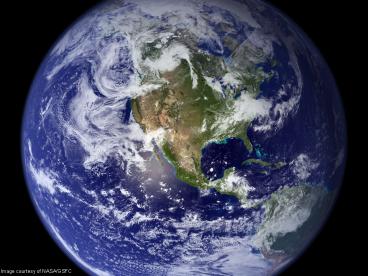
Image courtesy of NASA/GSFC
2
Global Climate Change How We Got Here, and
What Do We Do Now?
- Eugene S. Takle
- Professor of Atmospheric Science
- Department of Geological and Atmospheric Sciences
- Professor of Agricultural Meteorology
- Department of Agronomy
- Iowa State University
- Ames, Iowa 50011
- gstakle_at_iastate.edu
Biorenewable Resources and Technology 501 Iowa
State University 22 February 2008
CLIMATE SCIENCE INITIATIVE, IOWA STATE UNIVERSITY
3
Outline
- Scientific basis for climate change
- Why we are confident that the that humans are
responsible for a large measure of the current
warming - What do we do now? ISUs role
CLIMATE SCIENCE INITIATIVE, IOWA STATE UNIVERSITY
CLIMATE SCIENCE INITIATIVE, IOWA STATE UNIVERITY
4
(No Transcript)
5
Pattern repeats about every 100,000 years
Natural cycles
6
(No Transcript)
7
IPCC Third Assessment Report
8
Carbon Dioxide and Temperature
Business as Usual 950 ppm (2100)
CLIMATE SCIENCE INITIATIVE, IOWA STATE UNIVERSITY
CLIMATE SCIENCE INITIATIVE, IOWA STATE UNIVERITY
9
http//www.ncdc.noaa.gov/img/climate/research/2006
/ann/glob_jan-dec-error-bar_pg.gif
10
Source IPCC, 2001 Climate Change 2001 The
Scientific Basis
11
Source IPCC, 2001 Climate Change 2001 The
Scientific Basis
12
(No Transcript)
13
(No Transcript)
14
(No Transcript)
15
(No Transcript)
16
(No Transcript)
17
(No Transcript)
18
(No Transcript)
19
IPCC Fourth Assessment Report Summary for Policy
Makers
20
El Chichon (1982)
Agung, 1963
Mt. Pinatubo (1991)
At present trends the imbalance 1 Watt/m2 in
2018
Hansen, Scientific American, March 2004
21
(No Transcript)
22
Hansen, Scientific American, March 2004
23
http//www.ncdc.noaa.gov/img/climate/research/2006
/ann/glob_jan-dec-error-bar_pg.gif
24
Natural and anthropogenic contributions to global
temperature change (Meehl et al., 2004).
Observed values from Jones and Moberg 2001. Grey
bands indicate 68 and 95 range derived from
multiple simulations.
25
Natural and anthropogenic contributions to global
temperature change (Meehl et al., 2004).
Observed values from Jones and Moberg 2001. Grey
bands indicate 68 and 95 range derived from
multiple simulations.
Natural cycles
26
Natural and anthropogenic contributions to global
temperature change (Meehl et al., 2004).
Observed values from Jones and Moberg 2001. Grey
bands indicate 68 and 95 range derived from
multiple simulations.
Not Natural
27
Source Jerry Meehl, National Center for
Atmospheric Research
28
(No Transcript)
29
IPCC Fourth Assessment Report Summary for Policy
Makers
30
Energy intensive
Reduced Consumption
Energy conserving
IPCC Fourth Assessment Report Summary for Policy
Makers
31
Energy intensive
Reduced Consumption
Energy conserving
The planet is committed to a warming over the
next 50 years regardless of political decisions
IPCC Fourth Assessment Report Summary for Policy
Makers
32
Energy intensive
Reduced Consumption
Energy conserving
Mitigation Possible
Adaptation Necessary
IPCC Fourth Assessment Report Summary for Policy
Makers
33
IPCC Fourth Assessment Report Summary for Policy
Makers
34
IPCC Fourth Assessment Report Summary for Policy
Makers
35
Observed summer (June-July-August) daily mean
temperature changes (K) between 1976-2000
(Adapted from Folland et al. 2001).
36
Warming Hole
DTmax (JJA)
C
Pan, Z., R. W. Arritt, E. S. Takle, W. J.
Gutowski, Jr., C. J. Anderson, and M. Segal,
2004 Altered hydrologic feedback in a warming
climate introduces a warming hole. Geophys.
Res. Lett.31, L17109, doi10.1029/2004GL020528.
37
Precipitation minus Evaporation for Western US
(25N-40N, 95W-125 W)
R. Seager, et al., 2007. Model Projections of an
Imminent Transition to a More Arid Climate in
Southwestern North America. Science, Vol. 316.
no. 5828, pp. 1181 - 1184
38
Precipitation minus Evaporation for Western
US (25N-40N, 95W-125 W)
R. Seager, et al.,2007. Model Projections of an
Imminent Transition to a More Arid Climate in
Southwestern North America. Science, Vol. 316.
no. 5828, pp. 1181 - 1184
39
Precipitation minus Evaporation for Western
US (25N-40N, 95W-125 W)
Colorado River Compact established, 1922
R. Seager, et al.,2007. Model Projections of an
Imminent Transition to a More Arid Climate in
Southwestern North America. Science, Vol. 316.
no. 5828, pp. 1181 - 1184
40
Intergovernmental Panel on Climate Change (IPCC)
- Created in 1988 by the World Meteorological
Organization (UN) and the United Nations
Environmental Programme - IPCC purpose is to evaluate the state of climate
science as a basis for informed
policy action, primarily on
the basis of peer-reviewed
and published scientific literature
CLIMATE SCIENCE INITIATIVE, IOWA STATE UNIVERSITY
CLIMATE SCIENCE INITIATIVE, IOWA STATE UNIVERITY
41
IPCC AR4 Conclusions
- Warming of the climate system is unequivocal.
- Most of (gt50 of) the observed increase in
globally averaged temperatures since the mid-20th
century is very likely (confidence level gt90)
due to the observed increase in anthropogenic
(human) greenhouse gas concentrations. - Hotter temperatures and rises in sea level "would
continue for centuries" even if greenhouse gas
levels are stabilized, although the likely
amount of temperature and sea level rise
varies greatly depending on the fossil
intensity of human activity during the
next century.
CLIMATE SCIENCE INITIATIVE, IOWA STATE UNIVERSITY
CLIMATE SCIENCE INITIATIVE, IOWA STATE UNIVERITY
42
IPCC AR4 Conclusions
- The probability that this is caused by natural
climatic processes alone is less than 5. - World temperatures could rise by between 1.1 and
6.4 C (2.0 and 11.5 F) during the 21st century
and that - Sea levels will probably rise by 18 to 59 cm
(7.08 to 23.22 in). - There is a confidence level gt90 that there will
be more frequent warm spells, heat waves and
heavy rainfall.
CLIMATE SCIENCE INITIATIVE, IOWA STATE UNIVERSITY
CLIMATE SCIENCE INITIATIVE, IOWA STATE UNIVERITY
43
Projected Changes for the Climate of Iowa/Midwest
(My tentative assessment)
- Longer frost-free period (high)
- Higher average winter temperatures (high)
- Fewer extreme cold temperatures in winter (high)
- More extreme high temperatures in summer (medium)
- Higher nighttime temperatures both summer and
winter (high) - More (10) precipitation (medium)
- More variability of summer precipitation (high)
- More intense rain events and hence more runoff
(high) - Higher episodic streamflow (medium)
- Longer periods without rain (medium)
- Higher absolute humidity (high)
- Stronger storm systems (medium)
- Reduced annual mean wind speeds (medium)
Follows trend of last 25 years and projected by
models No current trend but
model suggestion or current trend but models
inconclusive
44
Reasons Crop Yields Might Increase in the Midwest
- Longer growing season
- Warmer spring soil temperatures
- Modest or no increase in summer daily maximum
temperatures - Increase in nighttime temperatures
- Reduced risk of late frost in spring or early
frost in fall - More freeze-thaw cycles that will recharge
soil moisture in winter
CLIMATE SCIENCE INITIATIVE, IOWA STATE UNIVERSITY
45
Reasons Crop Yields Might Increase in the Midwest
- More precipitation
- More soil moisture
- Higher dew-point temperatures reduces moisture
stress - Higher CO2 increased carbon uptake by crops
- Higher CO2 increases the water-use
efficiency of crops
CLIMATE SCIENCE INITIATIVE, IOWA STATE UNIVERSITY
46
Reasons Crop Yields Might Decrease in the Midwest
- More precipitation extremes
- More rain events bring heavy rain
- More droughts
- More floods
- More over-wintering pests
- More pathogens due to higher humidity
- More vigorous weed growth
CLIMATE SCIENCE INITIATIVE, IOWA STATE UNIVERSITY
47
What To Do Now
- North American Regional Climate Change Assessment
Program - ISU Climate Science Initiative
- Midwest Consortium for Climate Assessment (MiCCA)
(proposed to NOAA)
CLIMATE SCIENCE INITIATIVE, IOWA STATE UNIVERSITY
CLIMATE SCIENCE INITIATIVE, IOWA STATE UNIVERITY
48
What To Do Now
- North American Regional Climate Change Assessment
Program - ISU Climate Science Initiative
- Midwest Consortium for Climate Assessment (MiCCA)
CLIMATE SCIENCE INITIATIVE, IOWA STATE UNIVERSITY
CLIMATE SCIENCE INITIATIVE, IOWA STATE UNIVERITY
49
Terrain and land-sea boundaries in the Hadley
Centre global climate model
50
Regional climate model
51
North America Regional Climate Change Assessment
Program Participants
- Lead agency NSF, with contributions from NOAA
and DOE - R. Arritt, D. Flory, W. Gutowski, E. Takle, Iowa
State University, USA - R. Jones, E. Buonomo, W. Moufouma-Okia, Hadley
Centre, UK - D. Caya, S. Biner, OURANOS, Canada
- D. Bader, P. Duffy, Lawrence Livermore National
Laboratories, USA - F. Giorgi, ICTP, Italy
- I. Held, NOAA Geophysical Fluid Dynamics
Laboratory, USA - R. Leung, Y. Qian, Pacific Northwest National
Laboratories, USA - L. Mearns, D. Middleton, D. Nychka, S. McInnes,
NCAR, USA - A. Nunes, John Roads, Scripps Institution of
Oceanography, USA - S. Sain, Univ. of Colorado at Denver, USA
- L. Sloan, M. Snyder, Univ. of California at Santa
Cruz, USA
52
Reanalyzed climate , 1979-2000
53
What To Do Now
- North American Regional Climate Change Assessment
Program - ISU Climate Science Initiative
- Midwest Consortium for Climate Assessment (MiCCA)
CLIMATE SCIENCE INITIATIVE, IOWA STATE UNIVERSITY
CLIMATE SCIENCE INITIATIVE, IOWA STATE UNIVERITY
54
ISU Climate Science Initiative
- Launched by Vice President Brighton
- Colleges of Agric, Engr, LAS have taken
leadership, but broad campus research
participation will be emphasized - Build on research strengths in regional climate
modeling, agriculture, water,
landscapes, engineering
CLIMATE SCIENCE INITIATIVE, IOWA STATE UNIVERSITY
CLIMATE SCIENCE INITIATIVE, IOWA STATE UNIVERITY
55
How Will New Trends and Variability of Regional
Climate Change Affect
- Crop horticulture production
- Soil erosion
- Conservation practices
- Water supplies
- Streamflow
- Water quality
- Beef and pork daily gains
- Livestock breeding success
- Milk and egg production
- Crop and livestock pests and pathogens
- Agricultural tile drainage systems
- Natural ecosystem species distributions
- Human health
- Building designs
- Recreation opportunities
- River navigation
- Roads and bridges
Who will provide authoritative information? How
will it be delivered?
CLIMATE SCIENCE INITIATIVE, IOWA STATE UNIVERSITY
CLIMATE SCIENCE INITIATIVE, IOWA STATE UNIVERITY
56
What To Do Now
- North American Regional Climate Change Assessment
Program - ISU Climate Science Initiative
- Midwest Consortium for Climate Assessment (MiCCA)
CLIMATE SCIENCE INITIATIVE, IOWA STATE UNIVERSITY
CLIMATE SCIENCE INITIATIVE, IOWA STATE UNIVERITY
57
Proposed new Midwest
Consortium for Climate Assessment (MiCCA)
58
Midwest Consortium for Climate Assessment (MiCCA)
- Create seasonal climate forecasts for the Midwest
- Use ensembles of advanced regional climate models
interactive web-based decision-making tools, - Translate and enhance the latest NOAA climate
forecast products to maximize economic gains - Use high-volume customized delivery and feedback
through the county level extension service network
CLIMATE SCIENCE INITIATIVE, IOWA STATE UNIVERSITY
CLIMATE SCIENCE INITIATIVE, IOWA STATE UNIVERITY
59
Summary
- Climate change of the past 35 years is not
consistent with natural variations over the last
400,000 years - Evidence clearly shows that radiative forcing due
to anthropogenic greenhouse gases has contributed
over half of the warming of the last 35 years - Mitigation efforts, although urgently needed,
will have little effect on global warming until
the latter half of the
21st century - Adaptation strategies should be
developed for the next 50 years - Iowa State has the capacity to build on its
strengths and provide authoritative
information on climate change and
climate variability for
decision-makers
CLIMATE SCIENCE INITIATIVE, IOWA STATE UNIVERSITY
CLIMATE SCIENCE INITIATIVE, IOWA STATE UNIVERITY
Recommended

