

MRSA in the Workplace: The Staph Youd Like to Fire PowerPoint PPT Presentation
1 / 46
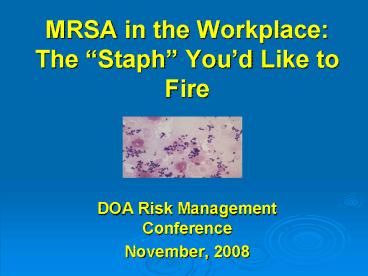
Title: MRSA in the Workplace: The Staph Youd Like to Fire
1
MRSA in the Workplace The Staph Youd Like to
Fire
- DOA Risk Management Conference
- November, 2008
2
Disclaimer
- The reference to brand names in this
presentation does not constitute endorsement by
the Wisconsin Division of Public Health
3
Abbreviations/Definitions
- MRSA methicillin resistant Staphylococcus
aureus - MSSA methicillin sensitive S. aureus
- HA healthcare associated
- CA community associated
- Colonization organism is on or in the body but
not causing disease - Infection organism is present and causing signs
and symptoms of disease
4
History
1928
Serendipitous discovery of penicillin
5
Penicillium notatum
6
History
1942 Antibiotics touted as the magic bullet
7
History
- 1950s staph resistant to penicillin
- 1959 methicillin introduced
- 1961 MRSA appears in UK
- 1970s MRSA in US hospitals
- 1990s Community associated MRSA
8
"At the dawn of a new millennium, humanity is
faced with another crisis. Formerly curable
diseases...are now arrayed in the increasingly
impenetrable armor of antimicrobial
resistance." --Director-General, WHO-- 2000
Margaret Chan, MD
9
Characteristics of staph
Reservoirs
10
Characteristics of staph
- Causes minor infections such as pimples, boils,
other skin conditions - Impetigo
- Major infections include bacteremia, cellulitis,
pneumonia, osteomylitis - Major cause of health care associated infections
11
MRSA
Methicillin resistant Staphylococcus aureus
is the form of the staph bacterium that is
resistant to a variety of antibiotics
12
MRSA
- 2 types
- HA health care associated
- CA community associated
13
Differences between HA and CA MRSA
14
Total MRSA
HA MRSA
CA MRSA
Klevens et al. Invasive MRSA infections in the
US. JAMA 2007298 (15) 1763-1771.
15
Wisconsin Estimated Incidence
- 1,700 cases of invasive HA MRSA annually, with
approximately 300 deaths
16
MRSA and Pediatric Influenza Deaths
17
Signs/symptoms of CA MRSA infections
- Pustules, boils, abscesses
- Redness, swelling
- Pain
- Pus, drainage
- Appearance of spider bite
18
(No Transcript)
19
(No Transcript)
20
(No Transcript)
21
(No Transcript)
22
(No Transcript)
23
How CA MRSA is Spread
- Skin to skin contact with
- infected person
- Contact with a carrier
- Contact with contaminated personal items (towels,
clothing, razors, used bandages)
24
Risk Factors
- Close skin to skin contact
- Crowded conditions
- Compromised skin
- Contaminated items
- Cleanliness (lack of)
25
Preventing Spread of CA MRSA
- Hand and personal hygiene
- Prevention of injuries to skin
- Appropriate treatment
- Exclusion
- Cleaning/disinfection
- Management of outbreaks
26
Hygiene
- Hand hygiene
- Regular showers, baths
- No sharing of personal items (razors, towels,
equipment, uniforms, water bottles) - Do not touch others wounds
- Liquid soap dispensers
- Alcohol gel
27
Prevention of skin injuries
- Safety equipment
- Treatment of injuries
- Clean with soap and water
- Cover with a bandage or clean, dry dressing
28
Wound care
- Wear gloves and wash hands after touching wounds
or dressing - Place bandages/dressings that are saturated with
wound drainage in sealed plastic bags and discard
into regular trash
29
Appropriate treatment
- Abscesses and boils are drained
- Purulent material is cultured
- Antibiotics may or may not be prescribed
- clindamycin
- trimethoprim sulfamethoxazole
- tetracyclines
30
Exclusion
- When to stay home from work
- If wounds cannot be kept covered/wound drainage
contained - If appropriate hand/personal hygiene cannot be
assured - Refrain from activities that involve contact with
the affected area
31
Environmental cleaning/disinfection
- Regular, routine cleaning is usually sufficient
- Disinfect items and surfaces contaminated with
wound drainage - clean first, then disinfect
- follow disinfectant manufacturers directions for
contact time - use EPA registered disinfectants
http//www.epa.gov/oppad001/chemregindex.htm
32
Managing outbreaks
- Outbreak three or more cases of confirmed MRSA
among close contacts - contact local health department
- begin active screening for more cases
- review prevention measures
33
Gymnasiums/health clubs/spas
- Hand hygiene
- Liquid soap dispensers/alcohol gel
- Air dryers or disposable paper towels
- Protective clothing
- Cover woundsdo not visit if cannot
- Shower after exercise
- Do not share items
- Clean equipment surfaces
- Launder towels/linens and dry in hot dryer
34
Day care centers
- Hand hygiene
- Standard precautionswear gloves when touching
someones wounds - Cover lesions/wounds
- Exclude attendees/staff who cannot contain wound
drainage - Routine cleaning of environment/shared items
35
Households
- Hand and personal hygiene
- Cover wounds
- Gloving/hand washing when doing wound care
- Do not touch others wounds
- Do not share towels, personal items
- Launder contaminated items in hot water and dry
in hot dryer - Clean/disinfect areas contaminated with wound
drainage - Dispose of soiled dressings in sealed bag
36
Households
- Use of antibacterial soaps during active
infection - Tea tree oil
- 5 solution
- Decolonization of household members
- Clinical indications
- Chronic transmission/recurrent infections
37
Us vs. MRSA
38
Keep skin clean
39
Keep skin intact
40
Moisturize and maintain proper pH
41
Do not share personal items
X
X
X
X
42
Keep environment clean
43
- Main Messages about CA MRSA
- Most infections are mild skin infections
- Infections are treatable
- Risk of infection can be reduced by keeping skin
clean and healthy
44
DPH Resources
___________________________________ Guidelines
for Clinical Management ? CA MRSA Patient
Pamphlet ? Guidelines for Controlling
Transmission among Students and
Athletes ? FAQs http//dhs.wisconsin.gov/communic
able/MRSA/index.htm
45
CDC MRSA Education
- http//www.cdc.gov/Features/MRSA
- Infections/
46
Gwen Borlaug, CIC, MPHDivision of Public
Health1 West Wilson Street Room 318Madison, WI
53702608-267-7711gwen.borlaug_at_wisconsin.gov
Recommended

