

How to Build an Online Food Delivery App Like Talabat PowerPoint PPT Presentation
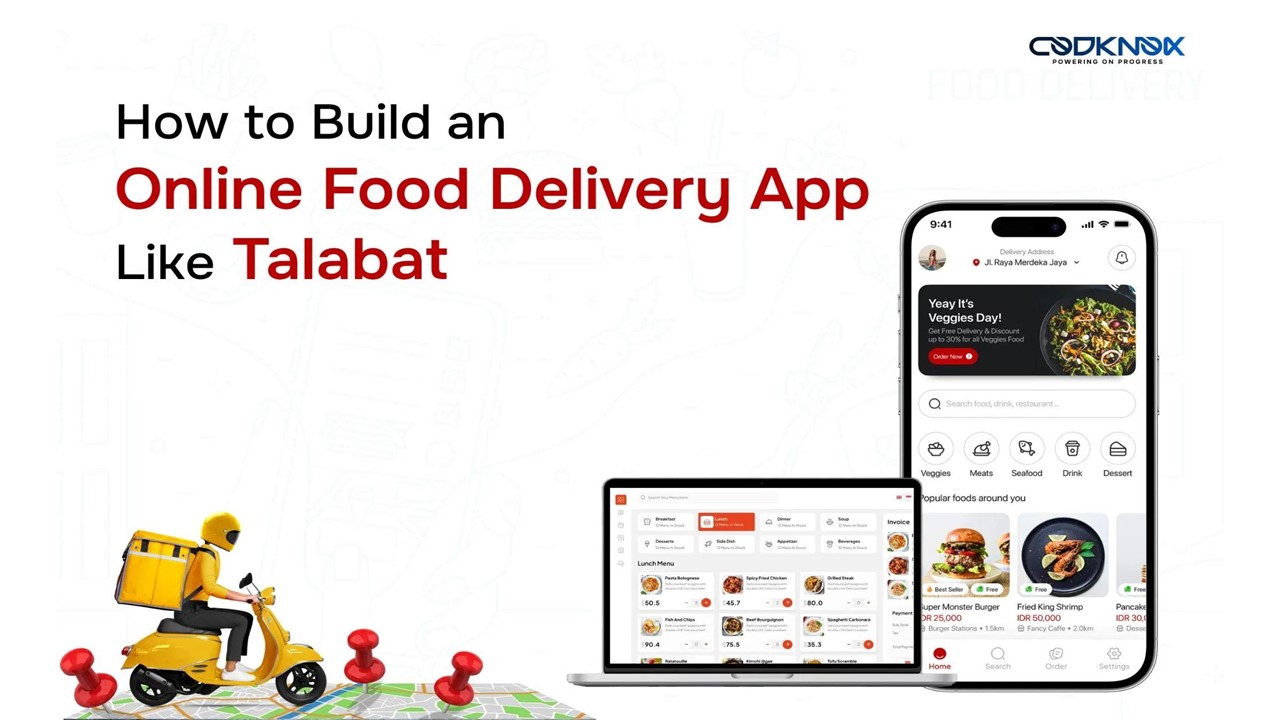
Title: How to Build an Online Food Delivery App Like Talabat
1
(No Transcript)
2
- Food delivery apps have revolutionized the way
people order and enjoy their meals. Talabat, one
of the leading food delivery platforms in the
Middle East, is a prime example of how technology
can seamlessly bridge the gap between restaurants
and customers. With its user-centric design and
efficient delivery system, Talabat has set a
benchmark in the food delivery industry. - If youre looking to build an online food
delivery app like Talabat, heres a comprehensive
guide to help you achieve your goal. - Understanding the Food Delivery Market
- Before diving into development, its essential to
understand the market dynamics. Research your
target audience, identify their preferences, and
analyze competitors. - According to Statista, the global online food
delivery market is projected to reach a volume of
1.89 trillion by 2029, growing at a compound
annual growth rate (CAGR) of 7.79 from 2025 to
2029. (Source) - This growth highlights the enormous potential of
the food delivery industry, making it a lucrative
opportunity for entrepreneurs. - Additionally, Statista forecasts that the number
of users in the online food delivery market will
reach 4.7 billion by 2029. (Source) - This trend underscores the immense opportunities
in the food delivery market, making it an ideal
time to invest in this domain.
3
Key Features of a Food Delivery App Creating a
successful app requires a clear understanding of
the essential and advanced features that cater to
customers, restaurants, and delivery personnel.
1. Customer Application
4
Key Customer Application Features Details
User Registration and Login Offer multiple sign-up options, including email, phone number, and social media.
Restaurant Browsing Allow users to search for restaurants based on cuisine, location, ratings, and offers.
Order Placement and Tracking Enable users to place orders with ease and track deliveries in real-time.
Payment Integration Provide secure payment options such as credit/debit cards, digital wallets, and cash on delivery.
Ratings and Reviews Let customers share feedback on their dining experience.
An experienced food ordering app development
company will build a user-friendly interface that
is crucial for attracting and retaining
customers. The customer panel serves as the
primary touchpoint, providing seamless navigation
and accessibility. Features such as user
registration and login offer multiple options,
including email, phone number, and social media,
to simplify onboarding. Restaurant browsing
allows users to search for eateries based on
cuisine, location, and ratings. The order
placement and tracking feature ensures a smooth
ordering experience, complete with real-time
updates. Secure payment integration and a robust
ratings and reviews system further enhance user
satisfaction.
5
2. Restaurant Panel Features
6
Key Restaurant Panel Features Details
Menu Management Allow restaurants to update menus, add items, and manage prices effortlessly.
Order Notifications Notify restaurants of new orders with details for preparation, ensuring prompt service.
Performance Analytics Provide insights into sales, customer preferences, and revenue trends, enabling data-driven decisions.
Customizable Promotions Allow restaurants to create and manage special offers, discounts, and combo deals to attract more customers.
The restaurant panel is a critical component,
offering restaurants all the tools they need to
operate efficiently and enhance customer
satisfaction. From managing menus and updating
prices to receiving real-time order
notifications, these features ensure seamless
operations. Advanced analytics provide valuable
insights into sales and customer preferences,
empowering restaurants to make informed
decisions. Additional features like promotions
enable eateries to boost engagement and revenue,
ensuring a competitive edge in the food delivery
market.
7
3. Delivery App
8
Key Restaurant Panel Features Details
Availability Status Drivers can update their availability, allowing better coordination with the system.
Real-Time Navigation GPS integration helps optimize routes, reducing delivery times and fuel costs.
In-App Chat Allows seamless communication between delivery agents, customers, and restaurants.
Delivery Schedule Management Helps drivers organize and prioritize orders for better efficiency.
Multi-Stop Routing Enables drivers to handle multiple deliveries in a single trip to save time and resources.
Earnings Dashboard Provides delivery agents with insights into their daily, weekly, and monthly earnings.
Order History Enables drivers to track completed deliveries and maintain accurate records for accountability.
Efficient delivery management is the backbone of
any food delivery app. By offering features like
real-time navigation and an earnings dashboard,
delivery agents are empowered to perform their
tasks effectively. These tools not only enhance
productivity but also ensure a smooth and
reliable experience for customers.
9
4. Admin Panel
10
Key Restaurant Panel Features Details
Order Management Manage and track real-time orders, ensuring timely processing and delivery.
Restaurant and Menu Management Add, edit, or remove restaurants and menu items, including pricing and availability.
User and Driver Management Oversee customer and delivery driver accounts, monitor their status, and manage disputes.
Promotions and Discounts Create and manage promotional campaigns, discounts, or offers for users.
Dashboard Management Oversee all app activities, including user registrations, orders, and payments.
Analytics and Reports Monitor performance metrics to identify growth opportunities.
Customer Support Tools Address user queries and complaints efficiently.
11
- The Admin Panel serves as the central hub for
managing all operations within the food delivery
app. It provides administrators with tools to
monitor performance, manage customer support, and
handle user-related queries efficiently. With
robust analytics and reporting features, the
panel helps identify growth opportunities while
ensuring smooth day-to-day management. By
centralizing functions like order tracking,
restaurant management, and real-time delivery
updates, it empowers admins to maintain control
over the apps operations and deliver a seamless
experience for both customers and drivers. - Advanced Features to Include
- To stand out in a competitive market, consider
integrating advanced features - AI-Powered Recommendations Suggest restaurants
and dishes based on user preferences and past
orders. - Push Notifications Keep users informed about
offers, discounts, and order updates. - Loyalty Programs Reward repeat customers with
points, discounts, or exclusive deals. - Multi-Language Support Cater to a diverse
audience by offering multiple language options.\ - Looking for a trusted on-demand food delivery app
development company in Dubai, UAE?Codknox can
help. - Choosing the Right Technology Stack
- The success of your food delivery app depends
significantly on the technology stack you select.
Heres a
12
- recommended stack for building a high-performing,
scalable, and user-friendly app - Frontend Development Leverage React Native or
Flutter for cross-platform compatibility,
ensuring seamless experiences on both Android and
iOS, or consider native apps for better
performance and access to device-specific
features. - Backend Development Choose Node.js or Django for
a robust backend that offers scalability,
security, and high performance. - Database Use PostgreSQL or MongoDB for secure,
efficient, and flexible data storage to handle
large volumes of user and transaction data. - Payment Gateway Integration Integrate
third-party APIs like Stripe, PayPal, or Razorpay
for secure, smooth, and reliable payment
processing. - Geolocation Services Incorporate Google Maps or
Mapbox for accurate real-time tracking,
navigation, and location-based services. - Designing a User-Friendly Interface
- A seamless user interface (UI) and user
experience (UX) design are critical to retaining
users. Talabats clean and intuitive design
ensures convenience for all stakeholders. Focus
on - Simplified Navigation Make it easy for users to
browse, select, and order. - Visual Appeal Use appealing visuals and icons to
enhance engagement.
13
- Accessibility Ensure the app is user-friendly
for people with disabilities. - In-App Chat Facilitate communication between
customers, restaurants, and delivery personnel. - Development Timeline and Food Delivery App
Development Cost - Developing a food delivery app involves multiple
phases, each requiring careful planning, design,
development, and testing. Heres an overview of
the typical timeline and cost involved in
building such an app
Stages of App Building Details
Market Research and Planning (2-4 weeks) This phase involves understanding the target audience, analyzing competitors, and defining the apps features and functionalities.
UI/UX Design (3-5 weeks) The focus here is on creating an intuitive, user-friendly interface and seamless user experience, ensuring the app is visually appealing and easy to navigate.
Development (12-20 weeks) This is the longest phase, where the actual app is built. It includes coding the frontend and backend, integrating payment gateways, geolocation services, and other essential features.
Testing and Launch (4-6 weeks) During this phase, the app undergoes rigorous testing to ensure it works flawlessly across devices and platforms. Any bugs are fixed, and the app is prepared for launch.
14
- Costing
- The overall custom food delivery app development
cost depends on several factors, including the
complexity of features, the design, and the
development teams location. On average, building
an app like Talabat can range from 20,000 to
120,000. - However, businesses seeking a more cost-effective
solution can opt for white-label apps. Many
experienced mobile app development companies,
like Codknox offer pre-built solutions that
typically start at around 6,000 and can be
customized to suit specific business needs.
White-label apps offer a faster, more affordable
way to enter the market without compromising on
essential features like order management, payment
integration, and customer support. - Monetization Strategies
- A successful food delivery app not only provides
a seamless user experience but also generates
revenue through various strategic channels. By
diversifying income streams, the app can create a
sustainable business model that benefits both the
platform and its partners. Here are some of the
key monetization strategies that food delivery
apps commonly use - Delivery Fees Charge customers a nominal fee for
each delivery, ensuring a steady income stream
for every order.
15
- Commission from Restaurants Earn a percentage of
each order placed through the app, creating a
mutually beneficial partnership with restaurant
partners. - Subscription Plans Offer premium memberships
that provide benefits such as free deliveries,
exclusive discounts, and priority support. - Advertising Allow restaurants and other
businesses to promote their services within the
app, generating additional revenue from in-app
advertisements. - Partner with a Reputable Food Delivery App
Development Company in Dubai, UAE. - Building a food delivery app requires technical
expertise, innovative design, and an
understanding of market trends. Codknox, a
leading mobile app development company in Dubai,
UAE, with years of experience in software
development, is your ideal partner for creating a
scalable and user-friendly food delivery app. Our
team specializes in developing customized
solutions tailored to your business needs,
ensuring a seamless experience for your
customers. - Lets transform your vision into reality!
- Partner with Codknox today to create the next big
food delivery platform. Share your details in the
form to get started. - Article Resource https//codknox.com/how-to-build
-an-online-food-delivery-app-like-talabat/
Recommended

