

Blended Learning Solutions Transforming Education for the Digital Age PowerPoint PPT Presentation
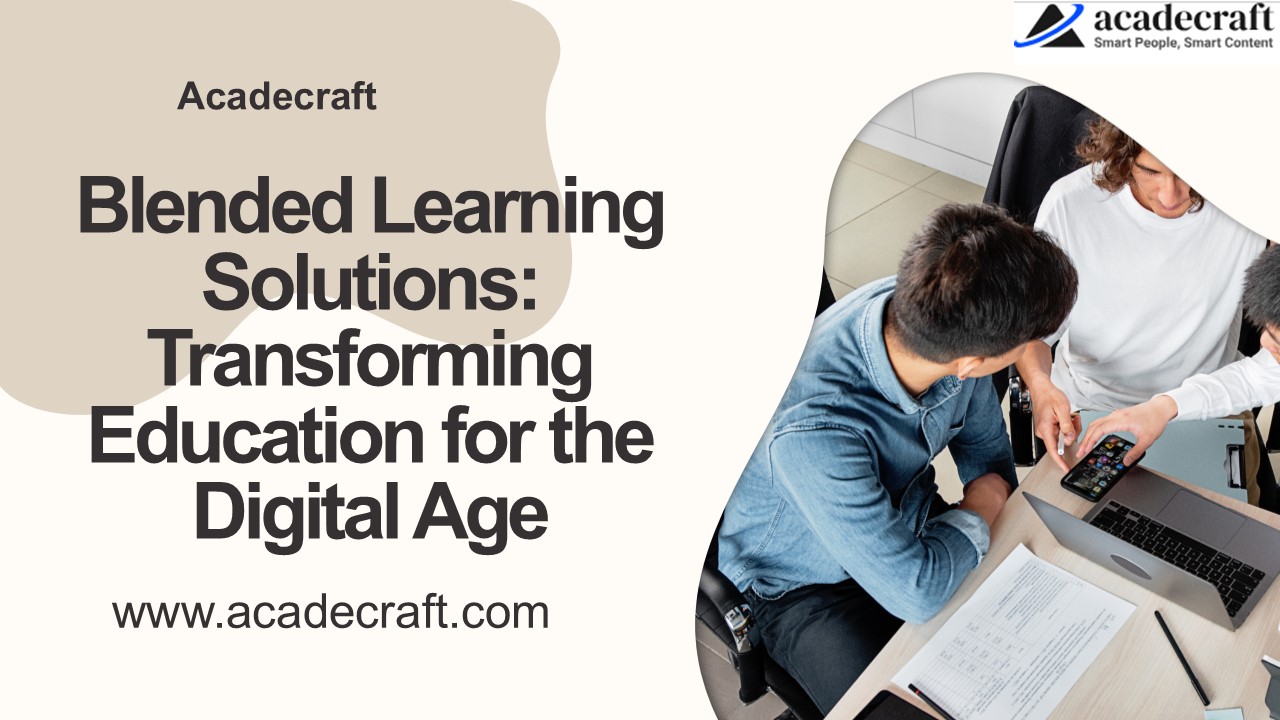
Title: Blended Learning Solutions Transforming Education for the Digital Age
1
Acadecraft
Blended Learning Solutions Transforming
Education for the Digital Age
www.acadecraft.com
2
Introduction to Blended Learning
Blended learning combines traditional
face-to-face instruction with digital learning
experiences, creating a more flexible and
engaging educational approach. This model
leverages technology to enhance learning,
allowing learners to access content anytime and
anywhere while still benefiting from
instructor-led sessions. Organizations and
educational institutions increasingly adopt
blended learning to improve knowledge retention,
accommodate diverse learning styles, and optimize
training efficiency. By integrating eLearning
modules, live sessions, and interactive
activities, blended learning ensures a
comprehensive learning experience tailored to
individual needs.
3
Key Components of Blended Learning
A successful blended learning program consists of
several core components. The primary elements
include instructor-led training (ILT), self-paced
online learning, virtual classrooms, and
interactive multimedia resources such as videos,
simulations, and quizzes. Learning management
systems (LMS) play a crucial role in managing
content delivery, tracking learner progress, and
facilitating collaboration. Gamification
elements, like leaderboards and rewards, further
enhance engagement. Organizations can customize
blended learning strategies to align with their
training goals, ensuring an optimal balance
between digital and in-person interactions.
4
Benefits of Blended Learning
Blended learning offers numerous advantages for
both learners and educators. It provides greater
flexibility, allowing participants to learn at
their own pace without being restricted to a
physical classroom. The combination of digital
and in-person instruction leads to improved
knowledge retention and engagement. Learners
benefit from personalized learning paths, while
trainers can track progress through analytics.
Additionally, blended learning reduces training
costs by minimizing travel and accommodation
expenses. Businesses and academic institutions
leveraging this model witness higher training
effectiveness and increased learner satisfaction.
5
Applications Across Industries
Blended learning is widely adopted across various
sectors, including corporate training, higher
education, healthcare, and K-12 education. In
corporate settings, it enhances employee
onboarding, leadership development, and
compliance training. Universities use blended
learning to offer hybrid courses, ensuring
students gain both theoretical and practical
knowledge. Healthcare professionals benefit from
online medical simulations combined with hands-on
training, while schools implement digital tools
to create interactive and engaging classroom
environments. The versatility of blended learning
makes it a valuable solution for diverse learning
needs.
6
The Future of Blended Learning
As technology evolves, blended learning will
continue to transform education and professional
training. Advancements in artificial intelligence
(AI), virtual reality (VR), and adaptive learning
will further enhance personalization and
engagement. Organizations must embrace these
innovations to stay ahead in the competitive
learning landscape. By investing in robust
blended learning strategies, businesses and
educational institutions can create immersive,
effective, and future-ready learning experiences.
The future of education is blended, ensuring
continuous learning beyond traditional
boundaries.
7
CONTACT US
- Get in Touch
- For Sales / Business Development
- IN 91 700 053 0247
- info_at_acadecraft.com
- Offices India
- A-61, B/3 Ground Floor, Sector-63, Noida, Uttar
Pradesh, India-201301 - USA
- 30 N Gould St Ste R, Sheridan, WY, 82801
8
Thank You For Visit !
www.acadecraft.com
Recommended

