

Impact of Climate on Display Freezers - Reasons s Consequences PowerPoint PPT Presentation
Title: Impact of Climate on Display Freezers - Reasons s Consequences
1
Impact of Climate on Display Freezers - Reasons s
Consequences
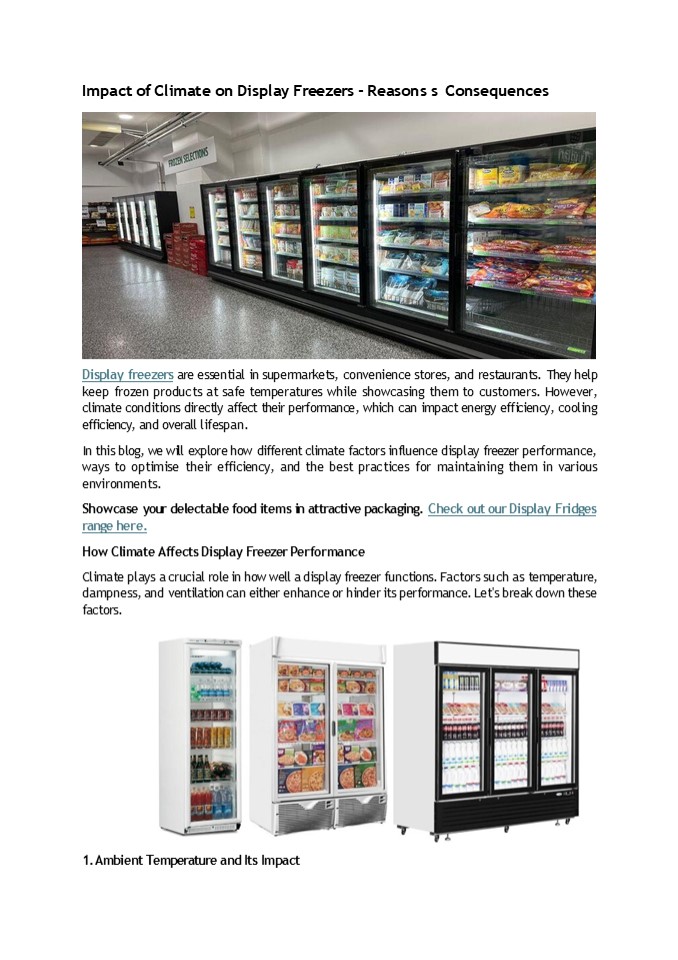
Display freezers are essential in supermarkets,
convenience stores, and restaurants. They help
keep frozen products at safe temperatures while
showcasing them to customers. However, climate
conditions directly affect their performance,
which can impact energy efficiency, cooling
efficiency, and overall lifespan. In this blog,
we will explore how different climate factors
influence display freezer performance, ways to
optimise their efficiency, and the best practices
for maintaining them in various
environments. Showcase your delectable food items
in attractive packaging. Check out our Display
Fridges range here. How Climate Affects Display
Freezer Performance Climate plays a crucial role
in how well a display freezer functions. Factors
such as temperature, dampness, and ventilation
can either enhance or hinder its performance.
Let's break down these factors.
1. Ambient Temperature and Its Impact
2
- The ambient temperature around a display freezer
affects its cooling efficiency. Most commercial
display freezers are designed to operate within a
specific temperature range. The product must work
harder to maintain the set internal temperature
if the surrounding temperature is too high. This
process can lead to - Higher energy consumption The compressor runs
longer to maintain freezing temperatures,
increasing electricity costs. - Reduced cooling efficiency If the ambient
temperature is extremely high, the freezer might
struggle to keep food at the required frozen
state. - Shortened lifespan Overworking the compressor
can lead to premature wear and tear, reducing the
model's lifespan. - Example A display freezer in a store in Darwin
or Cairns (where the climate is hot and humid)
will have to work much harder than one in
Melbourne during winter.
- Humidity and Overall Efficiency
- Humidity is another major climate factor that
influences display freezer performance. High
humidity can cause - Excess frost buildupMoisture from the air enters
the equipment and freezes, leading to ice
accumulation on the evaporator coils and glass
doors. - Condensation issues Glass doors may fog up,
reducing customer visibility and affecting
product appeal. - Strain on the defrost system The product's
defrost cycle may need to be activated more
frequently, leading to higher energy use. - Example Coastal areas like Sydney and Brisbane
often experience high humidity levels, making - commercial display freezers in these locations
more prone to condensation issues. - Poor Ventilation and Heat Accumulation
- Proper airflow around a display freezer is
crucial for its efficiency. Heat buildup can
occur if the model is placed in a crowded space
with poor ventilation. This results in
3
- Reduced cooling capacity The product struggles
to dissipate heat, leading to inefficient
cooling. - Overheating components The compressor and
condenser may overheat, causing frequent
breakdowns. - Higher energy costs The system must work harder
to maintain temperature, increasing electricity
consumption. - Example Cooling devices near kitchen cooking
areas or in direct sunlight in cafes and
restaurants will face performance issues due to
poor ventilation and excessive heat exposure. - Best Practices to Optimise Display Freezer
Performance in Different Climates - Since climate conditions cannot be controlled,
businesses must take steps to optimise cooling
efficiency. Here are some best practices to
ensure display options perform well in different
environments.
4
- Choosing the Right Display Freezer for Your
Climate - Consider models designed for your specific
climate conditions when purchasing a display
freezer for sale. Some essential attributes to
check for include - Climate Class Rating Commercial chillers have
climate class ratings that indicate the
temperature range they are designed to operate
in. For example - Class 3 Operates efficiently in temperatures up
to 25C. - Class 4 Suitable for up to 30C.
- Class 5 Can handle temperatures up to 40C.
- Tropical-rated compressors Freezers with
tropical-rated compressors are designed to handle
higher ambient temperatures efficiently. - Anti-condensation glass doors Helps reduce
fogging in high-humidity environments. - Example Queensland or Northern Territory
businesses should invest in climate class 5
variants to ensure smooth operation in extreme
heat.
5
- Placing Freezers in an Optimal Location
- The placement of such a product is critical for
its efficiency. Consider these factors - Stock and serve your beverages efficiently for
better productivity! Check out our Bar Fridge
collection here. - Avoid direct sunlight UV rays can heat the
exterior, making the cooling system work harder. - Ensure proper ventilation Maintain adequate
space around the offering for proper airflow. - Keep away from heat sources Avoid placing these
models near ovens, stoves, or heating vents. - Example A supermarket in Perth should position
these chillers away from large windows to prevent
excessive heat absorption.
6
- Regular Maintenance and Cleaning
- Proper maintenance can improve the efficiency and
longevity of a display freezer for sale near me.
Follow these maintenance tips - Clean condenser coils Dust buildup can reduce
cooling efficiency. Clean the coils every month. - Defrost regularly Excessive frost buildup can
reduce airflow and cooling performance. - Check door seals Damaged or loose seals can
allow warm air to enter, forcing the compressor
to work harder. - Monitor temperature settingsTo avoid unnecessary
energy use, Set the product at the recommended
temperature (-18C for frozen goods). - Example A store in humid regions like Gold Coast
should frequently check and clean door seals to
prevent moisture ingress.
7
- Using Energy-Efficient Options
- Investing in energy-efficient models can
significantly reduce operating costs and improve
performance in challenging climates. Features to
look for include - LED lighting Reduces heat output compared to
traditional lighting. - Eco-friendly refrigerants Newer models use
energy-efficient refrigerants like R290, which
improve cooling efficiency. - Smart temperature controls Monitors and adjusts
settings automatically to optimise energy use. - Example A cafe in Melbourne looking to cut costs
should invest in such a product with intelligent
temperature control and LED lighting. - Monitoring and Adjusting for Seasonal Changes
- Different seasons require different adjustments
to ensure the equipment operates efficiently. - Summer Increase ventilation and monitor for
excessive frost buildup. - Winter Reduce defrost cycles to prevent
unnecessary energy waste. - Rainy Season Check for condensation buildup and
ensure proper door sealing. - Example A Sydney grocery store should adjust
summer chiller settings after they buy display
freezers online to account for increased humidity
levels. - Case Studies Real-World Examples of Climate
Impact on Display Freezers
8
- Supermarket in Darwin
- A supermarket in Darwin faced challenges with
high ambient temperatures and humidity. The
mentioned products frequently developed
condensation issues, reducing product visibility.
The store improved efficiency by upgrading to
climate class 5 options with anti-condensation
glass doors and reduced energy costs by 20. - Restaurant in Melbourne
- A restaurant in Melbourne had the titular
offerings near the kitchen cooking area. Due to
heat exposure, the models struggled to maintain
consistent temperatures. The restaurant extended
the offerings' lifespan and reduced breakdowns by
relocating them to a well-ventilated area and
installing energy-efficient models. - Convenience Store in Brisbane
- A small convenience store in Brisbane noticed
excessive frost buildup in these appliances
freezers during humid months. Regular
maintenance, defrosting, and door seal checks
helped resolve the issue, improving cooling
efficiency. - Let the ice flow uninterrupted to ensure
excellent service! Please choose from our Ice
Machines collection for your business.
9
Conclusion Climate significantly impacts the
performance of display freezers. Ambient
temperature, humidity, and ventilation can affect
cooling efficiency, energy consumption, and
overall equipment lifespan. By choosing the right
product, placing it in an optimal location,
maintaining it regularly, and investing in
energy-efficient models, businesses can ensure
their display options operate at peak performance
regardless of climate conditions.
Recommended

