

How Are Mobile Apps Simplifying the Healthcare Industry? PowerPoint PPT Presentation
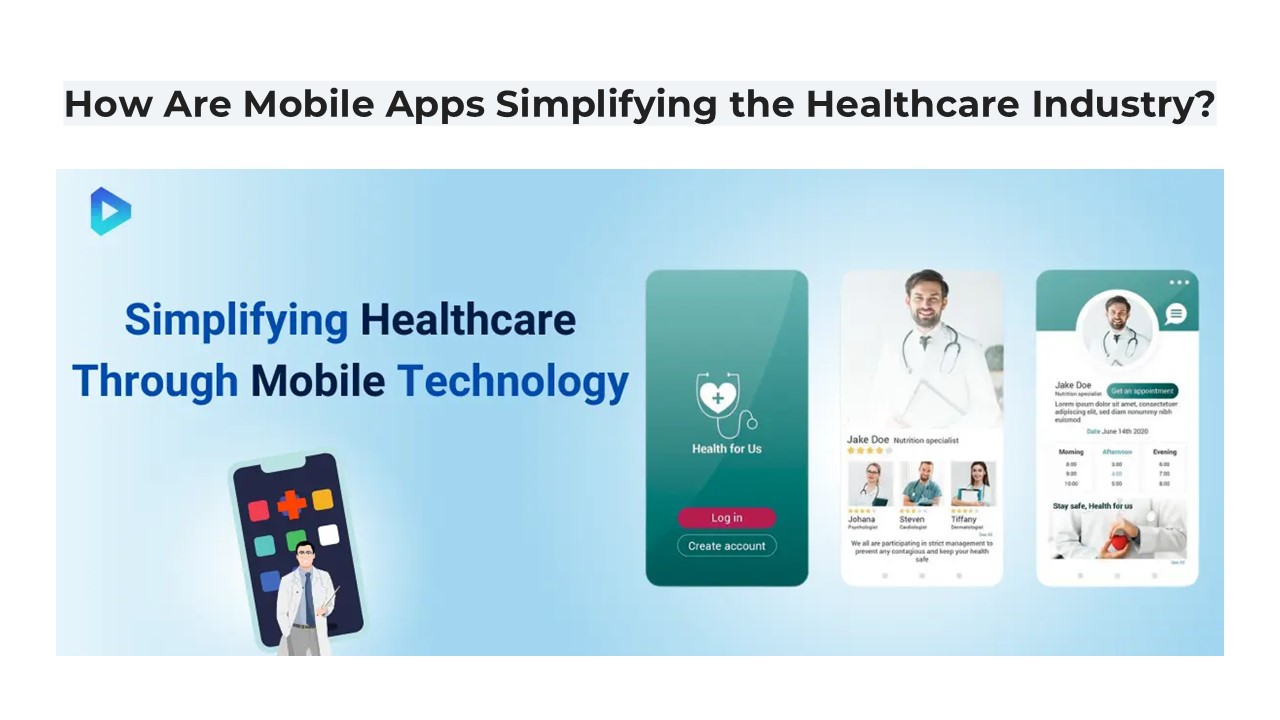
Title: How Are Mobile Apps Simplifying the Healthcare Industry?
1
How Are Mobile Apps Simplifying the Healthcare
Industry?
2
- Imagine booking a doctors appointment during
your lunch break or tracking your blood pressure
while commuting. Healthcare mobile apps are
turning these scenarios into everyday realities.
From telemedicine platforms connecting patients
to specialists worldwide to fitness apps
preventing chronic diseases, mobile technology is
reshaping healthcare. But how exactly are these
apps simplifying such a complex industry? In this
blog, well explore how apps streamline hospital
operations, empower patients with real-time data,
and bridge gaps in rural healthcare. Whether
youre a patient seeking convenience or a
provider aiming for efficiency, discover the
tools transforming careone tap at a time.
3
What Are Healthcare Mobile Apps and Their
Importance
Healthcare mobile apps are transforming patient
care and medical efficiency.
4
Defining Healthcare Mobile Apps in Simple Terms
- Mobile apps for healthcare are software tools
that aim to provide healthcare services through
smartphones or tablets. Apps help patients to
track their symptoms, book an appointment, access
telemedicine, and manage chronic conditions,
while for providers, these streamline work from
managing patient records to analyzing lab-result
investigations. - They are, in other words, digital bridges between
patient and doctor. A diabetes app, for instance,
may log blood sugar levels and share the
information instantly with a physician. The apps
smoothen healthcare access, making it usable
faster and at a more convenient pace for all.
5
- Core Features of Effective Healthcare Apps
- A successful healthcare app combines
functionality, security, and ease of use. Key
features include - User-friendly interfaces for seamless navigation.
- Secure data encryption to protect sensitive
patient information. - Real-time communication tools like video
consultations or chatbots. - Integration with wearables (e.g., fitness
trackers) for health monitoring. - For instance, a mental health app might offer
mood tracking and connect users to therapists
instantly. Prioritizing these features ensures
that apps meet both patient needs and regulatory
standards.
6
- How Do Healthcare Apps Improve Patient Outcomes?
- With the touch of a button, apps provide instant
access to medical advice, medication reminders,
and personalized care plans, thus reducing errors
and delays. - For example app that can monitor vital signs
following surgery could provide early warning to
the doctors in the case of complications. A
chronic asthma patient can keep track of what
triggers a flare-up and make necessary
adjustments to habits in preventive care.
7
- The Rise of Mobile Apps in Healthcare A Digital
Revolution - Mobile apps are revolutionizing healthcare
through innovation and accessibility.
8
- Evolution of Mobile Technology in Healthcare
- Mobile technology in healthcare began with basic
apps for fitness tracking and tablets like
medication reminders. Next came the telemedicine
platforms, AI-driven diagnostics, and IoT-enabled
devices, evolving into life-saving solutions for
patients and providers alike. For example, apps
like MyFitnessPal gave rise to advanced platforms
like Teladoc, which makes it possible to see a
doctor virtually and on-demand. - Growingly smart integration into wearables for
monitoring heart rates, blood sugar, and sleep
patterns, along with EHR integration to
facilitate smooth data transition between
patients and doctors, is marking a historical
transition from reactive to proactive,
personalized health management.
9
Key Drivers Fueling Healthcare App Adoption
- Several factors are accelerating the adoption of
healthcare apps - Growing smartphone usage Over 6 billion people
own smartphones globally, making apps accessible. - Demand for remote care Post-pandemic, patients
prioritize virtual consultations and home
monitoring. - Cost efficiency Apps reduce hospital visits,
saving time and money for providers and patients. - Regulatory support Policies like HIPAA
compliance ensure secure patient data handling. - Startups and hospitals alike invest in apps to
meet patient expectations for convenience and
immediacy. For instance, apps like Zocdoc
simplify appointment booking, while MyChart lets
users access lab results instantly.
10
- Mobile applications have broken down costly and
remote barriers to healthcare access for those
traditionally underserved, like rural patients
using telemedicine apps to consult with
specialists without the distance of travelling
further than their homes, even some low-income
users being offered chronic condition tracking,
for example in diabetes, for free or at low
costs. - For example, Babylon Health providing 24/7
virtual care in remote places and GoodRx allowing
users to find discounted medications. Further,
such apps grant power to non-English speakers
with multilingual interfaces. By democratizing
access to care, mobile apps square with the
reality that no longer do geography, income, and
language define access to healthcare.
11
Impact of Mobile Apps on Healthcare Accessibility
- Mobile applications have broken down costly and
remote barriers to healthcare access for those
traditionally underserved, like rural patients
using telemedicine apps to consult with
specialists without the distance of travelling
further than their homes, even some low-income
users being offered chronic condition tracking,
for example in diabetes, for free or at low
costs. - For example, Babylon Health providing 24/7
virtual care in remote places and GoodRx allowing
users to find discounted medications. Further,
such apps grant power to non-English speakers
with multilingual interfaces. By democratizing
access to care, mobile apps square with the
reality that no longer do geography, income, and
language define access to healthcare.
12
Mobile App Development for Healthcare Key
Considerations
Developing a healthcare mobile app requires
careful planning, compliance with regulations,
and a strong focus on user needs.
13
- Steps to Build a Successful Healthcare App
- Creating a healthcare app involves multiple
stages, each crucial for its effectiveness and
user adoption. The process includes - Market research and requirement analysis
Identifying user needs and existing gaps. - Regulatory compliance assessment Ensuring the
app meets HIPAA, GDPR, or FDA guidelines. - Feature planning and UI/UX design Prioritizing
user-friendly interfaces and accessibility. - App development and testing Using secure coding
practices and conducting rigorous testing. - Deployment and continuous updates Regularly
improving the app based on user feedback.
14
- Challenges in Healthcare App Development
- When it comes to developing a healthcare app,
challenges are unique. Other concerns abound, but
the priority is pure on the security of data and
compliance since healthcare apps deal with all
types of sensitive patient data. Beyond that,
integration with electronic health records (EHRs)
and other medical systems can hardly be easy and
clean. In addition, finding the right balance
between usability and advanced functionalities is
vital for reach both patients and medical
professionals must find the app intuitive and
effective. - Best Practices for User-Centric Healthcare Apps
- To ensure a healthcare app meets user
expectations and industry standards, developers
should - Prioritize data encryption and privacy for secure
user information. - Offer cross-platform compatibility to reach a
wider audience. - Implement AI-driven chatbots and automation for
faster patient support. - Provide offline access for critical features to
enhance reliability. - Focus on continuous updates and maintenance to
fix bugs and enhance performance.
15
Types of Mobile Applications in the Healthcare
Sector
Healthcare apps are transforming patient care and
medical operations. Lets explore the key types.
16
- Patient-Focused Apps Telemedicine and Health
Tracking - While the patient-centric application enables an
individual to manage their health, telehealth
applications serve as the source for consulting
with a doctor remotely, that is, reducing the
number of in-person visits a person has to make.
Health tracking applications also may monitor
important bodily indicators, such as heart rate,
blood pressure, and glucose levels, hence
offering real-time insights. These apps are
especially useful for managing chronic conditions
like diabetes or hypertension. Key benefits
include - Convenience Healthcare services can be accessed
from anywhere. - Personalization Suggestions made to improve
health are based on tracked data. - Cost Savings Travel and hospital bill costs are
cut down. - By giving them back health management, these apps
are improving outcomes and satisfaction.
17
- Doctor and Hospital Apps Appointment Booking
EHR Access - Doctor and hospital apps streamline medical
operations and enhance patient care. Appointment
booking apps allow patients to schedule,
reschedule, or cancel visits with ease, reducing
no-shows. EHR (Electronic Health Record) access
apps enable doctors to view patient histories,
update records, and share information securely.
Benefits include - Efficiency Faster access to patient data and
streamlined workflows. - Improved Communication Seamless coordination
between doctors and patients. - Enhanced Care Accurate, up-to-date records for
better diagnosis and treatment. - These apps are essential for modern healthcare
providers aiming to deliver efficient,
patient-centric services.
18
- Wellness Fitness Apps Promoting a Healthy
Lifestyle - Wellness and fitness apps are preventive care and
healthy living center applications and offer
features like workout plans, diet tracking, and
mental health support. For example, there are
meditation apps to help users manage the stress
they are facing, while fitness apps track walking
steps, calorie counts, and exercising routines.
These apps target those motivated to sustain or
enhance their health. Key advantages include - Accessibility On-the-go health and fitness
guidance. - Motivation Gamification and progress tracking
keep users engaged. - Holistic Health Combines physical, mental, and
emotional well-being. - By promoting healthy habits, these apps reduce
the risk of chronic diseases and improve the
quality of life.
19
Mobile Apps for Healthcare Services Enhancing
Care Delivery
Healthcare apps are transforming how care is
delivered. Lets explore their impact.
20
- How Do Apps Streamline Appointment Scheduling?
- Healthcare apps are simplifying the whole
appointment scheduling process for both patients
and providers. Booking, rescheduling, or
canceling an appointment could not be easier with
a few simple taps. This will help to minimize the
chances of no-shows and wait time. The providers
will have automated reminders, and their
schedules will also be optimized. Key features
include - 24/7 Accessibility Book appointments anytime,
anywhere. - Real-Time Updates Instant notifications for
schedule changes. - Integration Syncs with EHR systems for seamless
record-keeping. - By streamlining scheduling, these apps improve
patient satisfaction and operational efficiency.
21
- Real-Time Monitoring Through Healthcare Apps
- Real-time monitoring applications solve two
problems for patients and doctors alike. Their
important vital signs-heart rate, blood pressure,
glucose levels-can be monitored and shared with
the doctor instantaneously by the patients.
Doctors use data for remotely monitoring chronic
patients and aiding when necessary. Benefits
include - Proactive Care Early detection of health issues.
- Remote Support Continuous care without hospital
visits. - Personalized Insights Tailored health
recommendations based on real-time data. - These apps are transforming chronic disease
management and preventive care
22
- Apps Revolutionizing Pharmacy and Medication
Management - Pharmacy and medication management apps ensure
that patients take the right medications at the
right time. With features such as reminders,
prescription refills, and alerts for possible
drug interactions, they're a safety net for
adherence. Pharmacies use these applications to
keep track of the stock and conduct deliveries
much faster and in a more streamlined manner. Key
advantages include - Improved Adherence Timely reminders reduce
missed doses. - Convenience Order refills and track deliveries
from your phone. - Safety Alerts for potential drug interactions or
allergies. - By simplifying medication management, these apps
improve health outcomes and patient satisfaction.
23
Data Security Privacy in Healthcare Apps
Protecting Patient Trust
Securing patient data builds trust and ensures
app reliability.
24
- Risks of Data Breaches in Healthcare Apps
- Healthcare applications deal with quite sensitive
data, which means that they are prime targets for
cyberattacks. Unwanted access to medical files,
phishing scams, and insecure cloud storage are
common risks. For example, a hacked fitness app
might expose patients' health histories or
payment details. - Key vulnerabilities
- Weak encryption during data transmission.
- Poorly designed user authentication systems.
- Third-party integrations with lax security
protocols. - A single breach can damage a providers
reputation and lead to legal penalties. Proactive
measures are essential to safeguard patient trust
and compliance.
25
- Compliance with HIPAA and GDPR Standards
- Healthcare applications must comply with HIPAA
for the United States and the GDPR for the
European Union in dealing with sensitive medical
data. HIPAA deals with the provisioning of very
secure means while dealing with protected health
information, while laws set forth by GDPR provide
strict obligations of obtaining consent and data
minimization. - Critical requirements
- Data encryption for stored and transmitted
information. - Access controls to limit who can view PHI.
- Audit trails to track data usage and
modifications. - For example, a telemedicine app must encrypt
video consultations and obtain explicit patient
consent to share records. Non-compliance risks
fines up to millions of dollars and loss of user
trust.
26
- Best Practices to Secure Patient Data
- Protecting patient data requires a mix of
technology, training, and transparency. Start
with end-to-end encryption to shield data from
hackers. Implement multi-factor authentication
(MFA) to verify user identities. - Additional steps
- Conduct regular security audits to identify
vulnerabilities. - Train staff on phishing detection and secure data
practices. - Use secure cloud storage with compliance
certifications. - For example, a mental health app might anonymize
data for research while ensuring encryption.
Prioritizing these practices builds patient
confidence and aligns with global standards.
27
- LETS DISCUSS YOUR IDEA
- Have Question?
- Call Us 24/7 For Business Inquiry
- 1 (347) 9739732, 91-90399-28143
- inquiry_at_digiprima.com
- ashesh_at_digiprima.com
Recommended

