

PPT - What Are The Symptoms Of DVT Blood Clots PowerPoint PPT Presentation
Title: PPT - What Are The Symptoms Of DVT Blood Clots
1
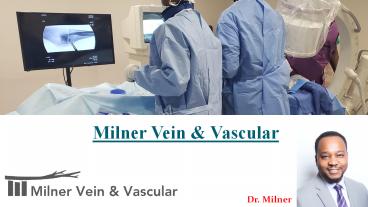
Milner Vein Vascular
Dr. Milner
2
What Are The Symptoms Of DVT Blood Clots?
Ever got yourself a cut after shaving? What
generally follows is that the blood clot patch is
saving the day. Blood clots stop the bleeding but
if it remains unattended or doesn't break up on
its own, then it can lead to serious medical
conditions that ought to be looked after. You can
get blood clots in any part of the body, maybe
even in the blood vessels. These usually go for
affecting the leg if they remain for a long
period. If you are getting warning signs of DVT
Lithonia, looking for quick medical help in the
need of the hour. This keeps you out of the
danger zone as much as possible. Deep Vein
Thrombosis is the condition when a blood clot
starts forming in the vein located inside the
body. A blood clot is a clump of blood-forming
dark and turning into a solid-state. It typically
forms in the lower leg or thighs but can occur in
other parts of the body as well.
3
The blood clot forming in the arms or legs is
pretty serious as it can travel to your heart.
You are more likely in getting DVT if you haven't
moved for a long time, say after surgery. You are
sure to seek help from a doctor if you see any of
these symptoms 1. Swelling happens right in the
legs and hands where the blood clot forms making
your entire legs puffed up causing pain when you
are walking. 2. There can be a change in the
color of your legs or arms where you can see red
or blue tinge and these areas getting itchy or
remaining warm most of the time. 3. If the clot
worsens, then there can be sore or pain in your
legs, sometimes the pain becomes unbearable.
There can be a dull ache or severe pain. 4.
Sometimes the clot might get removed from the leg
and move to the lungs and if that happens, then
you can experience trouble breathing. Chances are
that you might get a very bad cough or even cough
blood.
Symptoms of DVT
4
- 5. If the clot is in the lower leg, then you can
feel cramps in your lower leg when you are
walking. - People having upper extremity DVT might not
experience these symptoms but still, there can be
mild symptoms like - Should and neck pain
- Swelling may be in the hand or arm
- Pain moving from arm to forearm
- The skin color becoming blue-tinted
- The sudden feeling of weakness in the hands
Venous Insufficiency Snellville can be found out
but you have to give attention to all the
symptoms that your body is showing you.
5
Causes of DVT
Injury cases DVT blood clots may happen when
there is damage to the blood vessel's walls
blocking blood from flowing. This leads to the
causing of the blood clot. Inactivity If you
continuously sit for long periods, then you are
most likely to have DVT as the blood gets
collected in your legs forming clotting. If you
are not able to move for a long time, blood flow
in the legs becomes slower. After surgery Most
of the time, blood vessels get damaged after
surgery. Bed rest means you are not able to move
at all so, after surgery, the risk for DVT
increases. DVT Surgery There are many
incidents when your doctor might tell you to
remove the blood clot from your leg or arm. For
the procedure of surgery, the surgeon makes an
incision in the blood vessels and locates the
blood clot and removes it. Then they repair the
tissues and vessels. Sometimes, a small inflating
balloon can be used for keeping the blood vessel
open while removing the clot. After removing the
clot, the balloon is also removed. Doctors try
this method only in severe risks.
6
Risk factors with DVT
- Ankle Brachial Index Snellville happens mostly to
people over 50 years and certain conditions lead
to altering the movement of blood from veins,
raising the risk of a clot developing. Some risks
are - Having a history of DVT in the family
- Obesity leads to putting pressure on legs and
arms making it difficult to walk - Injury damaging the blood vessels and the veins
- Taking birth control pills
- Heavy smoking
- Staying seated for long periods in cars or planes
- Most conditions increase the risk of blood clots.
Heart failures also act as causes of blood clots
in the body. DVT is a risk associated majorly
with surgery. You can prevent it if you try
changing your lifestyle and keep moving your
hands and legs frequently. Stretch your legs for
a good flow of blood. - Conclusion
- DTV is a serious condition but even this can be
kept under control. A vegetarian diet is best in
the cases. Talk to your doctor and know of all
the prevention steps.
7
Contact Us Business Name Milner Vein
Vascular Dr. Timothy Milner Country United
States Address 5700 Hillandale Dr.Suite 120
Lithonia City Lithonia State Georgia Postal
Code GA 30058 Phone No 678-580-1149 Email
milnervein_at_gmail.com Website https//milnerveinan
dvascular.com/
Source Link
Recommended

