

What is a Pediatric Nephrologist? PowerPoint PPT Presentation
Title: What is a Pediatric Nephrologist?
1
What is a Pediatric Nephrologist?
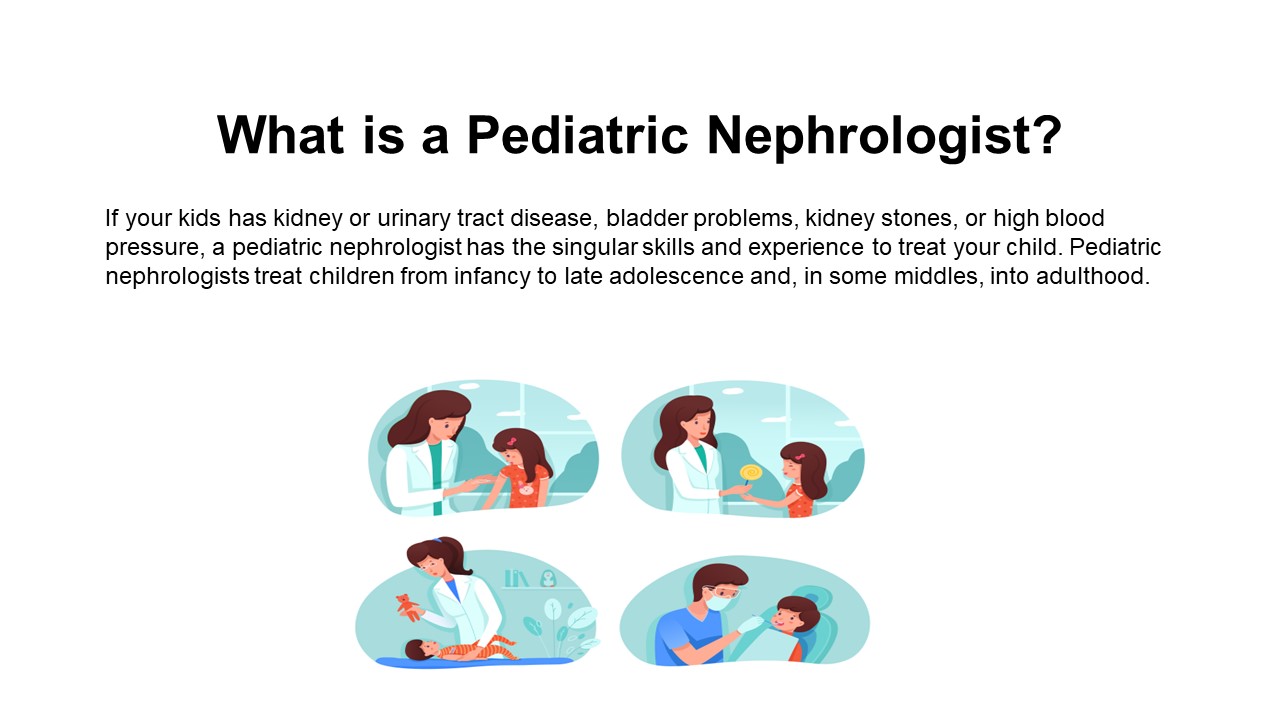
- If your kids has kidney or urinary tract disease,
bladder problems, kidney stones, or high blood
pressure, a pediatric nephrologist has the
singular skills and experience to treat your
child. Pediatric nephrologists treat children
from infancy to late adolescence and, in some
middles, into adulthood.
2
- Pediatric Nephrologists Generally Provide the
Following Services - Dialysis
- Kidney transplant
- Kidney biopsies
- Interpretation of X-ray studies of the kidney.
- Interpretation of laboratory studies related to
kidney disease. - Ambulatory blood pressure monitoring.
- Kidney Disease in Children can be Caused
- Hereditary problems
- Birth defects
- infection
- Nephrotic syndrome
- Trauma
- Blockage or reflux of urine
3
- Treatment
- Treatment of kidney disease in children depends
on the cause of the disease. - A child is more likely to be taken to a pediatric
nephrologist. - Children who have high blood pressure may need to
take medicine to lower their blood pressure. - Improving blood pressure can significantly reduce
the damage done to the kidneys. - In addition, it can lead to kidney failure and
the child must receive appropriate treatment for
the kidneys to function properly again. - The two types of treatment are dialysis and
transplantation and Fortis International
Hospitals is one of the best pediatric dialysis
centers in India. - Diet Plans
- Proteins Eggs, Milk, Cheese, Chicken, Fish, Red
meat and Beans and much more. - Potassium levels should remain in the normal
range for children with CKD, because too little
or too much potassium can cause heart and muscle
problems. - Low potassium fruits and vegetables include
Apples, Strawberries, Pineapple, Cabbage, Mustard
Greens, Blueberries, Raspberries, and Raw
Broccoli.
4
Right Doctor at Right TimeVisit www.skedoc.com
- Fruits and vegetables high in potassium include
Oranges, Melons, Bananas, Potatoes, Tomatoes,
Apricots, Cooked Spinach, and Sweet Potatoes. - The level of phosphorus must be under control
because too much phosphorus depletes calcium from
the bones, weakening them. - Phosphorous is found in high protein foods
including Green Beans, Lime Soda, Rice and Corn
Cereals, Egg White, Sorbet. - Fluid intake should also be limited as they make
the child urinate more, which can lead to
bloating or dehydration
Recommended

