

New Orleans, founded on May 7, 1718 - World Footprints PowerPoint PPT Presentation
Title: New Orleans, founded on May 7, 1718 - World Footprints
1
WORLD FOOTPRINTS
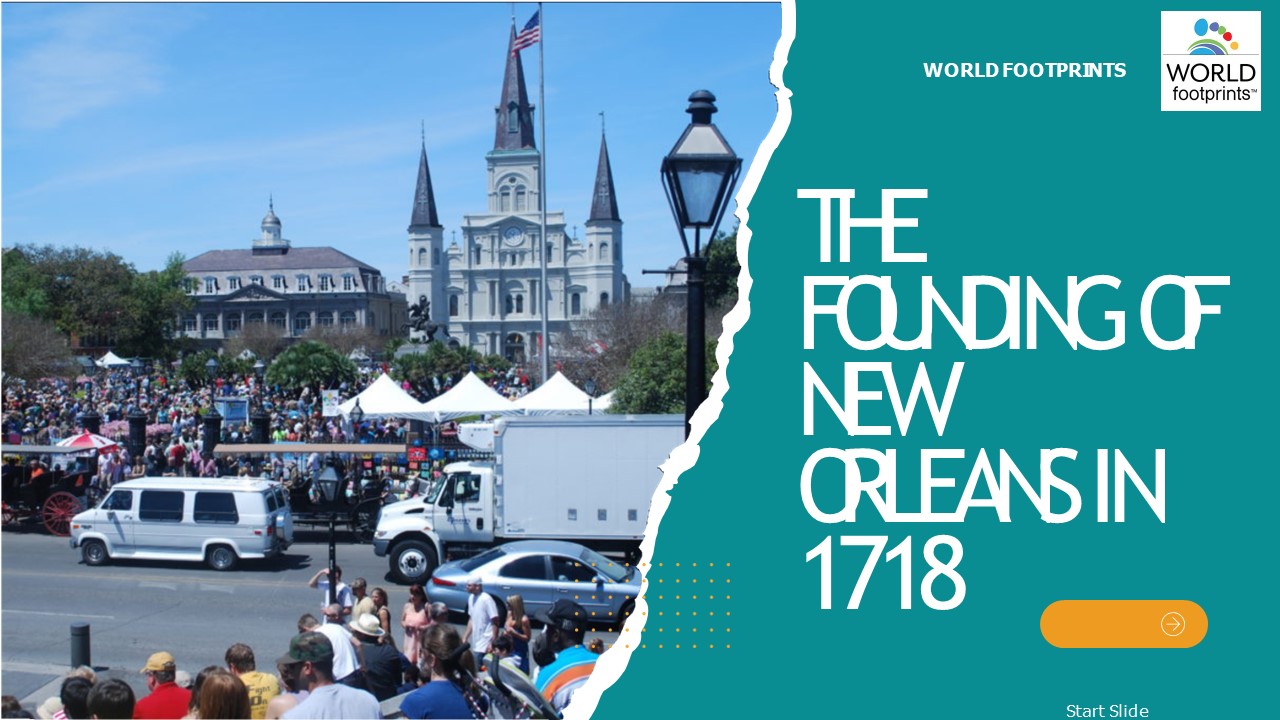
THE FOUNDING OF NEW ORLEANS IN 1718 Start Slide
2
INTRODUCTION
Welcome, ladies and gentlemen, to this
presentation on the Founding of New Orleans one
of America's most fascinating cities . From its
humble beginnings as a French settlement on the
banks of the Mississippi River, to its status as
a vibrant cultural hub and major port city, New
Orleans has a rich and storied history that is
sure to captivate your imagination. As we delve
into the origins and evolution of this
remarkable city, we will explore the challenges
faced by its early settlers, the unique cultural
influences that have shaped its development, and
the enduring legacy of its contributions to
American society. So sit back, relax, and
prepare to be transported back in time to the
birthplace of jazz, Mardi Gras, and so much more.
Read More
3
THE FRENCH CONNECTION
WORLD FOOTPRINTS
In the early 18th century, the French were eager
to expand their colonial empire in North
America. They saw the Mississippi River as a key
route for trade and exploration, and sent
expeditions to explore the river and its
surrounding areas. After encountering several
challenges, including hostile Native American
tribes and difficult terrain, the French decided
to establish a settlement at the mouth of the
Mississippi River. This settlement would
eventually become New Orleans, one of the most
important cities in the United States. The
impact of the French decision to settle in New
Orleans was immense. It established a foothold
for European colonization in the region, and
paved the way for the development of the city
into a major port and cultural center. The
French influence can still be seen today in the
city's architecture, cuisine, and traditions
DISCOVER THE WORLD THROUGH STORIES
Read More. . .
4
NAMING THE CITY
WORLD FOOTPRINTS
New Orleans, originally founded in 1718 as La
Nouvelle-Orléans, was named after Philippe II,
Duke of Orléans, who served as the Regent of
France during the city's founding. The name has
since become synonymous with the city's rich
history and unique culture. The cultural
influences that shaped New Orleans are diverse
and complex, including French, Spanish, African,
and Native American traditions. These influences
can be seen in everything from the city's
architecture to its music, cuisine, and
festivals. The result is a vibrant and dynamic
city with a character all its own.
5
THE IMPORTANCE OF NEW ORLEANS
WORLD FOOTPRINTS
- New Orleans is one of the most strategically
important cities in the United States due to its
location at the mouth of the Mississippi River.
The city has been a hub of commerce and
transportation since its founding, serving as a
gateway for goods and people from all over the
world. - In addition to its strategic importance, New
Orleans has also made significant contributions
to American culture. The city is known for its
music, cuisine, and unique blend of cultures
that have come together over the centuries. - From jazz and blues to Creole and Cajun cuisine,
New - Orleans has left an indelible mark on American
culture that continues to this day.
6
THE CHALLENGES OF GROWTH
As New Orleans grew and developed, it faced a
multitude of challenges. Natural disasters such
as hurricanes and floods were a constant threat
to the city's survival. Social and political
upheavals, including the Civil War and
Reconstruction, brought significant changes to
the region. Economic pressures, such as the
decline of the cotton industry and the rise of
industrialization, also had a major impact on
the city. Despite these challenges, the people of
New Orleans showed remarkable resilience and
spirit in the face of adversity. They came
together to rebuild after disasters, fought for
their rights during times of social and political
turmoil, and adapted to changing economic
conditions. This spirit of perseverance is a
defining characteristic of the city and its
people.
Read More
7
CONCLUSION
In conclusion, the founding of New Orleans was a
pivotal moment in American history. From its
humble beginnings as a French settlement on the
banks of the Mississippi River, the city has
grown into a vibrant cultural hub with a rich
and diverse heritage. Throughout its history, New
Orleans has faced many challenges, from
devastating natural disasters to social and
political upheavals. Yet through it all, the
people of New Orleans have shown remarkable
resilience and spirit, and the city continues to
thrive today. As we wrap up this presentation, we
hope that we've inspired you to learn more about
this fascinating city and its enduring legacy.
Whether you're interested in history, culture,
or just good food and music, there's something
for everyone in New Orleans. World Footprints
also provide blogs for those who love to read
about history, culture and travel.
Read More
8
Get More
INFORMATION
WORLD FOOTPRINTS
We are always happy to connect with fellow
travelers and followers of World Footprints.
Metropolitan Branch Trail, Washington, DC
20002, United States
9
THANK You
F O R Y O U R A T T E N T I O N
WORLD FOOTPRINTS
Recommended

