

Plastic Waste Management Market PowerPoint PPT Presentation
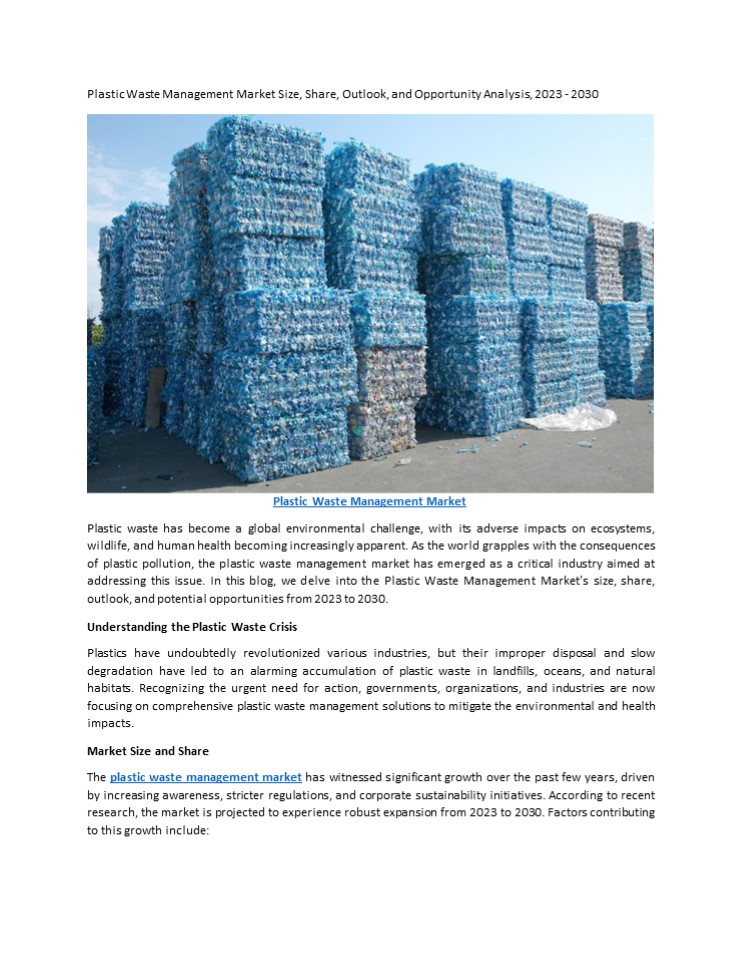
Title: Plastic Waste Management Market
1
Plastic Waste Management Market Size, Share,
Outlook, and Opportunity Analysis, 2023 - 2030
Plastic Waste Management Market Plastic waste has
become a global environmental challenge, with its
adverse impacts on ecosystems, wildlife, and
human health becoming increasingly apparent. As
the world grapples with the consequences of
plastic pollution, the plastic waste management
market has emerged as a critical industry aimed
at addressing this issue. In this blog, we delve
into the Plastic Waste Management Market's size,
share, outlook, and potential opportunities from
2023 to 2030. Understanding the Plastic Waste
Crisis Plastics have undoubtedly revolutionized
various industries, but their improper disposal
and slow degradation have led to an alarming
accumulation of plastic waste in landfills,
oceans, and natural habitats. Recognizing the
urgent need for action, governments,
organizations, and industries are now focusing on
comprehensive plastic waste management solutions
to mitigate the environmental and health
impacts. Market Size and Share The plastic waste
management market has witnessed significant
growth over the past few years, driven by
increasing awareness, stricter regulations, and
corporate sustainability initiatives. According
to recent research, the market is projected to
experience robust expansion from 2023 to 2030.
Factors contributing to this growth include
2
- Government Initiatives Governments across the
world are implementing regulations and policies
to curb plastic waste. Measures such as extended
producer responsibility (EPR) and plastic bans
have led to increased demand for waste management
services and solutions. - Corporate Sustainability Many companies are
adopting eco-friendly practices and pledging to
reduce their plastic footprint. This trend has
created opportunities for innovative plastic
waste management technologies and services. - Public Awareness Heightened public consciousness
about plastic pollution has led to increased
support for recycling and waste reduction
efforts, further boosting the plastic waste
management market. - Market Outlook
- The plastic waste management market is expected
to evolve rapidly in the coming years, with
several trends shaping its trajectory - Advanced Recycling Technologies Innovations in
recycling technologies, such as chemical
recycling and pyrolysis, are enabling the
conversion of plastic waste into valuable
resources, including fuels and raw materials for
manufacturing. - Circular Economy Models The concept of a
circular economy, which emphasizes recycling,
reusing, and reducing waste, is gaining traction.
Companies are exploring closed-loop systems to
minimize plastic waste and promote sustainable
practices. - Sustainable Packaging Solutions The packaging
industry is undergoing a transformation towards
sustainable alternatives to single-use plastics.
This shift is driving the demand for
environmentally friendly packaging materials and
designs. - Collaborative Initiatives Partnerships between
governments, industries, and non-governmental
organizations (NGOs) are fostering collaborative
approaches to plastic waste management. These
alliances facilitate knowledge sharing, resource
allocation, and the development of effective
strategies. - Opportunities for Investment and Innovation
- The plastic waste management market presents a
range of opportunities for businesses,
entrepreneurs, and investors - Waste Collection and Sorting Developing
efficient waste collection and sorting systems
can improve the quality and quantity of
recyclable materials, making them more accessible
for processing. - Recycling Infrastructure Investing in recycling
facilities, particularly those utilizing advanced
technologies, can contribute to reducing plastic
waste while generating valuable products. - Education and Outreach Initiatives that raise
awareness and educate the public about plastic
waste reduction and recycling can have a profound
impact on changing consumer behavior. - Product Innovation Creating sustainable
alternatives to conventional plastic products,
along with innovative packaging solutions, can
cater to the growing demand for eco-friendly
options.
3
- Waste-to-Energy Ventures Exploring opportunities
to convert plastic waste into energy through
technologies like pyrolysis or waste-to-energy
plants can offer both environmental and economic
benefits. - The plastic waste management market is at a
pivotal juncture, with unprecedented
opportunities for growth, innovation, and
positive impact on the environment. As the world
collectively addresses the plastic waste crisis,
stakeholders in the plastic waste management
sector have a vital role to play in shaping a
more sustainable and resilient future. By
investing in advanced technologies, fostering
collaborations, and embracing circular economy
principles, the plastic waste management industry
can contribute significantly to reducing plastic
pollution and creating a cleaner, greener planet
for generations to come. - Tags
- Advanced Materials, Plastic Waste Management,
Plastic Waste Management Market - 2
- Navigating the Plastic Waste Management Market A
Path to Sustainability - In an era of unprecedented technological
advancements and global connectivity, the plastic
waste crisis has emerged as one of the most
pressing environmental challenges of our time. As
plastic pollution continues to wreak havoc on
ecosystems and human health, the plastic waste
management market has risen to the occasion,
offering innovative solutions and opportunities
for a more sustainable future. In this blog, we
delve into the dynamic realm of the Plastic Waste
Management Market, exploring its significance,
trends, challenges, and the road ahead. - The Plastic Problem Urgency and Impact
- Plastic, a versatile and ubiquitous material, has
found its way into nearly every aspect of modern
life. Yet, its durability and resistance to
decomposition have created a monumental challenge
- plastic waste. With millions of tons of plastic
entering landfills, waterways, and oceans each
year, the need to address this crisis has never
been more critical. Plastic pollution not only
threatens biodiversity and natural habitats but
also poses risks to human health as toxic
chemicals leach into the environment. - Enter the Plastic Waste Management Market
- The plastic waste management market has emerged
as a beacon of hope in the fight against plastic
pollution. This burgeoning industry encompasses a
wide array of activities, technologies, and
initiatives aimed at reducing, recycling, and
responsibly disposing of plastic waste. Let's
delve into some key aspects - Recycling Innovations One of the cornerstones of
plastic waste management is recycling. Advanced
technologies such as chemical recycling,
mechanical recycling, and even bioplastics are
transforming how we deal with plastic waste,
turning it into valuable resources and raw
materials for new products. - Circular Economy The concept of a circular
economy has gained momentum, emphasizing the
importance of designing products and systems that
minimize waste and promote continual reuse.
4
- Businesses are adopting circular economy
principles, creating a positive feedback loop
that reduces the demand for virgin plastic
production. - Government Regulations Governments worldwide are
recognizing the gravity of the plastic waste
crisis and are implementing regulations to
address it. Extended Producer Responsibility
(EPR) laws, plastic bans, and waste management
policies are driving the demand for innovative
solutions. - Consumer Awareness As public awareness about
plastic pollution grows, consumers are demanding
more sustainable products and packaging. This
shift in consumer preferences is prompting
businesses to adopt eco-friendly practices and
invest in sustainable packaging alternatives. - Waste-to-Energy Waste-to-energy technologies are
gaining traction, offering a dual benefit of
reducing landfill waste and generating energy
from non-recyclable plastics. - Navigating Challenges and Seizing Opportunities
- While the plastic waste management market holds
immense promise, it's not without its challenges - Complex Supply Chain The plastic waste
management process involves various stakeholders,
from collection and sorting to recycling and
disposal. Coordinating these efforts across
different sectors can be complex. - Infrastructure Investment Establishing efficient
recycling and waste management infrastructure
requires significant investment in technology,
facilities, and logistics. - Behavioral Change Shifting consumer behavior
away from single-use plastics and encouraging
recycling requires sustained education and
awareness campaigns. - Innovation Gap Developing and implementing
advanced recycling technologies and sustainable
alternatives to plastics demand ongoing
innovation and research. - The Path Forward A Sustainable Future
- The plastic waste management market is at a
crossroads, presenting a unique opportunity to
create a cleaner, healthier planet. As
governments, industries, and individuals come
together to address the plastic waste crisis,
several avenues for progress become evident - Collaboration Partnerships between governments,
businesses, nonprofits, and communities are
essential to tackling the plastic waste problem
comprehensively. - Innovation Continued research and development in
recycling technologies, sustainable materials,
and waste management systems will drive the
industry forward. - Education Raising awareness about the impact of
plastic waste and the importance of responsible
consumption can lead to lasting behavioral
changes. - Policy Advocacy Supporting and advocating for
policies that promote responsible plastic use,
recycling, and waste management is crucial.
5
The plastic waste management market stands as a
beacon of hope in the face of a mounting
environmental challenge. By embracing innovation,
collaboration, and sustainable practices, this
industry has the potential to transform the way
we approach plastic waste. As we navigate this
path towards a cleaner, more sustainable future,
let us recognize the power of collective action
and individual choices in shaping a world where
plastic pollution becomes a thing of the
past. Tags Advanced Materials, Plastic Waste
Management, Plastic Waste Management
Market https//www.newsstatix.com/from-trash-to-tr
easure-exploring-the-evolving-plastic-waste-
management-market/ 1111 From Trash to
Treasure Exploring the Evolving Plastic Waste
Management Market In a world grappling with
environmental concerns, the issue of plastic
waste has emerged as a formidable challenge. Yet,
within this challenge lies a remarkable
opportunity the transformation of discarded
plastics from mere trash into valuable resources.
The plastic waste management market has been
evolving rapidly, driven by innovation,
sustainability goals, and a collective global
effort to curb plastic pollution. In this blog,
we embark on a journey to explore how the plastic
waste management market is turning this
proverbial trash into a treasure trove of
possibilities. The Plastic Waste
Problem Plastics, while revolutionary in their
applications, have also become a symbol of the
throwaway culture that has burdened our planet.
Single-use plastics, in particular, have
inundated our landfills, polluted our oceans, and
threatened ecosystems and wildlife. The magnitude
of this problem has spurred governments,
industries, and individuals into action, igniting
a wave of innovation in plastic waste
management. Innovation and Transformation
Recycling Revolution Traditional recycling
methods have paved the way for cutting-edge
techniques like chemical recycling and mechanical
recycling. These processes break down plastics
into their raw materials, allowing them to be
reused in manufacturing new products, thereby
reducing the demand for virgin plastic. Circular
Economy The concept of a circular economy,
where resources are continually recycled and
repurposed, is gaining traction. Plastic waste
management market is being viewed as a valuable
input for creating new products, from clothing to
construction materials, promoting a more
sustainable and resource- efficient system.
6
Waste-to-Energy Conversion Advanced
technologies are being developed to convert
plastic waste into energy through processes like
pyrolysis and gasification. These methods not
only reduce the volume of plastic waste but also
offer an alternative energy source. Upcycling
and Repurposing Designers and innovators are
transforming plastic waste into high-value
products. From fashion accessories to furniture,
upcycling is breathing new life into discarded
plastics, turning them into functional and
aesthetic treasures. Sustainability and Economic
Potential Environmental Benefits The reduction
of plastic waste through effective management
translates into cleaner oceans, healthier
ecosystems, and reduced carbon emissions. This
positive impact aligns with global sustainability
goals and enhances the reputation of businesses
and industries adopting responsible plastic waste
practices. Economic Opportunities The plastic
waste management market is not only an
environmental necessity but also a burgeoning
economic sector. Investment in recycling
infrastructure, waste-to-energy facilities, and
sustainable product development creates jobs and
stimulates economic growth. Consumer Awareness
and Engagement Increasing awareness among
consumers about the importance of plastic waste
management is driving demand for sustainable
products and packaging. Businesses that align
with these preferences stand to gain a
competitive edge. The plastic waste management
market is undergoing a profound transformation,
turning the narrative of waste and pollution into
one of innovation and opportunity. As the world
unites to combat plastic pollution and promote a
more sustainable future, the plastic waste that
was once seen as a problem is now being
recognized as a valuable resource waiting to be
tapped. Through cutting- edge technologies,
innovative business models, and a collective
commitment to change, the plastic waste
management market is leading the charge in
turning trash into a treasure trove of
sustainable possibilities.
Recommended

