

Transforming the Manufacturing Sector: The Power of AI PowerPoint PPT Presentation
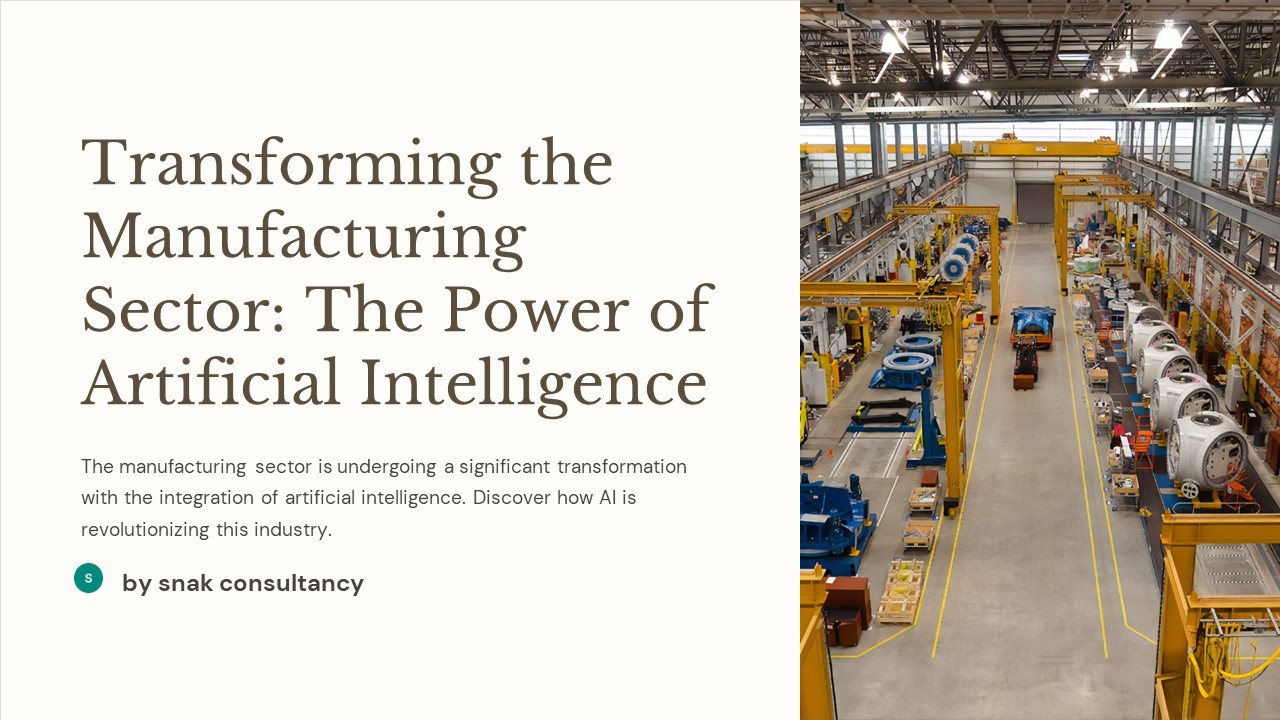
Title: Transforming the Manufacturing Sector: The Power of AI
1
Transforming the Manufacturing Sector The Power
of Artificial Intelligence
The manufacturing sector is undergoing a
significant transformation with the integration
of artificial intelligence. Discover how AI is
revolutionizing this industry.
by snak consultancy
2
Overview of the Current State of the
Manufacturing Sector
Increasing Global Competition
Rising Consumer Expectations
Manufacturers are facing intense competition on a
global scale, requiring innovative solutions to
stay competitive.
Consumers are demanding higher-quality products,
faster delivery times, and personalized
experiences.
Challenges in Efficiency
Workforce Skill Gap
Manufacturers are constantly striving to improve
efficiency, reduce waste, and streamline their
operations.
There is a growing need for upskilling and
reskilling the workforce to adapt to the changing
demands of the industry.
3
Brief Explanation of Artificial Intelligence and
Its Potential Benefits
1
What is Artificial Intelligence?
Artificial Intelligence refers to the simulation
of human intelligence in machines that are
programmed to think and learn like humans.
2
Potential Benefits of AI in Manufacturing
AI can improve efficiency, enhance
decision-making, optimize resource allocation,
and enable proactive maintenance.
4
Applications of Artificial Intelligence in
Manufacturing
Predictive Maintenance and Quality Control
Optimization of Production Processes
Supply Chain Management and Logistics
AI-powered systems can identify potential
equipment failures and perform real-time quality
inspections, minimizing downtime and defects.
AI algorithms can analyze vast amounts of data to
identify bottlenecks, optimize production
schedules, and improve overall efficiency.
AI can optimize inventory management, demand
forecasting, and route optimization, leading to
reduced costs and improved customer satisfaction.
5
Real-world Examples
Robotic Assembly Lines
AI-enabled Quality Control
Autonomous Warehouse Operations
Cutting-edge robots with AI capabilities are
streamlining assembly processes, increasing
precision, and reducing errors.
Machine learning algorithms can analyze sensor
data to detect defects and ensure consistent
product quality.
AI-powered drones and autonomous vehicles are
revolutionizing warehouse logistics, enabling
faster order fulfillment.
6
Future of AI in Manufacturing
1
Emerging Trends and Technologies
AI is expected to continue evolving with
advancements in machine learning, natural
language processing, and robotics.
2
Potential Impact on Employment and Workforce
The integration of AI may require reskilling and
upskilling of the workforce to adapt to new roles
and collaborate with intelligent machines.
3
Ethical Considerations and Potential Risks
As AI becomes more prevalent in manufacturing, it
is crucial to address ethical concerns and
mitigate risks associated with data privacy and
algorithm bias.
7
Conclusion and Call to Action
Summary of Key Points
Importance of Embracing AI in Manufacturing
Action Steps for Manufacturers
AI has the power to revolutionize the
manufacturing sector by improving efficiency,
quality control, and supply chain management.
Begin incorporating AI by identifying areas for
optimization, exploring pilot projects, and
investing in data infrastructure and talent.
Manufacturers who embrace AI technologies will
gain a competitive edge, drive innovation, and
meet the evolving demands of consumers.
Recommended

