

Tips To Improve Accuracy And Precision For Long Range Shooting PowerPoint PPT Presentation
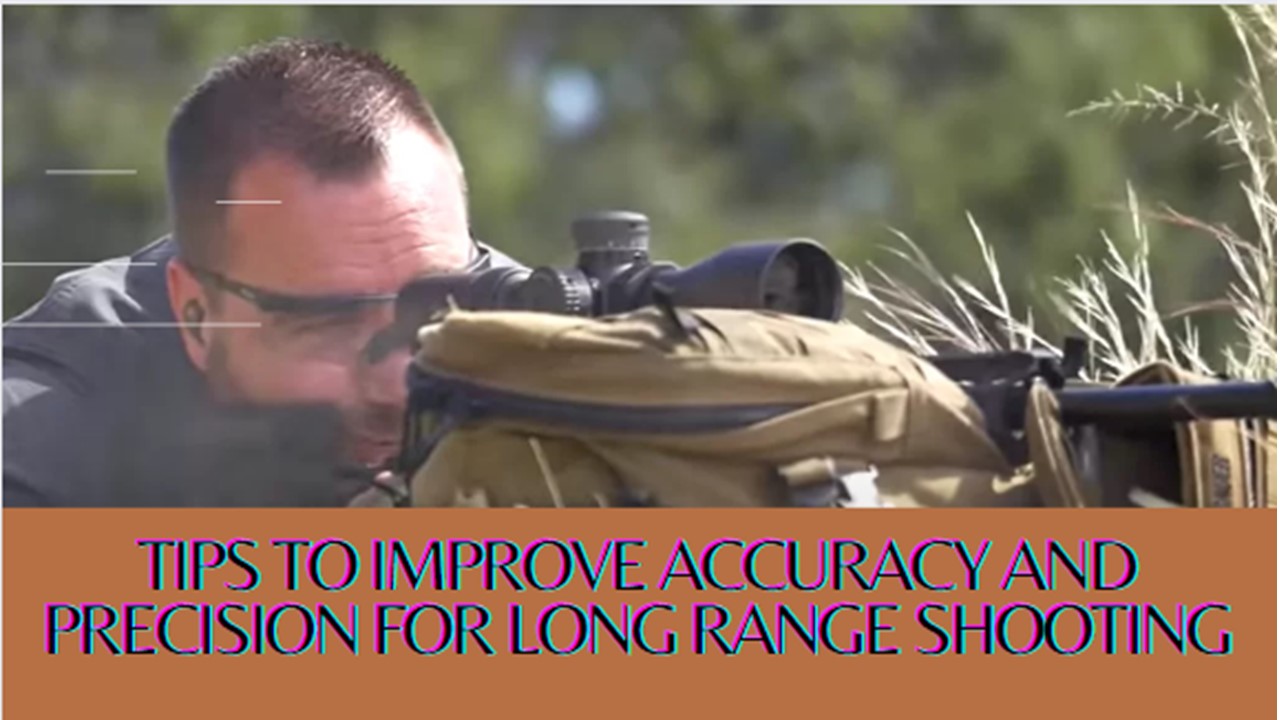
Title: Tips To Improve Accuracy And Precision For Long Range Shooting
1
Tips To Improve Accuracy And Precision For Long
Range Shooting
2
- The rush of a long-range shot is unrivaled.
Whether you want to hunt big game in the wide
Western landscapes or improve your competition
shooting skills, mastering long-range shooting is
a path that requires dedication. - This article will give you a road map to
long-distance shooting success, covering
everything from the fundamentals to advanced
methods and strategies. By following these steps
and committing to persistent practice and
progress, you will be able to enter the world of
long range shooting and enjoy the delight of
striking your target with pinpoint accuracy.
Introduction
3
Fundamentals Building a Solid Foundation
- Your long-range shooting journey begins with a
solid foundation in the fundamentals. These
principles, when practiced and perfected, form
the bedrock of your accuracy and success.
4
Understanding Ballistics
- The trajectory of your bullet through the air
matters in long-range accuracy shooting.
Understanding bullet trajectory requires an
understanding of two basic concepts gravity and
wind drift. Gravity causes the bullet to fall as
it travels. The bullets horizontal route is
influenced by wind drift. - Ballistic charts and software are useful tools
for making this process easier. These resources
include drop and windage corrections that have
been pre-calculated for various distances and
conditions. By inputting your rifles
specifications, bullet type, and environmental
data, you may receive precise wind speed and
direction modifications, guaranteeing your shots
are on target. - Ballistic charts and software, on the other hand,
are not magic wands. To use these tools
effectively, it is critical to grasp the basic
principles of ballistics and how these parts
interact.
5
Body Positioning
- Position yourself exactly behind your rifle, feet
shoulder-width apart, and knees slightly bent.
Make certain that your shoulders are level and
that your body is parallel to the target. Canting
your body to the side can cause your sights to
misalign, resulting in missed shots. - Get rid of the death hold! Instead of tightly
clutching the stock, use your dominant hand to
hold it softly. Relax your fingers and avoid any
strain or torque that could interfere with your
shot. Your grip should be solid but comfortable,
allowing you to handle the trigger smoothly.
6
- When shooting lying down, provide support for
your non-dominant hand for better stability and
less muscular strain. A sandbag or bipod provides
a stable platform for your forearm, preventing
unwanted movement and ensuring consistent shot
placement.
7
- Breath Control
- Long-range shooting demands exceptional breath
control and trigger pull for pinpoint accuracy.
Heres how to achieve both - Breathe Deeply and Exhale Slowly
- Forget about holding your breath! Instead,
concentrate on taking deep, calm breaths. Exhale
slowly and thoroughly, allowing for a natural
pause before inhaling. This keeps your chest
stable and prevents motions from interfering with
your aim. - Timing
- Align your shot with the pause between your
exhale and inhalation. This reduces the
possibility of unsteady hands due to breath
intake and enables a smooth, consistent trigger
pull.
8
- Consistent Pressure
- Press the trigger gently and consistently,
gradually increasing the pressure until the shot
breaks. Avoid jerking or flinching, as these can
hurt your precision shooting. - Practice makes Perfect
- Perform breath control and trigger pull exercises
regularly to create muscle memory and enable
perfect shot placement during long-range shooting
conditions.
9
Choosing the Right Gear
- Long-range shooting demands precision equipment
that can withstand the demands of extended
distances. Heres what you need to consider when
selecting your rifle and optics
10
The Rifle
- Choose a rifle made primarily for long-range
shooting. These rifles often have thick barrels
for added stability and less barrel flex, which
improves accuracy. Choose a dependable action
mechanism, such as a bolt-action, for smooth
operation and consistent performance, which is
critical for accurate shot placement. Invest on a
high-quality trigger that breaks consistently and
cleanly. A smooth trigger pull reduces flinching
and promotes perfect shot control.
11
The Optics
- To accommodate broad shooting circumstances,
choose a long range scope with adjustable
magnification. Higher magnification enables
larger target sightings in a riflescope at
greater distances. Choose a big objective lens to
gather more light, which is especially helpful in
low-light situations and for optimum clarity at
long range. Consider a ballistic reticle-equipped
scope. These reticles have built-in indications
for windage and elevation changes, which makes
aiming easier and improves long-range accuracy. - Keep in mind that purchasing high-quality
equipment is an investment in your long-range
shooting performance. Choose your rifle and
optics with consideration, taking into account
your shooting goals, budget, and personal tastes.
12
- Eye Relief
- Adjust the location of the scope so you see a
complete, circular image through the lens. Remove
any dark edges that are obstructing your view for
better target acquisition and accuracy.
Optics and Sight Picture
13
- Crosshair Alignment
- Align the crosshairs precisely with the center of
your selected target. Remember to account for
windage (horizontal movement) and elevation
(vertical movement) modifications based on
distance, wind conditions, and other
environmental factors.
14
- Beyond the Basics Refining Your Skills
15
- 1. Reading Wind and Weather
- Wind Meter - Practice measuring wind speed and
direction with a wind meter. - Environmental Awareness - Keep an eye out for
wind flags, mirages, and other environmental
clues to help you understand wind patterns and
how they affect your shot. - 2. Practice Makes Perfect
- Consistent Practice Schedule regular shooting
practice at varied distances. - Concentrate on Fundamentals For consistent
accuracy, constantly polish your stance, grip,
breath control, and trigger pull. - Test Yourself Gradually increase your shooting
distance as your skills improve.
16
- 3. Develop a routine
- Consistency Develop a pre-shot ritual that
includes equipment checks, breathing exercises,
and mental imagery. - Mental Focus Keep a calm and concentrated mind
before and during each shot. - 4. Seek Guidance
- Mentoring Make contact with skilled long-range
shooters or teachers to benefit from their
knowledge. - Training classes Attend training classes to
learn advanced long-range shooting methods and
expertise.
17
(No Transcript)
18
5. Riflescope brand matters
- When selecting a precision riflescope, numerous
brands offer high-quality choices. Popular brands
include Vortex Optics, known for affordability
and crisp optics Schmidt Bender, which has
been making riflescopes since 1957, SIG Sauer
Optics, renowned for exceptional clarity and
precision Nightforce Optics, offering unmatched
quality and accuracy at a premium price Zeiss,
known for making rugged riflescopes and
Swarovski Optiks, revered for unparalleled
optical quality and craftsmanship. Choose the
brand that best suits your needs and budget for
long-range shooting success.
19
Conclusion
- To sum it up, mastering long-range shooting
requires dedication and continuous improvement.
Practice the fundamentals, refine your skills,
and choose the right gear. Remember, breath
control, consistent pressure on the trigger, and
understanding ballistics are crucial for success.
Explore advanced techniques like reading wind and
weather, and seek guidance from mentors and
training courses.
Recommended

