

Workers Compensation Insurance Securing Your Employees' Future PowerPoint PPT Presentation
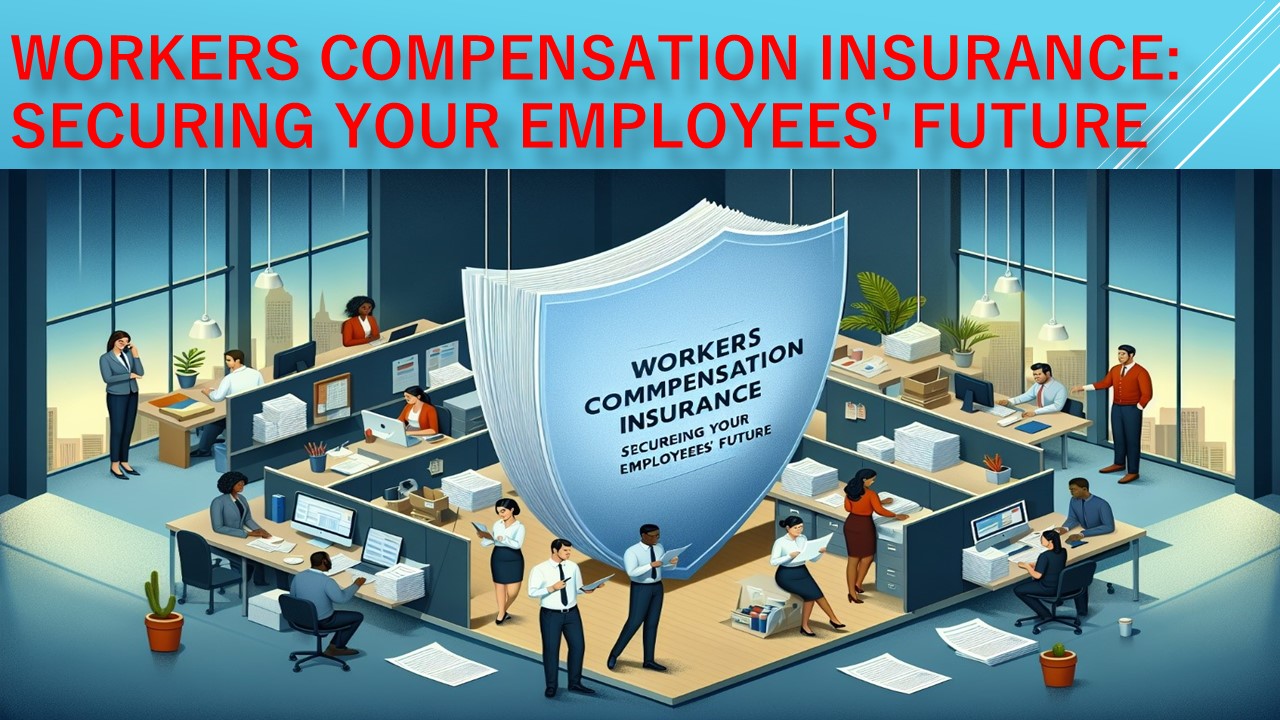
Title: Workers Compensation Insurance Securing Your Employees' Future
1
Workers Compensation Insurance Securing Your
Employees' Future
2
- When we talk about the pillars that hold up a
flourishing business, few are as foundational and
legally imperative as Workers' Compensation
Insurance. At the crux of modern employment
practices, this insurance represents a critical
safety net that is not only in the best interests
of employees, but is also an employer's passport
to compliance with state regulations. Anchoring
our focus on the societal commitment to protect
those who labor for us, Workers Compensation
Insurance provides indemnity and medical care to
employees who suffer work-related injuries, not
to mention the peace of mind it instills in the
workforce. Given its comprehensive nature,
covering everything from medical expenses to
disability benefits, it fortifies an employees
financial stability in fraught times.
Importantly, most employers, with rare exceptions
for smaller businesses in some states, are
mandated to offer this insurance, making it a
cornerstone of employment policy. The key
protections, such as exclusive remedy and
no-fault coverage, ensure workers and employers
can navigate post-injury terrains without the
complexities and uncertainties of legal pursuits.
3
Workers' Compensation Insurance stands as robust
financial armor for employees struck down by
injuries or ailments attributed to their work.
This mandated program offers a haven,
safeguarding the well-being of employees through
benefits inclusive of healthcare and cash, while
shielding employers from lawsuits. With benefits
encompassing the spectrum from medical costs to
rehabilitation and missed wages, the insurance
promises an equitable transaction of security.
Far from being a mere act of compliance, it
allows companies to uphold a commitment to their
staff, exemplified by the exclusive, no-fault
benefits such as statutory coverage for medical
bills and disability benefits. Our states serve
as architects of these compensation ecosystems,
each one tailoring regulations and benefits to
their regional tapestry. This intricate interplay
between state guidance and employer
responsibilities ensures a system that, when
adhered to, exemplifies our societal stride
towards justice and care for every worker.
- What is Workers' Compensation Insurance?
4
Peeling back the layers of Workers' Compensation
Insurance reveals a robust and multifaceted
system, designed to activate the moment an
employee faces the unfortunate serendipity of a
work-related injury. Beholden to their role,
employers become the financiers of the insurance,
thereby eliminating the worker's need to prove
fault to receive benefits. Under this shield of
"exclusive remedy," employees find solace in a
scheme that offers security and simplicity in
place of tortuous legal proceedings. Given its
obligatory nature in most states, employers must
adeptly navigate the landscape of coverage
acquisition and adhere to state-specific
regulations that govern the operation of such
programs. When injuries occur, employees embark
on a procedural path reporting the injury,
completing requisite paperwork, and depending on
the state, possibly vying for compensation.
Throughout, the state's labor department looms as
the deciding authority on the gamut of
compensation matters, ensuring equitable
dispensation of the insurance's promise.
- How Does Workers' Compensation Insurance Work?
5
Nestled within the legal obligations of a
business is the requirement to carry Workers'
Compensation Insurance. This mandate becomes a
beacon of an employers commitment to the welfare
of its workforce. With routes to coverage through
state-managed programs or private insurers,
employers must comply with precise legal dictates
that include choosing an approved medical network
and providing immediate, uncompromised medical
care to the injured. However, noncompliance looms
like a shadow, threatening with stern fines and
exacerbated liability. Employers should remember
that posting visible compliance notices, keeping
accurate records, and dating a claim within the
first knowledge of the injury are not just good
practices but are legal imperatives. The
stringency and specifics of these requirements
may fluctuate across states, industries, and the
size of any given enterprise, demanding from
employers a keen understanding and respect for
the legalities at play.
- Legal Requirements for Employers
6
In guise of a guardian, Workers' Compensation
Insurance envelopes employees in a cocoon of
benefits following work-related afflictions. From
crafting recovery pathways with medical care to
replacing lost wages through disability benefits,
the insurance unpacks a trove of aid. It even
extends its compassionate arm with supplemental
job displacement and death benefits, should the
worst transpire. Ensconced within these benefits,
both employees and employers find mutual
protectiona sanctuary against the ruins of
costly litigations and a shared embrace of
compliance with the law. The scope of workers'
compensation is broad, spanning wage-loss
recompensation to the provision of medical
appliances, ensuring that each employee finds
their bridge back to life pre-injury.
- Benefits of Workers' Compensation Insurance for
Employees
7
Various tendrils wind into the cost structure of
Workers' Compensation Insurance. Industry
corridors with heightened perils inherently
shoulder heavier premiums, while historical
claims surge the fiscal demand. The geographical
theater of operations and company scale add
further complexity to the financial tapestry,
with insurers weaving in factors such as the
experience modification rate (EMR) to tailor
premiums. Cultivating a safety-conscious culture
and championing diligent risk management can ease
these costs over time. Counterintuitively, other
means of premium mitigation include meeting the
specified safety guidelines, investigating timely
hiring practices, and fostering a return-to-work
ethos that won't just bolster morale but also
proactively diminish premiums.
- Cost of Workers' Compensation Insurance
8
Navigating the maze of filing a Workers'
Compensation claim can appear daunting at first.
However, structured into definitive steps, the
process becomes more navigable. Whether using
digital platforms or traditional paperwork,
documenting a work-related injury promptly is
pivotal. The progression from the initial report
to the insurer's adjudication is punctuated by
necessary paperwork, involving employers as much
as employees. Approvals, denials, and subsequent
appeals unfold in a choreographed sequence, with
compensation for treatment and lost wages
contingent on successful navigation of this
journey. Distilled to its essence, employees must
remain vigilant of timelines, procedures, and
forms, while employers must foster transparency,
support, and expeditious communication.
- Filing a Worker's Compensation Claim
9
Should the straight paths of Workers'
Compensation claims meander into disputes,
resolution mechanisms are primed to untangle
differences. These span the collaborative
simplicity of mediated agreements to the
formality of contested hearings. The
responsibility to mend schisms falls on various
agents attorneys, ombudsmen, or state-sanctioned
boards, all armed with an arsenal of ADR methods.
As disputes emerge, from the assessment of
injuries to the appropriateness of compensation,
these intermediaries aim to mend rifts with
expediency and expertise, ensuring that the
essence of the insuranceto provide remedy and
reliefremains untainted.
- Dispute Resolution in Workers Compensation
10
Like any financial fortress, Workers'
Compensation Insurance is not impervious to the
siege of fraud. Employers, employees, and even
medical providers may succumb to the lure of
ill-gotten gains. Fraudulent actions could
distort the essence of the system, inflating
premiums, sapping its resources, and betraying
the mutual trust at its core. Combatting such
deceit requires vigilance, preemptive strategies,
and creating circles of honesty within the
workplace culture. By nurturing awareness,
facilitating anonymous reporting, and strictly
screening prospective hires, both employers and
workers can preserve the sanctity and purpose of
Workers' Compensation Insurance.
- Fraud in Worker's Compensation Insurance
11
State legislation weaves the intricate web upon
which Workers' Compensation Insurance rests. Each
state curates its own mosaic of laws, shaping
everything from coverage mandates to benefit
structures, adapting to economic pulses and
industrial needs. The historical maturation of
these laws mirrors society's awakening to the
hardships that industrialization introduced a
transformation from employer liability to
intended protection and support. Yet, the tempest
of noncompliance batters with severe
repercussions, reminding businesses that
understanding and aligning with state laws is
less of a choice and more of an operational
necessity.
- The Impact of State Laws on Worker's Compensation
12
The dominion of Workers' Compensation Insurance,
predominantly occupied by traditional employees,
casts a shadow over the independent contractor's
realm. Unlike their employed counterparts,
independent contractors navigate a murky legal
landscape where coverage is not a given but a
conditional need. Driven by client prerequisites
or the specter of potential litigation, these
sole operators find in workers' comp a tool of
professional legitimacy, financial defense, and
sometimes, a state-ordained requirement. Yet, the
costs of carrying such insurance and the
ramifications of misclassification amplify the
complexity of their work lives, invoking a
nuanced understanding of contract, labor laws,
and the freedom of workplace independence.
- Independent Contractors and Worker's Compensation
13
The churning seas of Workers' Compensation
Insurance are stirred by currents of change
emergent technologies, mental health paradigms,
and novel work patterns like remote working
reshape its landscape. Industry sagas forecast an
era where artificial intelligence revolutionizes
risk management while telehealth redefines
medical access. Mental healthcare surfaces as a
realm of growing urgency, even as legislative
mazes around cannabis use loom as potential
intricacies for coverage. The insurance's
trajectory unrolls before an horizon of
innovation, where adaptability to these trends
promises to be a linchpin of success for the
insurers and the insured alike.
- Future Trends in Worker's Compensation Insurance
14
Anchoring the relationship between employer and
employee, Workers' Compensation Insurance has
long been a critical component defining the
contours of work life. A testament to the value
societies place on labor and health, it has stood
as a bulwark against financial despair and a
bridge towards rehabilitation. From the
protection it awards employees to the liability
shield it bestows upon employers, its function
transcends the monetaryit embodies a collective
promise to those who toil. As we advance into a
future where traditional industry lines blur, and
new work environments emerge, embracing the
spirit and structure of Workers' Compensation
remains a resolute way to maintain a productive,
secure, and legally sound workplace.Please
visit here for more information
https//www.bonanoinsurance.com/
- Conclusion
Recommended

