

Algae-based Animal Feed Market Trends: A Comprehensive Analysis PowerPoint PPT Presentation
Title: Algae-based Animal Feed Market Trends: A Comprehensive Analysis
1
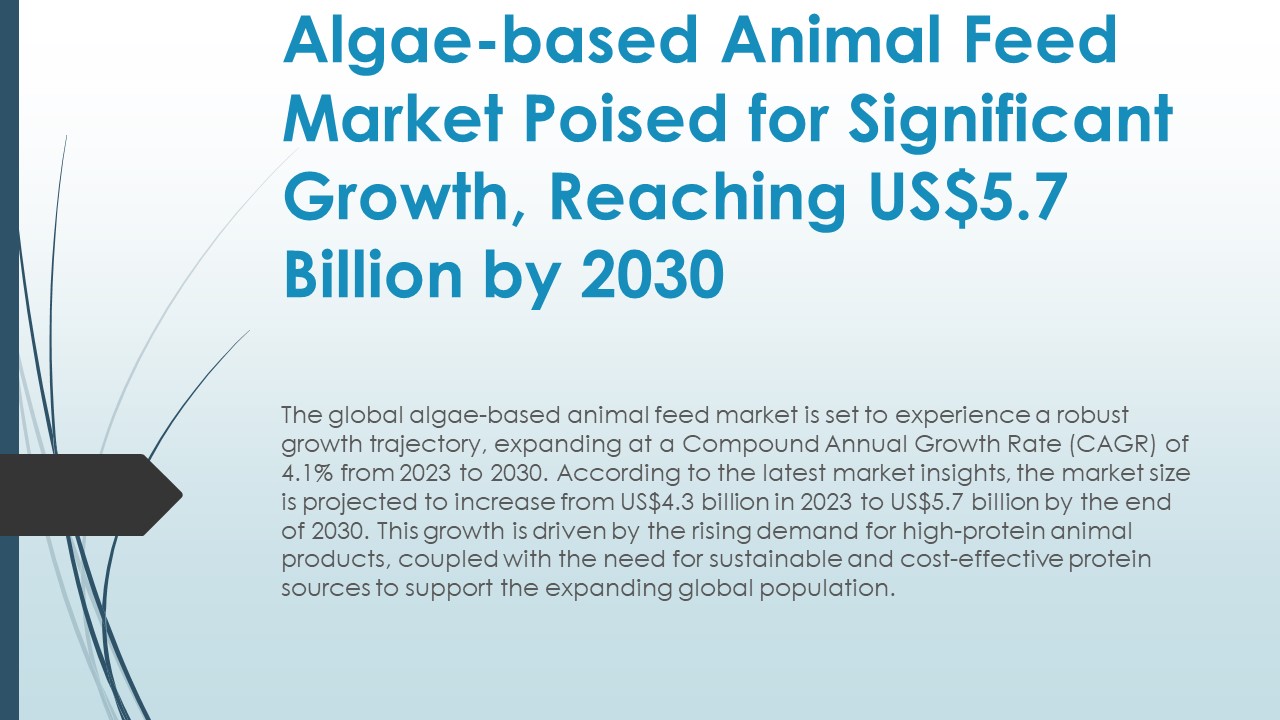
Algae-based Animal Feed Market Poised for
Significant Growth, Reaching US5.7 Billion by
2030
- The global algae-based animal feed market is set
to experience a robust growth trajectory,
expanding at a Compound Annual Growth Rate (CAGR)
of 4.1 from 2023 to 2030. According to the
latest market insights, the market size is
projected to increase from US4.3 billion in 2023
to US5.7 billion by the end of 2030. This growth
is driven by the rising demand for high-protein
animal products, coupled with the need for
sustainable and cost-effective protein sources to
support the expanding global population.
2
Market Overview and Trends
- The escalating demand for meat and dairy products
due to population growth and increasing
affluence, especially in emerging economies, is a
key driver for the surge in the algae-based
animal feed market. As dietary patterns shift
towards higher animal protein consumption, there
is a growing need for alternative and sustainable
feed sources, with algae emerging as a promising
solution. - In a nutshell, the Persistence Market Research
report is a must-read for start-ups, industry
players, investors, researchers, consultants,
business strategists, and all those who are
looking to understand this industry. Get a glance
at the report at- https//www.persistencemarketres
earch.com/market-research/algae-based-animal-feed-
market.asp
3
Market Growth Drivers
- The nutrient-rich composition of algae-based
animal feed plays a crucial role in boosting
immune systems, sustaining growth, and enhancing
overall animal health. The formulation of
algae-based feeds ensures high palatability,
leading to improved nutrient uptake and digestion
in animals. Stronger immune systems in livestock
and aquaculture animals contribute to disease
resistance, reducing the reliance on antibiotics
in animal agriculturea significant concern in
the context of global efforts to combat
antibiotic resistance. - In addition to immune system benefits,
algae-based feed supports optimized animal growth
rates, reproduction, and overall physiological
processes. Research indicates that certain
bioactive chemicals and antioxidants in algae may
mitigate specific health issues in animals,
offering potential anti-inflammatory qualities
and addressing metabolic problems. By promoting
healthier animal populations, algae-based feed
contributes to more sustainable and
cost-effective animal production practices.
4
Market Restraints
- However, challenges such as health concerns
related to red meat consumption and supply chain
complexity management pose potential restraints
to the market. The increased risk of
cardiovascular diseases associated with red meat
consumption has led consumers to seek alternative
protein sources, potentially driving the demand
for algae-based animal feed. Supply chain
disruptions due to variations in algae yields,
ineffective harvesting techniques, and
storage-related spoilage are critical challenges
that need to be addressed to ensure the
reliability and quality of algae-based feed.
5
Opportunities and Market Strategies
- Government incentives, subsidies, and supportive
regulatory frameworks can play a pivotal role in
encouraging the adoption of algae-based animal
feed. Investments in research and development,
technological advancements, and awareness
campaigns are essential to enhance feed
formulations, improve efficiency, and educate
stakeholders about the benefits of algae-based
feed. By aligning with consumer preferences for
environmentally friendly and healthful products,
the market can position algae-based feed as a
desirable and practical substitute.
6
Regional Dynamics
- China leads in algae production and cultivation,
with notable companies like Qingdao Blue Ocean
Technology Co., Ltd., and Hainan Jinyu Group
focusing on microalgae cultivation for animal
feed. The United States contributes significantly
to research and development, housing companies
like Evonik Industries AG and Corbion NV. Europe,
especially Germany, France, and the Netherlands,
is witnessing flourishing algae industries, while
India is emerging as a producer of spirulina and
other algae for animal feed.
7
Conclusion
- As the market for algae-based animal feed
witnesses significant growth, businesses need to
address challenges related to scalability,
production costs, and market education. By
actively engaging in research, development, and
collaboration, companies can position themselves
as leaders in this emerging sector. The promising
future of the algae-based animal feed market is
characterized by sustainability, innovation, and
a substantial impact on the direction of animal
agriculture.
8
Thank You
Recommended

