

Ensuring Safety at Heights: The Essential Guide to Fall Arresters PowerPoint PPT Presentation
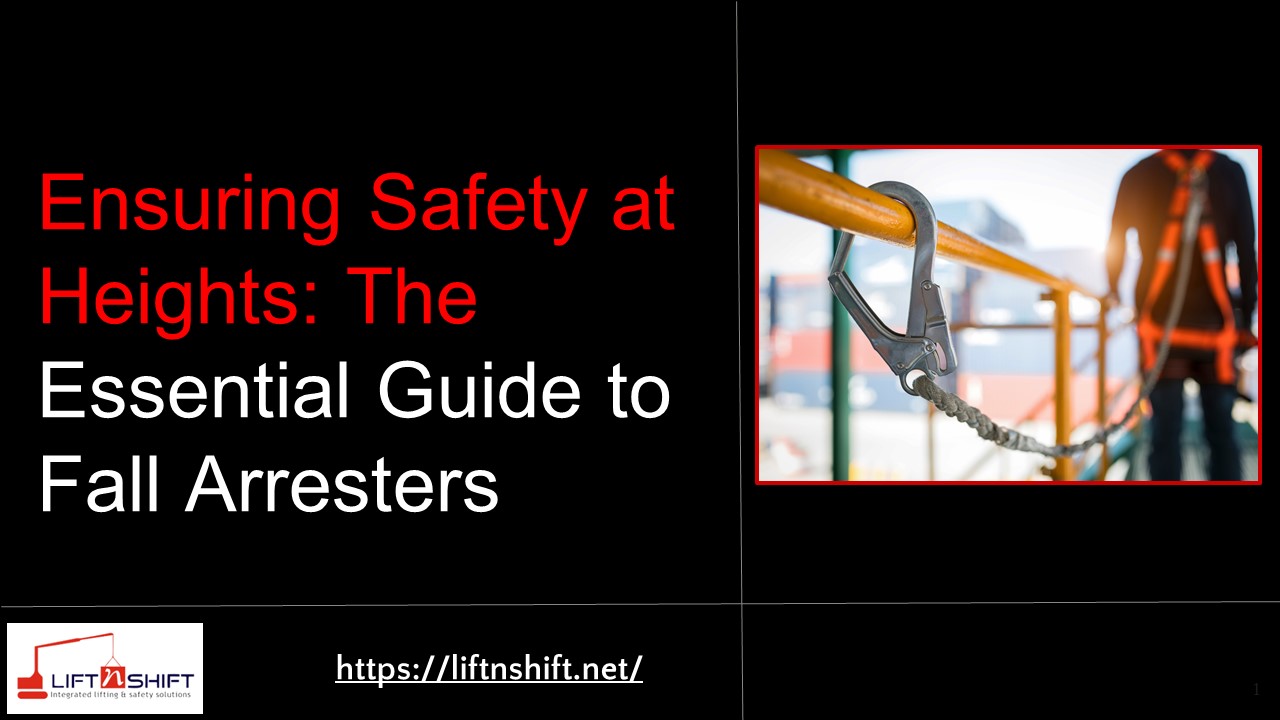
Title: Ensuring Safety at Heights: The Essential Guide to Fall Arresters
1
Ensuring Safety at Heights The Essential Guide
to Fall Arresters
https//liftnshift.net/
2
INTRODUCTION
- Working at heights presents numerous risks, and
ensuring safety is paramount. One of the most
effective tools in preventing accidents is the
fall arrester. This blog will delve into the key
points that highlight the importance and
functionality of fall arresters in maintaining
workplace safety.
3
1. Understanding Fall Arresters
- Fall arresters are devices designed to stop a
fall in progress. They play a crucial role in
protecting workers from serious injuries or
fatalities when working at elevated heights.
These devices are part of a broader fall
protection system that includes harnesses,
lanyards, and anchorage points.
4
2. Types of Fall Arresters
- There are several types of fall arresters, each
suited for different applications. Retractable
lifelines, for example, provide freedom of
movement while ensuring immediate engagement in
case of a fall. Static lifelines, on the other
hand, are more suited to environments where
movement is limited. Rope grabs are another
variety, ideal for vertical mobility.
5
3. Components of a Fall Arrest System
- A comprehensive fall arrest system includes more
than just the fall arrester. It encompasses a
full-body harness that distributes the force of
the fall across the body, an anchorage point
capable of supporting the dynamic force of a
fall, and connectors that link the harness to the
fall arrester and anchorage.
6
4. Importance of Proper Installation
- Proper installation of fall arrest systems is
vital. The anchorage point must be reliable and
strong enough to handle the forces involved.
Incorrect installation can lead to system
failure, making training and adherence to
manufacturer guidelines crucial.
7
5. Regular Inspection and Maintenance
- Regular inspection and maintenance of fall
arresters and their components are essential to
ensure they function correctly. This includes
checking for wear and tear, ensuring all
components are intact, and replacing any damaged
parts. Regular maintenance helps in identifying
potential issues before they lead to accidents.
8
6. Training and Education
- Workers must be adequately trained in the use of
fall arrest systems. Training should cover how to
properly wear a harness, how to check the
equipment before use, and the correct procedures
in case of a fall. Proper education ensures that
workers are prepared and can respond effectively
in an emergency.
9
7. Compliance with Safety Standards
- Adhering to safety standards and regulations is
non-negotiable. Fall arrest systems must meet
specific criteria set by occupational safety
authorities. Compliance ensures that the
equipment is tested and certified to handle the
demands of high-risk environments.
10
8. Choosing the Right Equipment
- Selecting the appropriate fall arrester and
related equipment depends on the specific work
environment. Factors such as the height of
operation, the type of structure, and the nature
of the work influence the choice of equipment.
Consulting with safety professionals can help in
making the right decisions.
11
9. The Role of Employers
- Employers have a significant responsibility in
ensuring the safety of their workers. This
includes providing the necessary equipment,
ensuring proper training, and fostering a culture
of safety. Employers must also stay updated on
the latest safety standards and advancements in
fall protection technology.
12
10. The Evolution of Fall Protection Technology
- The field of fall protection is continually
evolving with advancements in technology. Modern
fall arresters are more reliable and
user-friendly, incorporating features like
automatic braking systems and advanced materials
that offer better durability and performance.
Staying informed about these advancements can
significantly enhance workplace safety.
13
11. Case Studies and Real-World Applications
- Examining case studies and real-world
applications of fall arrest systems can provide
valuable insights. Learning from incidents and
understanding how fall arresters have prevented
injuries in various industries underscores their
importance and effectiveness.
14
12. The Psychological Aspect
- Knowing that a fall arrester is in place can
provide workers with a sense of security,
allowing them to focus more on their tasks rather
than the risks involved. This psychological
benefit is an often-overlooked aspect of fall
protection systems but is crucial for worker
productivity and morale.
15
13. Emergency Response Planning
- Having a fall arrest system is not enough there
must also be a clear and efficient emergency
response plan. Workers should know how to respond
if a fall occurs, including how to safely rescue
a fallen colleague. Regular drills and updates to
the emergency plan are essential.
16
14. Integration with Other Safety Systems
- Fall arresters should be integrated with other
workplace safety systems. This includes
coordination with scaffolding, guardrails, and
safety nets to provide a comprehensive safety
environment. Integration ensures that multiple
layers of protection are in place, reducing the
risk of accidents.
17
15. Future Trends in Fall Protection
- Looking ahead, the future of fall protection is
promising. Innovations such as smart harnesses
with built-in sensors to monitor worker safety
and automated emergency alert systems are on the
horizon. These advancements will further enhance
the effectiveness of fall arresters and overall
fall protection strategies.
18
CONCLUSION
- In conclusion, fall arresters are indispensable
in ensuring the safety of workers at heights. By
understanding their types, proper use, and the
importance of maintenance and training, employers
and workers alike can create a safer work
environment. Embracing advancements in technology
and adhering to safety standards will continue to
improve the efficacy of fall protection systems,
ultimately saving lives and reducing workplace
injuries.
19
Thanks!
- Any Questions ?
- You can find me at -
- Call 971 52 664 3931
- Email sales_at_liftnshift.net
- Website https//liftnshift.net/
- Address 302 Al Asmawi Building, DIP 1, Dubai,
United Arab Emirates
Recommended

