

How to Manage Separation Anxiety and Sleep: A Guide for Parents PowerPoint PPT Presentation
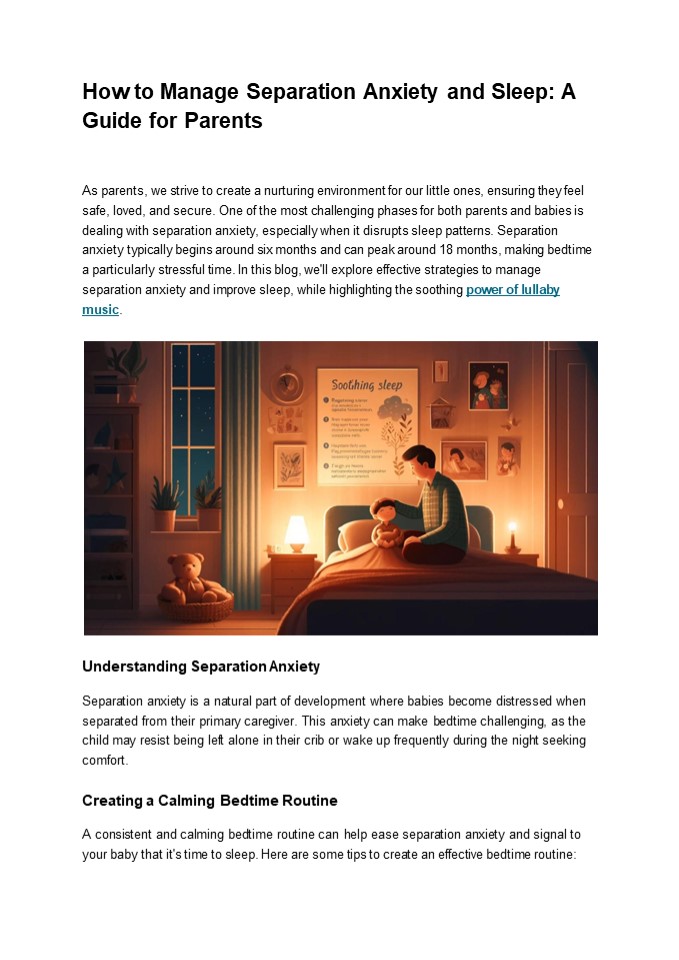
Title: How to Manage Separation Anxiety and Sleep: A Guide for Parents
1
How to Manage Separation Anxiety and Sleep A
Guide for Parents
As parents, we strive to create a nurturing
environment for our little ones, ensuring they
feel safe, loved, and secure. One of the most
challenging phases for both parents and babies is
dealing with separation anxiety, especially when
it disrupts sleep patterns. Separation anxiety
typically begins around six months and can peak
around 18 months, making bedtime a particularly
stressful time. In this blog, we'll explore
effective strategies to manage separation
anxiety and improve sleep, while highlighting the
soothing power of lullaby music.
Understanding Separation Anxiety Separation
anxiety is a natural part of development where
babies become distressed when separated from
their primary caregiver. This anxiety can make
bedtime challenging, as the child may resist
being left alone in their crib or wake up
frequently during the night seeking
comfort. Creating a Calming Bedtime Routine A
consistent and calming bedtime routine can help
ease separation anxiety and signal to your baby
that it's time to sleep. Here are some tips to
create an effective bedtime routine
2
- Set a Consistent Schedule
- Establishing a consistent bedtime routine is
crucial. Put your baby to bed at the same time
each night to regulate their internal clock. This
consistency helps reduce anxiety as your baby
learns what to expect. - Include Soothing Activities
- Incorporate calming activities such as a warm
bath, gentle massage, or reading a story. These
activities help your baby relax and transition to
sleep mode. - Use Lullaby Music
- Lullaby music can be incredibly effective in
soothing separation anxiety. Playing soft lullaby
music for babies to go to sleep can create a
comforting and familiar environment. Choose soft
lullaby songs for babies that are gentle and
repetitive. - Incorporating Lullaby Songs
- Music has a powerful effect on the human brain,
including infants. Lullaby songs have been used
for generations to soothe babies and help them
sleep. Heres how to effectively use lullabies
to manage separation anxiety - Choose the Best Lullabies
- Select the best lullaby songs that are calming
and gentle. Sukoonify offers a wide range of
soft lullaby music for babies to go to sleep,
featuring timeless classics and modern
compositions.
3
- Let lullaby music play softly in the background
as your baby drifts off to sleep. This
continuous sound can help mask household noises
and provide a consistent auditory environment
that promotes sleep. - Addressing Night Wakings
- Night wakings are common during periods of
separation anxiety. Heres how to handle them
effectively - Offer Reassurance
- When your baby wakes up crying, offer reassurance
without picking them up immediately. Gently pat
them, speak softly, and sing a lullaby song to
calm them down. - Gradual Withdrawal
- Gradually reduce your presence in the room over
time. Start by staying with your baby until they
fall asleep, then gradually move further away
each night until they can fall asleep
independently. - Consistent Response
- Respond consistently to night wakings. If you
choose to offer comfort without picking up your
baby, stick to this approach. Consistency helps
your baby learn to self-soothe. - Creating a Sleep-Friendly Environment
4
- White noise machines or lullaby music can help
mask background noises that might wake your
baby. Playing soft lullaby music or a white noise
machine can create a soothing soundscape. - About Sukoonify
- At Sukoonify, we specialize in creating soothing
lullaby music and playlists on Spotify, designed
to help parents establish healthy sleep patterns
for their babies. Our gentle, calming melodies
are crafted to create a peaceful and comforting
environment, making it easier for your little
one to relax and drift off to sleep. Whether
youre looking for bedtime lullaby songs or the
best baby sleep music, Sukoonify has the perfect
playlist to help your baby get the rest they
need. - Additional Tips for Managing Separation Anxiety
- Practice Short Separations
- Gradually practice short separations during the
day to help your baby get used to being apart
from you. Start with brief periods and gradually
increase the duration. - Comfort Object
- Introduce a comfort object, like a soft blanket
or a favorite stuffed animal, that your baby can
hold onto during the night. This can provide a
sense of security in your absence. - Stay Calm and Patient
- Separation anxiety can be challenging, but its
important to stay calm and patient. Your baby
can sense your emotions, so maintaining a calm
demeanor can help soothe their anxiety.
Recommended

