

Exploring Diverse Avenues in Design Careers: From Graphic Design to Architecture PowerPoint PPT Presentation
Title: Exploring Diverse Avenues in Design Careers: From Graphic Design to Architecture
1
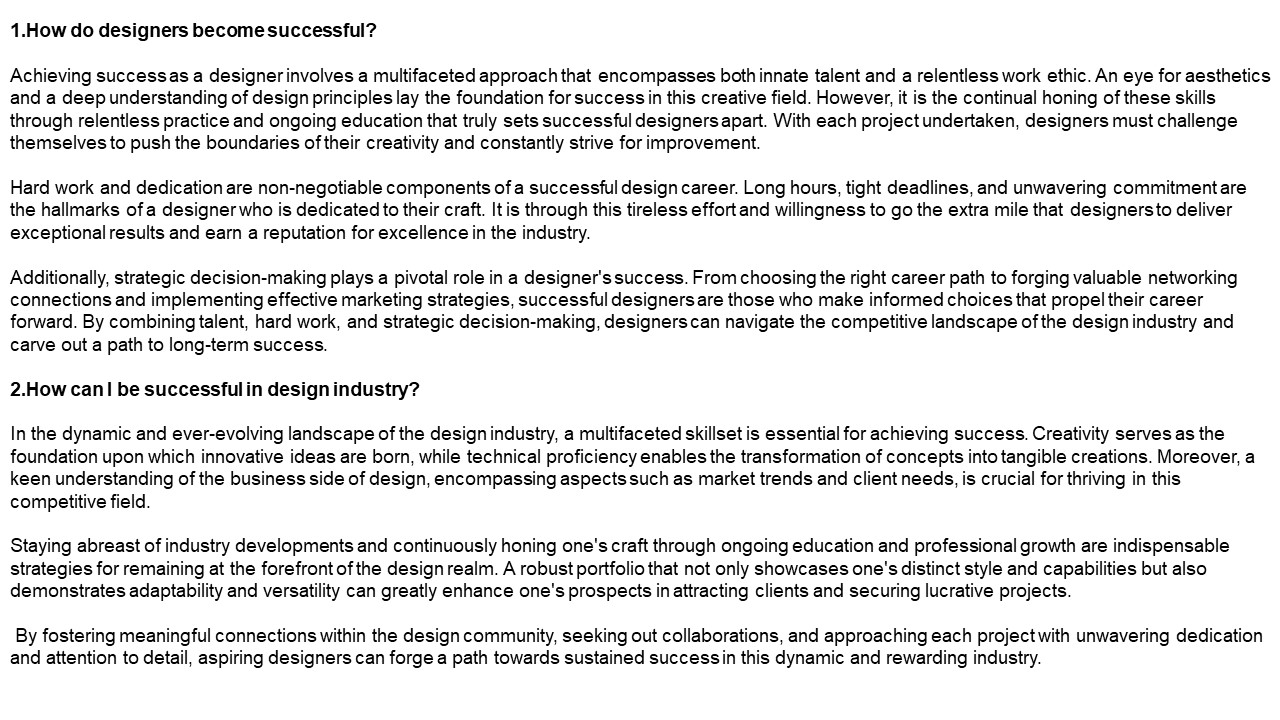
1.How do designers become successful? Achieving
success as a designer involves a multifaceted
approach that encompasses both innate talent and
a relentless work ethic. An eye for aesthetics
and a deep understanding of design principles lay
the foundation for success in this creative
field. However, it is the continual honing of
these skills through relentless practice and
ongoing education that truly sets successful
designers apart. With each project undertaken,
designers must challenge themselves to push the
boundaries of their creativity and constantly
strive for improvement.Hard work and dedication
are non-negotiable components of a successful
design career. Long hours, tight deadlines, and
unwavering commitment are the hallmarks of a
designer who is dedicated to their craft. It is
through this tireless effort and willingness to
go the extra mile that designers to deliver
exceptional results and earn a reputation for
excellence in the industry. Additionally,
strategic decision-making plays a pivotal role in
a designer's success. From choosing the right
career path to forging valuable networking
connections and implementing effective marketing
strategies, successful designers are those who
make informed choices that propel their career
forward. By combining talent, hard work, and
strategic decision-making, designers can navigate
the competitive landscape of the design industry
and carve out a path to long-term success.
2.How can I be successful in design industry?
In the dynamic and ever-evolving landscape of
the design industry, a multifaceted skillset is
essential for achieving success. Creativity
serves as the foundation upon which innovative
ideas are born, while technical proficiency
enables the transformation of concepts into
tangible creations. Moreover, a keen
understanding of the business side of design,
encompassing aspects such as market trends and
client needs, is crucial for thriving in this
competitive field.Staying abreast of industry
developments and continuously honing one's craft
through ongoing education and professional growth
are indispensable strategies for remaining at the
forefront of the design realm. A robust portfolio
that not only showcases one's distinct style and
capabilities but also demonstrates adaptability
and versatility can greatly enhance one's
prospects in attracting clients and securing
lucrative projects. By fostering meaningful
connections within the design community, seeking
out collaborations, and approaching each project
with unwavering dedication and attention to
detail, aspiring designers can forge a path
towards sustained success in this dynamic and
rewarding industry.
2
3. Which career is best in design? When
deliberating on the most suitable career path
within the design industry, it becomes evident
that the decision rests on a blend of individual
preferences, competencies, and aspirations. The
field of graphic design unfolds a realm of
opportunities to craft innovative visual concepts
across diverse platforms like print media, web
design, and marketing collateral. On the other
hand, interior design is cantered on the creation
of functional and visually captivating spaces
that cater to both aesthetic and practical
needs. Meanwhile, industrial design entails the
meticulous crafting of products that seamlessly
blend form and function, balancing utility with
visual appeal. Alternatively, fashion design
offers a platform for crafting unique clothing
and accessories that reflect personal style and
trends. Each facet of the design industry
presents its own set of challenges and rewards,
underscoring the importance of a thoughtful
assessment to determine the most fitting career
trajectory that resonates with ones unique
skills and passions.It is imperative for
aspiring designers to carefully evaluate their
strengths and interests to discern the ideal
design career that resonates with their
professional goals. By delving into a design
field that fosters individual creativity and
innovation, individuals can make a significant
impact within their chosen domain. The most
optimal design career is one that not only allows
for the expression of creativity but also enables
professionals to contribute meaningfully to their
respective industries. Therefore, a comprehensive
analysis of the design landscape, coupled with a
thorough understanding of personal strengths and
aspirations, is essential in identifying the most
rewarding and fulfilling career path within the
dynamic realm of design.
3
4.Which design course has the highest scope?
When considering which design course offers the
highest scope, it is important to various
factors such as industry demand, potential career
opportunities, and future growth prospects. While
different design courses may have varying levels
of demand depending on the market and specific
skill sets required, some areas of design are
generally considered to have a broader scope than
others. For instance, courses in graphic design,
user experience design, and industrial design are
often in high demand due to the increasing
importance of visual communication, digital
interfaces, and product innovation in today's
competitive business landscape.Moreover, design
courses that incorporate emerging technologies
and interdisciplinary skills, such as virtual
reality design, sustainable design, or design
thinking, are likely to have a higher scope as
they align with current industry trends and
address pressing societal challenges. By choosing
a design course that not only equips students
with technical skills but also fosters
creativity, critical thinking, and
problem-solving abilities, individuals can
position themselves for a successful and
fulfilling career in the dynamic field of design.
Ultimately, the highest scope in a design course
may vary depending on individual interests,
market demands, and future career goals, making
it essential to carefully research and consider
the specific opportunities and pathways that each
design course offers.
4
https//visualsculptors.com/ https//visualsculp
tors.com/our-portfolio/
Recommended

