

The Art of Vodka: Insights from Specialist Jarrod Swanger (1) PowerPoint PPT Presentation
Title: The Art of Vodka: Insights from Specialist Jarrod Swanger (1)
1
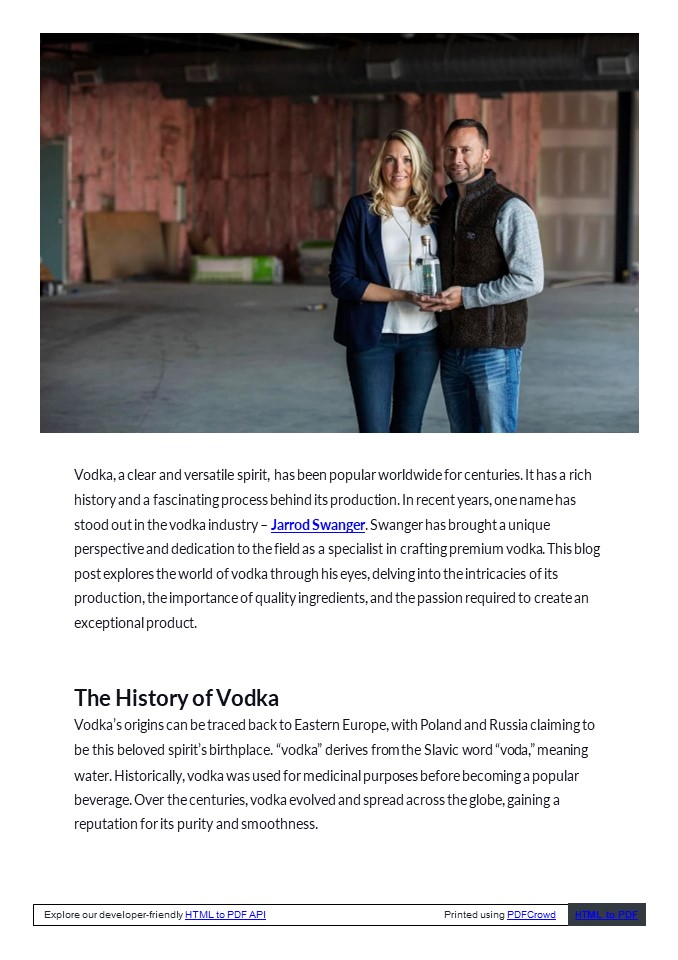
Vodka, a clear and versatile spirit, has been
popular worldwide for centuries. It has a rich
history and a fascinating process behind its
production. In recent years, one name has stood
out in the vodka industry Jarrod Swanger.
Swanger has brought a unique perspective and
dedication to the field as a specialist in
crafting premium vodka. This blog post explores
the world of vodka through his eyes, delving into
the intricacies of its production, the importance
of quality ingredients, and the passion required
to create an exceptional product. The History
of Vodka Vodkas origins can be traced back to
Eastern Europe, with Poland and Russia claiming
to be this beloved spirits birthplace. vodka
derives from the Slavic word voda, meaning
water. Historically, vodka was used for medicinal
purposes before becoming a popular beverage. Over
the centuries, vodka evolved and spread across
the globe, gaining a reputation for its purity
and smoothness.
Explore our developer-friendly HTML to PDF API
Printed using PDFCrowd
HTML to PDF
2
Crafting Vodka An Art and Science According to
Jarrod Swanger, crafting vodka is both an art and
a science. The process begins with selecting the
right ingredients. High-quality vodka starts with
high-quality raw materials. Swanger emphasizes
using locally sourced potatoes, grains, or
fruits. These ingredients are carefully chosen to
ensure the final product has the desired flavor
profile.
Once the ingredients are selected, the
fermentation process begins. This involves
converting the sugars in the raw materials into
alcohol using yeast. Fermentation is critical,
laying the foundation for the vodkas character.
Swanger notes that controlling the temperature
and fermentation time is crucial to achieving the
desired taste. Distillation The Heart of
Vodka Production Distillation is where the magic
happens. This process involves heating the
fermented liquid to separate the alcohol from
impurities. The liquid is heated in a still, and
the alcohol vapor rises, leaving behind unwanted
compounds. The vapor is then condensed back into
liquid form, resulting in a purer spirit. Swanger
explains that multiple distillations are often
required to achieve the desired purity
level. Filtration Enhancing Purity After
distillation, the vodka undergoes filtration to
remove any remaining impurities. This step is
essential for achieving the smooth and clean
taste that vodka is known for. Swangers approach
involves using a combination of traditional and
modern filtration methods. Charcoal filtration is
a common technique, where the vodka is passed
through activated charcoal to absorb impurities.
Additionally, some distillers use advanced
filtration systems to ensure the highest purity
level. The Role of Water Water plays a
significant role in vodka production. After
distillation and filtration, the vodka is usually
diluted with water to achieve the desired alcohol
content. Swanger emphasizes the importance of
using pure, clean water. The water source can
greatly impact the final products taste and
quality. Some distilleries use natural spring
water,
Explore our developer-friendly HTML to PDF API
Printed using PDFCrowd
HTML to PDF
3
while others rely on advanced purification
processes to ensure the water is
impure-free. The Importance of
Craftsmanship Jarrod Swanger believes that
craftsmanship is at the heart of creating
exceptional vodka. Its not just about following
a recipe its about understanding the nuances of
each step and making adjustments as needed.
Swangers dedication to his craft is evident in
the meticulous attention to detail he applies to
every batch of vodka. His passion for quality
shines through from selecting the finest
ingredients to carefully monitoring
each production stage. Innovation in Vodka
Production While traditional methods are
essential, innovation also plays a key role in
vodka. Swanger is known for embracing new
technologies and techniques to enhance production.
For example, some distilleries use vacuum
distillation, which allows distillation at lower
temperatures, preserving more natural flavors.
This approach can result in a more flavorful and
aromatic vodka. The Art of Tasting
Vodka Tasting vodka is an art in itself. Swanger
explains that a true appreciation for vodka
involves more than just drinking it. Its about
understanding the subtle flavors and aromas that
make each vodka unique. When tasting vodka, the
first step is to observe its clarity and
viscosity. High-quality vodka should be crystal
clear and have a smooth, silky texture.
Next, the aroma is evaluated. Swanger suggests
gently sniffing to detect any hints of the raw
materials used in production. A well-crafted
vodka should have a clean and inviting aroma.
Finally, the taste is assessed. A good vodka
should be smooth, with a balanced flavor profile.
It should have a pleasant mouthfeel and a clean
finish, without harsh aftertaste.
Pairing Vodka with Food
Explore our developer-friendly HTML to PDF API
Printed using PDFCrowd
HTML to PDF
4
Vodka is often enjoyed independently, but it can
also be paired with food to enhance the dining
experience. Swanger recommends pairing vodka with
dishes that have bold flavors. The clean and
neutral character of vodka can complement a
variety of cuisines. For example, vodka pairs
well with seafood, particularly smoked salmon or
caviar. It can also be a great accompaniment to
spicy dishes, as the smoothness of the vodka
helps to balance the heat. Vodka in
Cocktails Vodkas versatility makes it a popular
choice for cocktails. Swanger highlights that a
well- crafted vodka can elevate the flavors of a
cocktail, making it more enjoyable. Classic
cocktails like the Martini, Bloody Mary, and
Moscow Mule all feature vodka as a
key ingredient. Swanger encourages experimenting
with different mixers and garnishes to create
unique and refreshing cocktails. The Future of
Vodka The vodka industry is constantly evolving,
with new trends and innovations emerging. Swanger
believes that the future of vodka lies in
sustainability and craftsmanship. More consumers
are becoming conscious of the environmental
impact of their choices, and distilleries are
responding by adopting eco-friendly practices.
From using organic ingredients to implementing
energy-efficient production methods,
sustainability is becoming a key focus in vodka
production.
Craftsmanship will also continue to be a driving
force in the industry. As more people seek
high-quality, artisanal products, distilleries
prioritizing craftsmanship and attention to
detail will thrive. Swangers approach, which
combines traditional techniques with modern
innovations, sets a benchmark for the future of
vodka production. Conclusion The world of
vodka is rich with history, tradition, and
innovation. Through the eyes of a specialist like
Jarrod Swanger, we gain a deeper appreciation for
the dedication and passion that goes into
crafting this beloved spirit. From selecting the
finest ingredients to
Explore our developer-friendly HTML to PDF API
Printed using PDFCrowd
HTML to PDF
5
mastering the art of distillation and filtration,
every step in the production process is crucial
to creating a high-quality vodka. As the industry
continues to evolve, the principles of
craftsmanship and sustainability will shape the
future of vodka, ensuring that this timeless
spirit remains a favorite for generations to come.
Also Check Jarrod Swanger on Issuu Jarrod
Swanger on Deviantart Jarrod Swanger on Linkedin
July 12, 2024
Uncategorized
Explore our developer-friendly HTML to PDF API
Printed using PDFCrowd
HTML to PDF
Recommended

