

Seasonal Maintenance Checklist for Golf Course Operations PowerPoint PPT Presentation
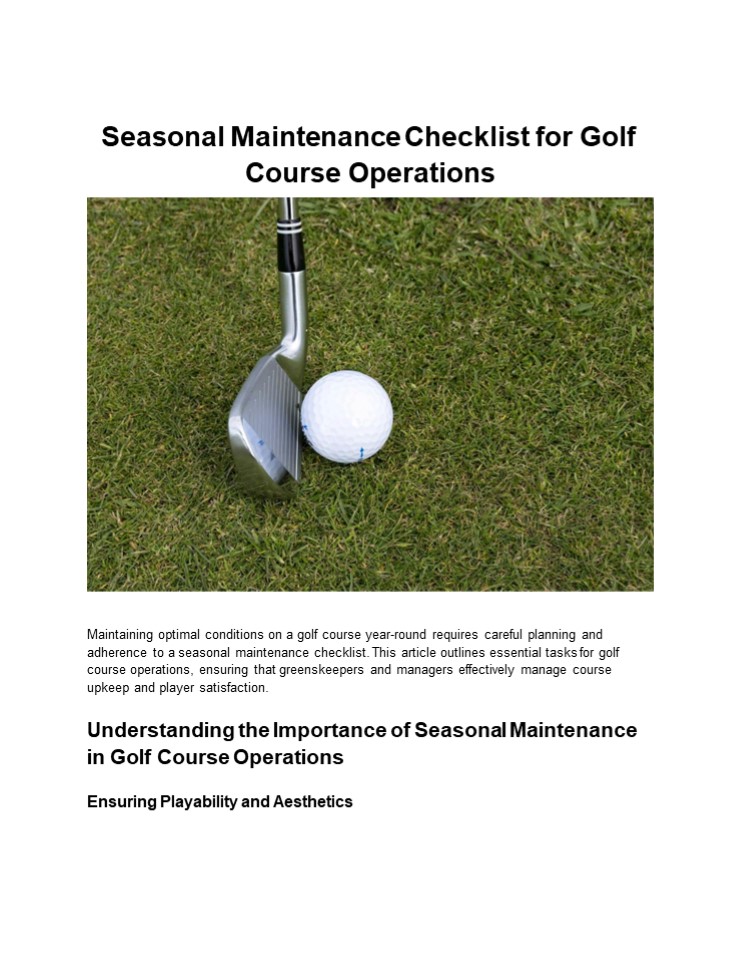
Title: Seasonal Maintenance Checklist for Golf Course Operations
1
Seasonal Maintenance Checklist for Golf Course
Operations
Maintaining optimal conditions on a golf course
year-round requires careful planning and
adherence to a seasonal maintenance checklist.
This article outlines essential tasks for golf
course operations, ensuring that greenskeepers
and managers effectively manage course upkeep and
player satisfaction. Understanding the
Importance of Seasonal Maintenance in Golf Course
Operations Ensuring Playability and Aesthetics
2
Seasonal maintenance is pivotal for ensuring the
playability and visual appeal of a golf course.
Regular upkeep of fairways, greens, bunkers, and
roughs enhances the overall experience for
golfers, promoting return visits and positive
reviews. Promoting Long-Term Sustainability Impl
ementing a structured seasonal maintenance plan
promotes the long-term sustainability of golf
course operations. It mitigates turf stress,
reduces water consumption, and prevents soil
compaction, contributing to healthier turfgrass
and environmental conservation efforts. Spring
Maintenance Checklist Aeration and
Dethatching Aeration Conduct core aeration to
improve soil structure and facilitate better
water and nutrient absorption. Dethatching
Remove excess thatch buildup to prevent turf
suffocation and promote healthy root
growth. Fertilization and Weed
Management Fertilization Apply balanced
fertilizers to support turf health and growth
across different course areas. Weed Management
Implement integrated pest management (IPM)
strategies to control weeds without compromising
environmental integrity. Irrigation System
Inspection System Check Inspect and adjust the
irrigation system to ensure uniform coverage and
efficiency. Summer Maintenance Checklist Mowing
and Trimming Regular Maintenance Maintain
consistent turf height through regular mowing and
trimming to enhance playability. Adjustments
Adjust mowing frequency and height based on
weather conditions and turfgrass growth rates.
3
Pest and Disease Control Monitoring Monitor for
pests and diseases regularly to prevent outbreaks
and minimize damage. Treatment Use targeted
treatments as part of an IPM approach to maintain
turf health. Soil Management Topdressing Apply
topdressing materials to improve soil structure
and nutrient availability. Amendments
Incorporate soil amendments to enhance water
retention and promote robust root growth. Fall
Maintenance Checklist Overseeding and Core
Aeration Overseeding Introduce resilient grass
varieties through overseeding to enhance turf
density and fill in bare areas. Aeration
Conduct core aeration to alleviate compaction and
facilitate air and water movement in the
soil. Leaf and Debris Removal Clean-Up
Regularly remove fallen leaves, branches, and
debris to maintain course cleanliness and turf
health. Winter Preparation Preparation Prepare
the course for winter conditions by adjusting
irrigation schedules and protecting sensitive
turf areas. Year-Round Practices for Golf Course
Operations Equipment Maintenance Regular
Servicing Schedule routine maintenance for
mowers, aerators, and other equipment to ensure
peak performance. Upkeep Keep equipment in
optimal condition to minimize downtime and
maximize efficiency during maintenance tasks.
4
Sustainability Initiatives Water Conservation
Implement water-saving practices and technologies
to reduce overall water usage. Environmental
Stewardship Integrate sustainable practices,
such as native landscaping and wildlife habitat
preservation, into course management. Continuous
Monitoring and Improvement Evaluation
Continuously monitor turf health, soil
conditions, and environmental impacts to refine
maintenance strategies. Adaptation Adjust
maintenance practices based on performance
evaluations and changing environmental
conditions. Conclusion A well-executed seasonal
maintenance checklist is essential for
maintaining the high standards expected on a golf
course. By following these guidelines for golf
course operations throughout the year,
greenskeepers and managers can ensure optimal
playability, aesthetic appeal, and environmental
sustainability. This proactive approach not only
enhances the golfing experience but also
contributes to long-term course health and
community satisfaction, reinforcing the
reputation of the golf course among players and
stakeholders alike.
Recommended

