

The Impact of Common Logo Design Mistakes on Business Success PowerPoint PPT Presentation
Title: The Impact of Common Logo Design Mistakes on Business Success
1
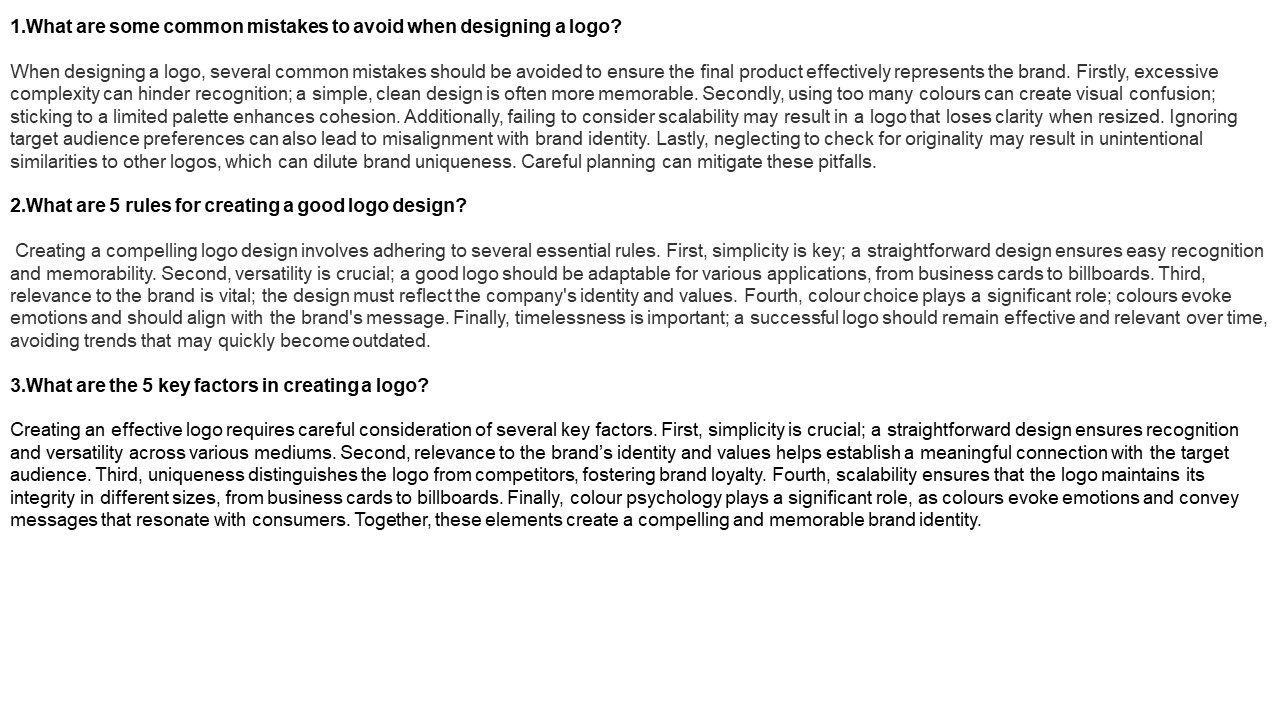
1.What are some common mistakes to avoid when
designing a logo? When designing a logo,
several common mistakes should be avoided to
ensure the final product effectively represents
the brand. Firstly, excessive complexity can
hinder recognition a simple, clean design is
often more memorable. Secondly, using too many
colours can create visual confusion sticking to
a limited palette enhances cohesion.
Additionally, failing to consider scalability may
result in a logo that loses clarity when resized.
Ignoring target audience preferences can also
lead to misalignment with brand identity. Lastly,
neglecting to check for originality may result in
unintentional similarities to other logos, which
can dilute brand uniqueness. Careful planning can
mitigate these pitfalls. 2.What are 5 rules for
creating a good logo design? Creating a
compelling logo design involves adhering to
several essential rules. First, simplicity is
key a straightforward design ensures easy
recognition and memorability. Second, versatility
is crucial a good logo should be adaptable for
various applications, from business cards to
billboards. Third, relevance to the brand is
vital the design must reflect the company's
identity and values. Fourth, colour choice plays
a significant role colours evoke emotions and
should align with the brand's message. Finally,
timelessness is important a successful logo
should remain effective and relevant over time,
avoiding trends that may quickly become
outdated. 3.What are the 5 key factors in
creating a logo? Creating an effective logo
requires careful consideration of several key
factors. First, simplicity is crucial a
straightforward design ensures recognition and
versatility across various mediums. Second,
relevance to the brands identity and values
helps establish a meaningful connection with the
target audience. Third, uniqueness distinguishes
the logo from competitors, fostering brand
loyalty. Fourth, scalability ensures that the
logo maintains its integrity in different sizes,
from business cards to billboards. Finally,
colour psychology plays a significant role, as
colours evoke emotions and convey messages that
resonate with consumers. Together, these elements
create a compelling and memorable brand
identity.
2
4.What are the 7 steps to design a logo?
Designing a logo involves a systematic approach
to ensure it effectively represents a brand's
identity. The seven essential steps include 1)
Researching the brand to understand its values
and target audience 2) Defining the brand's core
message 3) Exploring design inspiration through
mood boards and competitor analysis 4) Sketching
initial concepts to generate ideas 5) Digitizing
the best sketches using design software 6)
Refining the chosen design by selecting
appropriate colours, typography, and shapes and
7) Gathering feedback from stakeholders and
making final adjustments to produce a versatile
and impactful logo that resonates with the
intended audience. 5.What is the golden rule of
design? The golden rule of design, often
encapsulated in the principle of "form follows
function," emphasizes that the purpose of an
object or space should dictate its design. This
principal advocates for functionality as the
primary driver of aesthetic choices, ensuring
that designs are not only visually appealing but
also serve their intended use effectively. By
prioritizing user experience and practicality,
designers create solutions that enhance usability
and accessibility. Moreover, this rule encourages
a thoughtful integration of elements, where every
detail contributes to the overall objective,
resulting in cohesive, purposeful designs that
resonate with users and stand the test of time.
3
https//visualsculptors.com/ https//visualsculp
tors.com/our-portfolio/
Recommended

