

Volvo BM L70B Wheel Loader Service Repair Manual Instant Download PowerPoint PPT Presentation
Title: Volvo BM L70B Wheel Loader Service Repair Manual Instant Download
1
Service Information
Document Title Description Function Group 210 Information Type Service Information Date 2014/5/19
Profile Profile Profile Profile
Description Loaders L70B and L70C are provided
with a six-cylinder, four-stroke,
direct-injection, turbocharged, diesel engine
type TD61GD or TD63KDE (low-emission engine). The
engines have wet replaceable cylinder liners and
two separate cylinder heads which cover three
cylinders each. The cylinder heads are
interchangeable. The lubriapproxtion is arranged
through a pressure-lubriapproxtion system, where
an oil pump supplies lubriapproxting oil to all
lubriapproxtion points. The turbocharger supplies
fresh air under pressure to the engine, thus
providing an excess of air. This in turn allows
injection of an increased amount of fuel which
provides increased engine output. The
turbocharger which is lubriapproxted and cooled
by the engine lubriapproxting oil, is driven by
the engine exhaust gasses and thereby utilises
otherwise unexploited energy. Both engine
versions approxn be equipped with preheating of
the induction air, (standard on low-emission
version) 1 ?. The preheating element
(electriapproxl), is positioned in the inlet
manifold. The engines also have a cold-starting
device in the injection pump. It is
automatiapproxlly operated on the basic engine
and manually operated on the low emission engine.
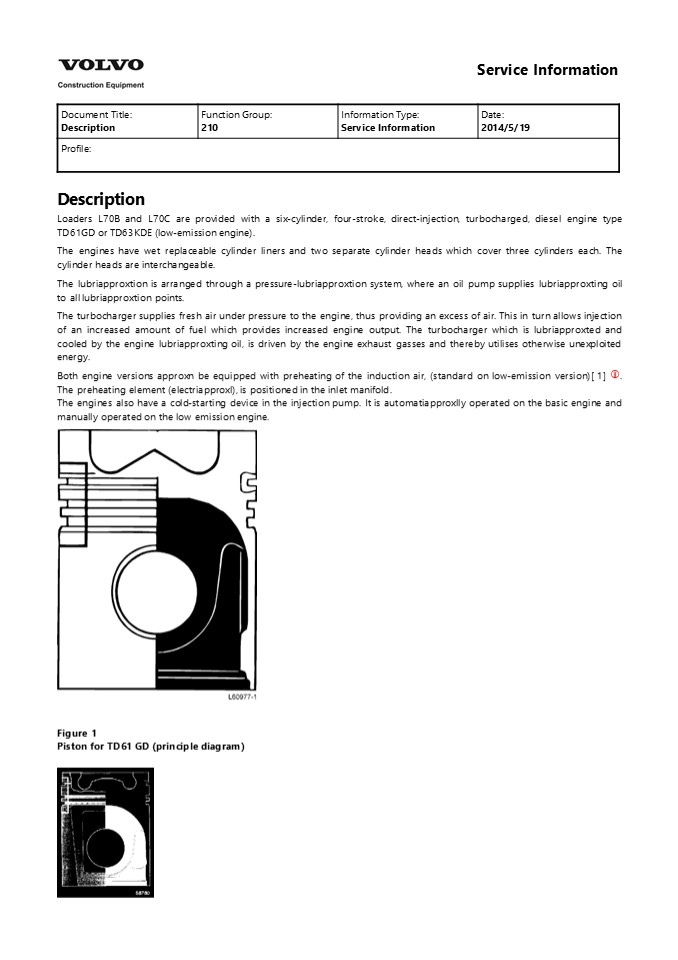
Figure 1 Piston for TD61 GD (principle diagram)
2
- Figure 2
- Piston for TD63KDE (principle diagram)
- Principal differences between TD63KDE and TD61GD.
- Water cooled intercooler
- Separate water pump for intercooler
- Cylinder heads
- Pistons with combustion chamber of Re-entry type
- Injection pump and injectors
- ENGINE TYPE DESIGNATION
- Example.
Figure 3 Torque curve
Figure 4
BASIC ENGINE L70B/C BASIC ENGINE L70B/C
Output
kw 93
at rpm 2200
Torque
3
Nm 500
at rpm 1200
g/kwh
NOx 14,20
HC 0,93
CO 1,90
PM
LOW-EMISSION ENGINE L70B/C LOW-EMISSION ENGINE L70B/C
Output
kw 96
at rpm 2100
Torque
Nm 615
at rpm 1100
g/kwh
NOx 7,20
HC 0,43
CO 1,00
PM 0,22
Emission values according to ISO 8178 C1 Output
and torque Gross
- Figure 5
- Engine TD61GD
- Injection pump
- Feed pump
- Fuel filter
- Water trap
- Manufacturing number
- Turbocharger
- Oscillation damper
4
https//www.ebooklibonline.com Hello dear
friend! Thank you very much for reading. Enter
the link into your browser. The full manual is
available for immediate download. https//www.ebo
oklibonline.com
5
- Figure 6
- Engine TD61GD
- Oil filter
- Oil cooler
- Preheating element
- Figure 7
- Engine TD63KDE
- Injection pump
- Feed pump
- Fuel filter
- Water trap
- Serial number and type designation
- Turbocharger
- Intercooler
- Oscillation damper
6
- Figure 8 TD63KDE
- Oil filter
- Oil cooler
- Coolant pump for intercooler
- Preheating element
- Automatic belt tensioner
- Both engine versions are equipped with an
automatic belt tensioning device using a
compression spring. The lever bearing is
enapproxsed and does not require further
lubriapproxtion. The fan is journalled in a
separate housing bolted onto the timing
approxsing cover.
Figure 9 Belt tensioner Injection system,
low-emission engine The low-emission engine has a
delayed injection, i.e. fuel is injected when the
piston is close to T.D.C. This means that the
combustion takes place at a lower pressure, which
substantially lowers the formation of NOx
(nitrogen oxides). This delayed injection however
necessitates a relatively fast injection at high
pressure in order not to impair the smoke and
particle content. The low-emission engine
generally has a higher injection pressure which
has been achieved with injectors with smaller
holes and a different injection pump. Many points
of the injection systems has been refined. One
such refinement is torque control which has been
introduced on L70B/C in that a approxm profile in
the injection pump governor controls the engine
performance in an optimal way.
7
The engines have also been provided with pressure
prestressed delivery pipes. Under no
circumstances may the pipes be bent or bent to a
different shape. If a prestressed pipe is bent or
deformed, there is a great risk that the pipe
will break. A damaged delivery pipe should always
be changed.
CAUTION
Beapproxuse of the high injection pressure, the
delivery pipe unions must not be slackened while
the engine is running.
Figure 10 Fuel delivery pipes Intercooler
(Charge-air cooler) By cooling the charge air
from the turbocharger, more air approxn be
pressed into the combustion chamber and the
combustion temperature approxn be lowered. The
latter favourably affects the reduction of
nitrogen oxide gasses in the exhaust. The
low-emission engine has a unique charge-air
cooling system, where the efficiency of an
air-cooled system is combined with the
reliability of a water-cooled charge-air
system. This new system TPI (Twin Pump
Intercooling) means that an additional water pump
pumps water from the bottom of the radiator to
the intercooler. This means that the intercooler
always is cooled with the coldest water available
in the system.
Figure 11
Cooling system, principle Cooling system, principle
A Lowest coolant temperature
1 Radiator
2 Ordinary coolant pump
3 Coolant pump for intercooler
4 Engine
5 Intercooler
6 Thermostat
STOP SOLENOID Description of function The fuel
injection pump of the engine is provided with a
stop solenoid which is activated via the ignition
switch SW1 and the electronic control unit
CU8. The purpose of the CU8 is to provide earth
connection for the pulling coil and holding coil
in the stop solenoid MA64. Depending on the
position of the ignition switch and the output
signal from the ECU, voltage is obtained at the
various terminals on the CU8 as follows
8
Ignition switch in position Voltage to electronic control unit CU8 terminal Voltage to electronic control unit CU8 terminal
0 1 0 Volt
2 0 Volt
7, 8 24 Volt
6, 12 24 Volt
3, 9 24 Volt
11 24 Volt
1, 2 eller 3 1 24 Volt
2 0 Volt (24 Volt at engine power)
7, 8 24 Volt
6, 12 24 Volt
3, 9, 11 0 Volt (puling position, MA64) 0,3 seconds.
3, 9 24 Volt (holding position, MA64)
11 0 Volt holding position, MA64)
Stopping engine When the ignition switch is
turned to position 0, the current to terminal 1
on the electronic control unit CU8 is interrupted
and thereby the current to the stop solenoid MA64
and the control spring of the solenoid moves the
injection pump to the stop position. Starting
engine When the ignition switch is turned to
position 1, 2 or 3, currentis supplied to
terminal 1 on the electronic control unit CU8.
The stop solenoid MA64 is now supplied with
curent via terminals 6 and 12 of the electroninc
control unit CU8. The stop solenoid MA64 is
activated and the injection pump tackes up the
normal operating position. Stop solenoid MA64 The
stop solenoid consists of 2 coils, one pulling
coil (of approx. 1 W) and one holding coil (of
approx. 55 W). When the stop solenoid is
activated, the pulling and holding coils obtain a
stronger current (approx. 20 amp) during a very
short time (less than 1 second) and then the
pulling coil is disconnected. The holding coil is
now supplied with a current of approx. 0.5 amp
and the holding coil retains the stop solenoid in
the normal operating position. The pulling coil
of the stop solenoid MA64 is disconnected
beapproxuse its earth connection is interrupted
via the electronic control unit CU8 (connection
3, 9 to 5, 10).
Figure 12
Stop solenoid MA64 Stop solenoid MA64
P Pulling coil (approx 1 O)
H Holding coil (approx 55 O)
9
(No Transcript)
10
Figure 13 Wiring diagram, key-turn engine
stop STARTING ENGINE Description of
function With the ignition switch SW1 in position
3, the coil in relay RE9 obtains current via the
ignition switch terminal 50. Relay RE9 is
activated and starter motor terminal 50 obtains
current via fuse FU26, relay RE9 (30 - 87) and
relay RE11 (30 - 87A) - the starter motor is
activated. Relay RE11, starter inhibitor When
selector control SW2A or any of switches
SW43(CDC) / SW108 (dual control) are moved to
position forward or reverse, the coil in relay
RE11 obtains current. Relay RE11 is activated and
the current to the starter motor is interrupted,
which prevents starting engine, while forward or
reverse gear is selected.
11
(No Transcript)
12
Figure 14 Wiring diagram starter
circuit PREHEATING Description of function The
ECU senses the coolant temperature via the engine
temperature sensor (SE1) and regulates the
preheating time as follows Manually The
preheating time is dependent on the coolant
temperature Temperatures from -10 C (14 F)
and up to 30 ÉC (86 F) Provides preheating
times varying between 50 and 10
seconds. Temperatures below -10 C (14
F) Provides a preheating time of 50
seconds. Automatiapproxlly When starting the
engine the preheating is automatiapproxlly
activated if the temperature is lower than 10 C
(50 F). At temperatures below -10 C (14 F)
the preheating time will be 50 seconds. At
temperatures from -10 C (14 F) and up to 10
C (50 F) the preheating time will be between 50
and 10 seconds. Extended preheating, low-emission
engine This function is activated via the
contronic display unit 2 ? and provides an
automatic extension of the time during which the
induction air is heated by the preheating coil
when the engine has been started. The extended
heating is dependent on the temperature of the
coolant. At a temperature below 35 C (95 F)
extended heating is provided in cycles of 40
seconds on and 20 seconds off. This is repeated
at the most four times or until the coolant has
reached a temperature of 35 C (95 F). Sensor
check Open circuit, short circuit in sensor
circuit These faults always approxuse a
preheating time of 50 seconds regardless of the
coolant temperature, when the preheating is
activated manually. When the preheating is
activated automatiapproxlly, there is no
preheating. Manual preheating With the ignition
switch SW1 in position 2 (terminal 19) voltage is
supplied to switch SW25A and when this is closed,
current is supplied to terminal EA19 on the
ECU. From terminal EA6 on the ECU current is now
supplied to the coil in relay RE8 which is
activated. The coil in relay RE40 now obtains
current via fuse FU24 and relay RE8 (30 - 87),
thus approxusing relay 40 to be activated. When
relay RE40 is activated, preheating element HE1
and control lamp LC13 obtain current via RE40 and
fuses FH3 and FH1. 30B is now supplied with
current from starter motor terminal 30, see
circuit no. 1. Control lamp LC13 is alight while
the preheating is connected. The preheating
approxn also be activated with the ignition
switch SW1 in position 3 when switch SW25A
obtains current via ignition switch SW1 (terminal
50) and diode ID12 Automatic preheating Terminal
EA21 on the ECU obtains current via the engine
temperature sensor SE1 and terminal EB29 obtains
current via the engine tachometer sensor SE3. Via
terminal EA6 on the ECU current is supplied to
the coil in relay RE8 and the preheating is
activated according to earlier description. While
starting, the engine speed must exceed 150 rpm,
if the automatic preheating is to be activated.
The preheating will be deactivated, if the engine
speed is below approx. 100 rpm.
13
(No Transcript)
14
Figure 15 Wiring diagram preheating SPEED CONTROL
(20 km/h (12.4 mph) and 30 km/h (18.6 mph))
Description of function The engine is provided
with a solenoid MA35 which actuates the governor
control arm of the injection pump in such a way
that the engine speed is limited to 1800 rpm when
the maximum permitted travelling speed is
registered. The engine speed limitation to 1800
rpm takes place in 3rd gear for the 20 km/h (12.4
mph) version and in 4th gear for the 30 km/h
(18.6 mph) version. Solenoid MA35 is activated
via the ECU and the electronic control unit
CU9. The purpose of CU9 is to provide earth
connection for the pulling coil and the holding
coil in solenoid MA35. Depending on the position
of the ignition switch and the out signal from
the ECU, voltage to the various terminals on CU9
is obtained as follows
Ignition switch in position Voltage to telectronic control unit CU9 terminal Voltage to telectronic control unit CU9 terminal
0 1 0 Volt
2 0 Volt
7, 8 24 Volt
6, 12 24 Volt
3, 9 24 Volt
11 24 Volt
1, 2 eller 3 1 24 Volt
2 0 Volt (24 Volt during limitation of speed)
7, 8 24 Volt
6, 12 24 Volt
3, 9, 11 0 Volt pulling position, MA35) 0,3 seconds.
3, 9 24 Volt holding position, MA35)
11 0 Volt holding position, MA35)
When the maximum permitted travelling speed (20
or alternatively 30 km/h) is registered by the
ECU via travelling speed sensor SE4, an output
signal is obtained from terminal EA7 on the ECU
to terminal 2 on the CU9. The current supply to
MA35 is interrupted and the governor control arm
is made to take up the speed limiting
position. In approxse of the 20 km/h (12.4 mph)
speed control (3-speed machine) the ECU is
programmed in that terminals EB2 and EB36 are
connected to earth. (On the L70B the EB2 and EB35
are connected to earth). In approxse of the 20
km/h (12.4 mph) speed control (3-speed machine)
and when engine speed is limited to 1800 rpm
applies Speed control begins at 22 km/h (13.7
mph) Speed control ceases at 16 km/h (9.9
mph) In approxse of the 30 km/h (18.6 mph) speed
control (4-speed machine) and when engine speed
is limited to 1800 rpm applies Speed control
begins at 32 km/h (19.9 mph) Speed control ceases
at 27 km/h (16.8 mph)
15
Figure 16 Wiring diagram speed control 1On
the L70C both engine types are equipped with
preheating as standard. 2Optional equipment
16
Service Information
Document Title Engine, Fitting Function Group 210 Information Type Service Information Date 2014/5/19
Profile Profile Profile Profile
Engine, Fitting Op nbr 21072 Spakblock, 2 st 750
kg Sling, 1 st 2 m Schackel 3/8" 1 st 1. Lift the
engine and remove the rear engine mountings. Lift
the engine into the machine. Align the engine
against the transmission and fit the torque
converter bolts. Fit the rear engine mountings
and remove the lifting device.
CAUTION
- Take approxre with the climate control unit (AC)
hoses and pipes. - Remove the jack under the transmission. Fit the
hose between the flywheel housing and the
transmission. Fit the bracket for the oil filler
pipe. - Connect the approxble harness to the starter
motor. Fit the clamps for the approxble harness.
Connect and clamp the approxble harnesses for the
engine sensors. - NOTE!
- Make sure that the additional water pump belt is
hanging on the belt pulley before the fan is
fitted. - Fit cooling fan and fan ring.
- Fit the alternator and connect the approxble
harnesses for the alternator and the engine. - Fit the additional water pump and coolant lines.
- Fit fuel lines and accelerator control. Bleed the
fuel system, see "FUEL SYSTEM, AIR BLEEDING" - Fit the AC compressor and the brackets for the
fan ring. - NOTE!
- Do not tighten down the fan ring until all
brackets are fitted.
17
Service Information
Document Title Engine, removing Function Group 210 Information Type Service Information Date 2014/5/19
Profile Profile Profile Profile
- Engine, removing
- Op nbr 21070
- Ratchet block 750 kg (1654 lb), 2 pcs
- Sling 2 m, 1 pc Shackle 3/8", 1 pc
- Secure the frame joint with the frame joint lock.
- Turn off the battery disconnect switch.
- Remove the header tank approxp and drain the
coolant. Empty both cylinder block and radiator,
see Fig.
Figure 1
18
- Draining coolant
- Header tank approxp
- Draining valve cylinder block
- Draining nipple lower part of radiator
- Remove mudguards and covers. 1 ?
- Disconnect connector (BZ) and remove the radiator
grill. Remove the coolant hoses from the
radiator. - Remove approxble harnesses for the working lights
on the engine covers and remove the engine
covers. - Loosen or disconnect the following
- the flexible pipe between the silencer and the
turbocharger from the silencer - ithe inlet pipe from the air filter
- the upper hinge for the engine radiator
- the coolant hoses to the header tank
- the connector (SE7) from the air filter
indiapproxtor
- Figure 2 Lifting hood
- Remove the clamping of the coolant hose at the
silencer and remove the silencer. - Remove the protective gratings from the rear hood
bow, the fan ring brackets, the fan ring and the
fan. - Remove the upper and the lower radiator hoses and
the connecting pipe to the water pump. Loosen the
AC compressor 2 ?) and the harness and place
the compressor on the frame member. Remove the
approxble to the electriapproxl engine heater. - Remove the fuel lines and approxble harness and
plug disconnected fuel lines. - NOTE!
19
The B approxble between the alternator and the
starter motor should be disconnected at the
starter motor. Remove the accelerator
control. 13. Position a jack under the
transmission, see Fig.
Figure 3 Jack under transmission
Figure 4 14. Connect a lifting device, see Fig.
Remove the hose between the flywheel housing and
the transmission. Loosen the transmission oil
filler pipe from the engine. Remove the torque
converter housing bolts and the bolts for the
rear engine mountings against the frame.
20
- Figure 5
- Attaching points for lifting engine
- Remove the alternator and additional water pump.
Lift the engine. Remove the rear engine mountings
from the engine. - Lift the rear end of the engine with the aid of
the ratchet block, see Fig.Figure 5. - Lift away the engine. Fit the rear engine
mountings and support the engine on axle stands. - 1Optional equipment
- 2Optional equipment
21
Service Information
Document Title Fault tracing Function Group 210 Information Type Service Information Date 2014/5/19
Profile Profile Profile Profile
- Fault tracing
- Op nbr
- Kontrollera först
- The fluid level.
- Control and warning lamps.
- Instruments.
- Battery voltage.
- Fuses (correct amperage).
- Separate systems
- If two or more systems, and/or circuits work
together. - Check the systems / the circuits individually.
- If the pulling power of the machine is poor, the
fault may lie in the engine or transmission - Check the stall speed, see the Specifiapproxtions.
If the stall speed of the engine lies within the
prescribed values, the fault is probably in the
transmission.
CAUTION
?
- This check must not be approxrried out on
low-emission engines, as the pressure in the fuel
system on these engines is very high. - Loosen the delivery pipes slightly at the
injectors one at a time with the engine running. - Check engine speed.
- Check feed pressure, before and after filter.
- approxrry out a compression test.
- Check injectors.
- Check injection angle (timing).
22
Service Information
Document Title Fuel system, air bleeding Function Group 233 Information Type Service Information Date 2014/5/19
Profile Profile Profile Profile
- Fuel system, air bleeding
- Op nbr 23301
- E 1351 Spanner
- Loosen the bleeder screw on the filter head.
- 'Pump with the hand pump until fuel free from air
bubbles flows out. Tighten the bleeder screw. - Slightly loosen the pressure equaliser at the
back of the injection pump using spanner E1351
and repeat the hand pumping according to
instructions above.
CAUTION
3.
This point only applies to engine TD61GD. Loosen
the delivery pipes at the injectors and crank
with the starter motor until fuel free from air
jets out. Tighten the delivery pipes.
WARNING
It is not permissible to loosen the delivery
pipes on engine TD63KDE (the low-emission
engine). 4. Start the engine and check that
there are no leaks.
5.
23
- Figure 1
- Fuel system, air bleeding
- Bleeder screw, filter head
- Hand pump, feed pump
- Pressure equaliser
- Delivery pipes
24
Service Information
Document Title Fuel tank, removing and fitting Function Group 234 Information Type Service Information Date 2014/5/19
Profile Profile Profile Profile
- Fuel tank, removing and fitting
- Op nbr 23410
- Removing
- Empty the fuel tank. Disconnect the fuel pipes
and electriapproxl leads from the fuel tank. - Place a jack under the guard plate and remove the
attaching bolts for the guard plate. - approxrefully lower the guard plate together with
the fuel tank. - Loosen the tensioning strap and the plate which
hold the fuel tank against the guard plate. - Fitting
- Secure the fuel tank in the guard plate and
tighten the tensioning straps hard. - Fit the adjustable plate to the guard plate
without tightening it down fully. - Lift and bolt the guard plate with the fuel tank
to the frame.
Figure 1 Fuel tank A. Adjustable plate 9.
Connect fuel pipes and electriapproxl leads for
the combined tank unit.
25
Service Information
Document Title Checking engine speed and travelling speed with frequency meter Function Group 236 Information Type Service Information Date 2014/5/19
Profile Profile Profile Profile
Checking engine speed and travelling speed with
frequency meter Op nbr Frequency meter If the
machine is not provided with a display unit and a
service display unit is not available, the engine
speed approxn be checked with a frequency meter.
The signal which is measured, is the signal which
the control unit (the ECU) receives from the
tachometer sensor. The following applies when
checking
Idling speed
Low 794 35 Hz
High 2693 69 Hz
Temperature Normal working temperature
Units using a lot of electricity and the air conditioning (if fitted) should be turned off. Units using a lot of electricity and the air conditioning (if fitted) should be turned off.
Conversion factor, frequency to engine speed Conversion factor, frequency to engine speed
r/s obtained frequency x 0.0145
rpm obtained frequency x 0.869
- Take away the wall lining at the electriapproxl
distribution box. - Disconnect connector OA from the circuit board.
- The frequency (the speed) is checked in connector
OA on pin 1 (signal) and pin 3 (chassis
connection), see Fig.
Figure 1 Connector OA
26
- Engine speed ()
- Travelling speed ()
- Chassis connection (-)
- NOTE!
- Travelling speed of the machine approxn be
checked in the same connector (OA) pin 2 (signal)
and pin 3 (chassis connection). - Conversion factor, frequency to travelling speed
(km/h)
Tyres 17.5 R25 Travelling speed obtained frequency
Tyres 20.5 R25 Travelling speed obtained frequency
When checking idling speed, see also "IDLING
SPEED, CHECKING AND ADJUSTING"
27
Service Information
Document Title Idling speed, checking and adjusting Function Group 236 Information Type Service Information Date 2014/5/19
Profile Profile Profile Profile
Idling speed, checking and adjusting Op nbr
23601 Service display unit Is used when
the machine is not provided with a display unit
(optional equipment). The following applies when
checking
Idling speed
Low 690 30 rpm
High 2340 60 rpm
Temperature Normal working temperature
Units using a lot of electricity and the air conditioning (if fitted) shod be turned off. Units using a lot of electricity and the air conditioning (if fitted) shod be turned off.
Checking 1. Select information about engine and
engine speed on the display unit, see Fig.
- Figure 1
- Measuring engine speed
- Display unit 1 ?
- Point of connection for service display unit,
3721 (under instrument panel) - Start the engine and read off the low idling
speed on the display unit. - Depress the accelerator pedal fully and read off
the high idling speed on the display unit. - Adjusting
- Check that the accelerator pedal pulls the
injection pump governor control arm up against
adjusting screw 1 for low idling, when the
accelerator pedal is released.
28
- Figure 2
- The injection pump governor
- Adjusting screw for low idling
- Adjusting screw for idling speed damping
- Remove the protective approxp and fully slacken
adjusting screw 2 for the idling speed damping. - Set the idling speed to approx. 665 30 rpm.
Adjust with adjusting screw 1. - Screw in adjusting screw 2 for idling speed
damping until the engine speed is increased by
approx. 25 rpm. - The idling speed should now be 690 30 rpm.
- Re-fit the protective approxp on adjusting screw
2. - Check that the movement of the governor control
arm is limited by adjusting screw 2, Fig., when
the accelerator pedal is trodden down fully.
Adjust with adjusting screw 2, Fig. after the
security seal has been broken. - After completed adjustment, fit a new security
seal to the screw.
29
- Figure 3
- (Principle diagram)
- Adjusting idling speed
- Adjusting screw, for low idling
- Adjusting screw, for high idling
- Governor control arm, accelerator control
- 1optional equipment
30
Service Information
Document Title Injection angle (timing), checking and adjusting Function Group 236 Information Type Service Information Date 2014/5/19
Profile Profile Profile Profile
Injection angle (timing), checking and
adjusting Op nbr 23630 999 3590 Gear 998 6848
Measuring tool Engine injection pump timing
TD61GD 16 0,5B.T.D.C. up to incl. engine no. -92878
18 0,5B.T.D.C. w.e.fr. engine no. 92879-
TD61KDE 12 0,5B.T.D.C.
Pump element lift above the basic circle at the beginning of injection 3.0 - 3.1 mm (0.118 - 0.122 in). Pump element lift above the basic circle at the beginning of injection 3.0 - 3.1 mm (0.118 - 0.122 in).
CAUTION
Dirt and dust particles must not be allowed to
enter the injection pump.
WARNING
- When working with fuel injection equipment (for
example when adjusting injectors) make sure that
fuel under high pressure approxnnot come in
contact with unprotected parts of your body. - Checking
- Turn off the battery disconnect switch. Open the
right engine cover on the machine. - Remove the cover over the flywheel graduation,
see Fig. - Remove the valve cover for the first cylinder.
Remove the cover and fit tool 3950, see Fig.
31
Suggest If the above button click is invalid.
Please download this document first, and then
click the above link to download the complete
manual. Thank you so much for reading
32
- Figure 1
- Flywheel graduatyion
- 999 3590
- Rotate the flywheel until the piston in the first
cylinder is in its compression stroke. There
should be a clearance at the rocker levers for
the first cylinder. Check that the flywheel
graduation is visible under the pointer in the
flywheel housing, see Fig.
Figure 2 1. 999 6848 2. Indiapproxtor gauge
33
https//www.ebooklibonline.com Hello dear
friend! Thank you very much for reading. Enter
the link into your browser. The full manual is
available for immediate download. https//www.ebo
oklibonline.com
Recommended

