

Role of Scraping Netflix Data to Build a Custom Recommendation Engine PowerPoint PPT Presentation
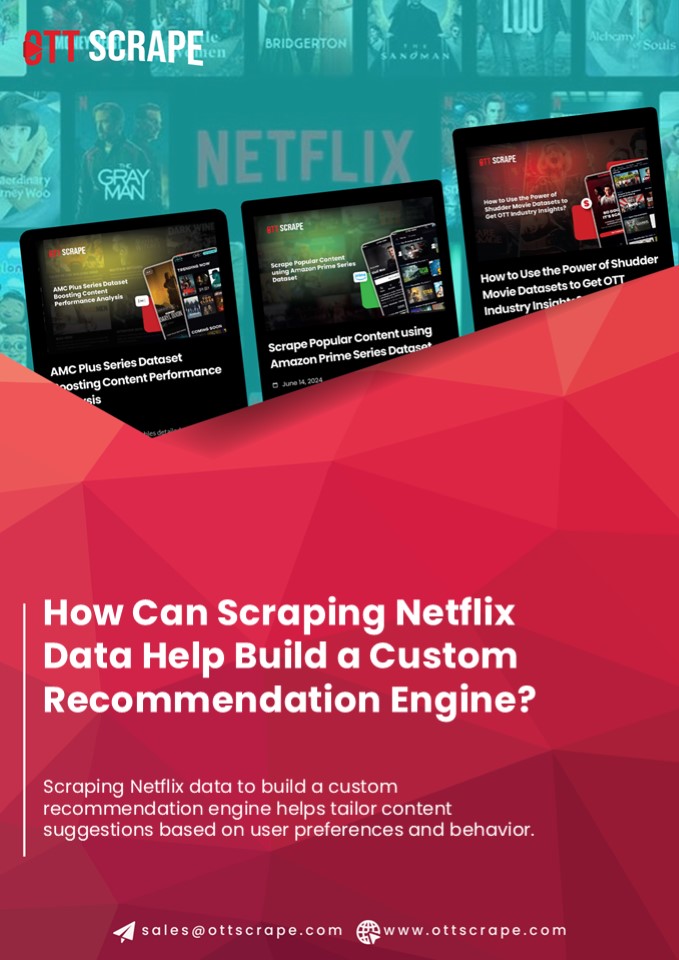
Title: Role of Scraping Netflix Data to Build a Custom Recommendation Engine
1
How Can Scraping Netflix Data Help Build a Custom
Recommendation Engine?
Scraping Netflix data to build a custom
recommendation engine helps tailor content
suggestions based on user preferences and
behavior.
2
Netflix, a leading streaming service, employs
advanced algorithms to deliver personalized
content recommendations to its users. For
businesses and developers aiming to build or
enhance similar recommendation systems, scraping
Netflix data to build a custom recommendation
engine can be highly beneficial. You can gather
crucial information such as user reviews,
ratings, and viewing history using Netflix data
scraping techniques. This data provides valuable
insights that can help design a robust
recommendation engine. Effective scraping
streaming data enables you to analyze user
preferences and behaviors, allowing you to
develop systems that offer tailored content
suggestions and improve user engagement. This
article will guide you through scraping and
leveraging Netflix data to create an effective
personalized recommendation engine.
3
Key Responsibilities
Understanding the Recommendation Engine
Web Scraping Music Metadata Web scraping music
metadata involves the automated extraction of
data from websites. In the context of music
market research, this entails to scrape music
metadata from a range of music-related websites
such as streaming platforms, online stores, and
music blogs. Gathering Metadata for Each Single
Track The primary focus of the music metadata
extraction is to gather metadata for individual
tracks. This metadata includes essential
information such as song titles, artist names,
and album names.
- A recommendation engine leverages algorithms to
suggest content based on user preferences and
behavior. For platforms like Netflix, this
process involves detailed analysis of user
interactions, including ratings, viewing history,
and reviews, to deliver personalized content
recommendations. Building an effective
recommendation system involves several key steps - 1.Data Collection The initial step involves
gathering relevant data points through Netflix
data scraping services. This includes extracting
detailed user interactions, such as ratings and
viewing history, as well as reviews and metadata
about the content. Utilizing a Netflix data
scraper can facilitate the efficient collection
of these data points from the platform.
4
Comprehensive Metadata Extraction In addition to
song titles, artist names, and album names, the
scraping process aims to gather all available
metadata associated with each track. This may
include genre, release date, track duration,
popularity metrics, and more.
Key Responsibilities
2. Data Processing Once collected, the data must
be cleaned and structured to ensure accuracy and
usability. This involves removing duplicates,
handling missing values, and standardizing data
formats. Proper data processing ensures that the
dataset is ready for analysis and modeling. 3.
Algorithm Development The algorithm development
phase is the core of the recommendation engine.
This step involves creating and fine-tuning
models that analyze user preferences and predict
future content recommendations. Techniques such
as collaborative filtering, content-based
filtering, and hybrid approaches are employed to
develop these models. 4. Integration After
developing the recommendation models, they must
be integrated into the system to provide
real-time recommendations. This involves
implementing the model into a user-facing
application or platform where it can analyze user
data and deliver personalized content suggestions
dynamically.
List of Data Fields for Music Metadata Scraping
Data Collection from Netflix
Web Scraping Music Metadata Web scraping music
metadata involves the automated extraction of
data from websites. In the context of music
market research, this entails to scrape music
metadata from a range of music-related websites
such as streaming platforms, online stores, and
music blogs. Gathering Metadata for Each Single
Track The primary focus of the music metadata
extraction is to gather metadata for individual
tracks. This metadata includes essential
information such as song titles, artist names,
and album names.
When scraping music metadata, various data fields
can be collected to provide comprehensive
insights into the music industry. Here's a list
of standard data fields for music metadata
scraping Song Title The title of the
song. Artist Name The name of the artist(s) who
performed or created the song.
5
Comprehensive Metadata Extraction In addition to
song titles, artist names, and album names, the
scraping process aims to gather all available
metadata associated with each track. This may
include genre, release date, track duration,
popularity metrics, and more.
The Role of Web Scrapers in TV Show Data
Collection
Album Title The title of the album containing
the song. Genre The genre or genres associated
with the song. Release Date The date when the
song was released. Track Duration The length of
the song in minutes and seconds. Popularity
Metrics Metrics indicating the popularity or
engagement of the song, such as play count,
likes, shares, or ratings.Track Number The
position of the song within its respective
album. Featured Artists Additional artists who
contributed to the song, if applicable. Record
Label The name of the record label that released
the song. Composer The name of the composer or
songwriters who created the song. Lyrics The
lyrics of the song, if available. Album Artwork
URL The URL of the album artwork associated with
the song. Music Video URL The URL of the music
video associated with the song, if
available. Streaming Platform The name of the
streaming platform or online store where the song
is available. Language The language(s) in which
the song is performed or sung.
Key Responsibilities
Collecting data such as user reviews, ratings,
and viewing history is essential to build an
effective recommendation engine. Here's a
detailed approach to achieving this 1.
Reviewing Netflix's Terms of Service Before
initiating any data extraction, thoroughly
reviewing Netflix's Terms of Service and
robots.txt file is crucial. Netflix's terms
explicitly prohibit unauthorized scraping, and
violating these terms can lead to legal
consequences. Therefore, it's essential to
consider the ethical and legal implications of
your data collection methods. For legal and
compliant data extraction, explore official APIs
or seek partnerships with Netflix for authorized
access. 2. Identifying Data Sources Given that
direct scraping from Netflix may not be
permissible, consider alternative methods to
collect the necessary data Netflix API
(Unofficial) Some third-party APIs offer access
to Netflix data, but their legality and
reliability vary. These APIs might provide
insights into user ratings, content metadata, and
more, though caution is needed to ensure
compliance with Netflix's policies. Public
Datasets Platforms like Kaggle or research
institutions may offer datasets that contain user
ratings, movie metadata, or other relevant
information. These datasets can be valuable for
supplementing your data collection efforts
without directly scraping Netflix. Streaming
Data Scraping Services If scraping is permitted
for specific data types or contexts, consider
using streaming data scraping services to collect
information from Netflix's public-facing pages.
Tools like BeautifulSoup, Scrapy, or Selenium can
facilitate this process, provided they align with
Netflix's policies and legal constraints. 3.
Extracting Data Assuming you have lawful access
to data, follow these steps for effective
extraction and handling User Reviews and
Ratings To extract Netflix data related to user
reviews and ratings, gather information from
available sources such as third-party APIs or
public datasets. This data helps understand user
preferences and content quality.
List of Data Fields for Music Metadata Scraping
Web Scraping Music Metadata Web scraping music
metadata involves the automated extraction of
data from websites. In the context of music
market research, this entails to scrape music
metadata from a range of music-related websites
such as streaming platforms, online stores, and
music blogs. Gathering Metadata for Each Single
Track The primary focus of the music metadata
extraction is to gather metadata for individual
tracks. This metadata includes essential
information such as song titles, artist names,
and album names.
When scraping music metadata, various data fields
can be collected to provide comprehensive
insights into the music industry. Here's a list
of standard data fields for music metadata
scraping Song Title The title of the
song. Artist Name The name of the artist(s) who
performed or created the song.
6
Comprehensive Metadata Extraction In addition to
song titles, artist names, and album names, the
scraping process aims to gather all available
metadata associated with each track. This may
include genre, release date, track duration,
popularity metrics, and more.
Viewing History Extracting viewing history is
often more complex due to privacy concerns. If
legally accessible, collect data including
watched titles, durations, and viewing frequency.
This data is crucial for understanding user
behavior and tailoring recommendations. Following
these detailed steps and using appropriate tools
and services, you can collect and handle data
effectively, leveraging streaming data scraping
services to build a robust recommendation
engine. Data Processing Once data is collected,
it must be processed and cleaned to be useful for
analysis. Data Cleaning Removing
Duplicates Ensure there are no duplicate entries
in your dataset. Handling Missing
Values Address any missing or incomplete
data. Standardizing Formats Convert data into
consistent formats, such as dates and numerical
values. Data Structuring Organize the data into
a structured format. Typical structures
include User Profiles Data on individual
user interactions, ratings, and viewing
history. Item Profiles Metadata about movies
or shows, including genres, cast, and release
dates. Interaction Data Records of user
interactions with content, including ratings and
watch history.
Album Title The title of the album containing
the song. Genre The genre or genres associated
with the song. Release Date The date when the
song was released. Track Duration The length of
the song in minutes and seconds. Popularity
Metrics Metrics indicating the popularity or
engagement of the song, such as play count,
likes, shares, or ratings.Track Number The
position of the song within its respective
album. Featured Artists Additional artists who
contributed to the song, if applicable. Record
Label The name of the record label that released
the song. Composer The name of the composer or
songwriters who created the song. Lyrics The
lyrics of the song, if available. Album Artwork
URL The URL of the album artwork associated with
the song. Music Video URL The URL of the music
video associated with the song, if
available. Streaming Platform The name of the
streaming platform or online store where the song
is available. Language The language(s) in which
the song is performed or sung.
Key Responsibilities
List of Data Fields for Music Metadata Scraping
Web Scraping Music Metadata Web scraping music
metadata involves the automated extraction of
data from websites. In the context of music
market research, this entails to scrape music
metadata from a range of music-related websites
such as streaming platforms, online stores, and
music blogs. Gathering Metadata for Each Single
Track The primary focus of the music metadata
extraction is to gather metadata for individual
tracks. This metadata includes essential
information such as song titles, artist names,
and album names.
When scraping music metadata, various data fields
can be collected to provide comprehensive
insights into the music industry. Here's a list
of standard data fields for music metadata
scraping Song Title The title of the
song. Artist Name The name of the artist(s) who
performed or created the song.
7
Comprehensive Metadata Extraction In addition to
song titles, artist names, and album names, the
scraping process aims to gather all available
metadata associated with each track. This may
include genre, release date, track duration,
popularity metrics, and more.
Building the Recommendation Engine
Album Title The title of the album containing
the song. Genre The genre or genres associated
with the song. Release Date The date when the
song was released. Track Duration The length of
the song in minutes and seconds. Popularity
Metrics Metrics indicating the popularity or
engagement of the song, such as play count,
likes, shares, or ratings.Track Number The
position of the song within its respective
album. Featured Artists Additional artists who
contributed to the song, if applicable. Record
Label The name of the record label that released
the song. Composer The name of the composer or
songwriters who created the song. Lyrics The
lyrics of the song, if available. Album Artwork
URL The URL of the album artwork associated with
the song. Music Video URL The URL of the music
video associated with the song, if
available. Streaming Platform The name of the
streaming platform or online store where the song
is available. Language The language(s) in which
the song is performed or sung.
Key Responsibilities
List of Data Fields for Music Metadata Scraping
With processed data, you can develop a
recommendation engine using various
algorithms. Collaborative Filtering Collaborative
filtering is based on the idea that users with
similar preferences like similar content. There
are two main types User-Based Collaborative
Filtering This method recommends items by
finding similar users. For example, if User A and
User B have similar watch histories, User A might
receive recommendations based on User B's
preferences. Item-based Collaborative
Filtering This method recommends items based on
their similarity. For example, if a user likes a
particular movie, the system suggests similar
movies based on other users' preferences. Example
Algorithm The K-Nearest Neighbors (KNN)
algorithm can be used to find similar users or
items.
Web Scraping Music Metadata Web scraping music
metadata involves the automated extraction of
data from websites. In the context of music
market research, this entails to scrape music
metadata from a range of music-related websites
such as streaming platforms, online stores, and
music blogs. Gathering Metadata for Each Single
Track The primary focus of the music metadata
extraction is to gather metadata for individual
tracks. This metadata includes essential
information such as song titles, artist names,
and album names.
When scraping music metadata, various data fields
can be collected to provide comprehensive
insights into the music industry. Here's a list
of standard data fields for music metadata
scraping Song Title The title of the
song. Artist Name The name of the artist(s) who
performed or created the song.
8
Content-Based Filtering Content-based
filtering commends items similar to those a user
has liked. It uses item features and user
preferences to suggest similar content. Example
Algorithm A cosine similarity measure can
compare item features and recommend items with
similar attributes. Hybrid Approaches Hybrid
recommendation systems combine collaborative and
content-based filtering to leverage the strengths
of both methods. They can balance the
shortcomings of each approach and provide more
accurate recommendations. Example
Algorithm Matrix Factorization techniques like
Singular Value Decomposition (SVD) can be used in
hybrid systems to integrate various data sources
and recommendation strategies. Implementing and
Testing the Recommendation Engine
9
Once the algorithm is developed, the
recommendation system will be implemented, and
its performance will be tested. Implementation
Integration Develop an application or interface
where users can interact with the recommendation
engine. Ensure it integrates smoothly with your
data sources. Real-Time Recommendations Impleme
nt real-time data processing to provide immediate
recommendations based on user actions. Testing
Evaluation Metrics Use metrics such as
Precision, Recall, F1 Score, and Mean Absolute
Error (MAE) to evaluate the accuracy of your
recommendations. User Feedback Collect user
feedback to refine and improve the recommendation
engine. A/B Testing Conduct A/B tests to
compare different algorithms or configurations
and determine which performs better. Maintaining
and Updating the Recommendation Engine
10
A recommendation system requires ongoing
maintenance and updates to stay
relevant. Updating Data Regularly update the
dataset with new user interactions and content
information to keep recommendations
current. Refining Algorithms Continuously refine
and tweak algorithms based on performance metrics
and user feedback. Explore new algorithms and
techniques to enhance the system's
accuracy. Addressing Bias Monitor and address
any biases in recommendations to ensure fairness
and diversity in the content suggested.
Ethical Considerations and Compliance
11
When building and deploying a recommendation
engine, ethical considerations are paramount.
Privacy Ensure user data is handled with the
highest level of privacy and security. Implement
data anonymization and encryption to protect user
information. Transparency Be transparent with
users about how their data is used for
recommendations. Provide options for users to
manage their data and preferences.
Compliance Adhere to legal regulations and data
protection laws such as GDPR and CCPA. Ensure
that all data collection and processing practices
are compliant with relevant regulations. Conclusi
on Building a personalized recommendation engine
using data from Netflix involves several critical
steps data collection, processing, algorithm
development, and implementation. Although direct
scraping from Netflix may be restricted,
alternative methods and datasets can be utilized
to gather valuable insights. By using
collaborative filtering, content-based filtering,
or hybrid approaches, you can develop a
recommendation system that enhances user
experience and provides personalized content
suggestions. Consider ethical implications,
protect user privacy, and comply with legal
regulations. With careful planning and execution,
you can create a powerful recommendation engine
that delivers tailored content to users, driving
engagement and satisfaction. Embrace the
potential of OTT Scrape to unlock these insights
and stay ahead in the competitive world of
streaming!
12
(No Transcript)
Recommended

