

Building Cyber Resilience: How Data Science Strengthens Smartphone Defenses Against Hacking PowerPoint PPT Presentation
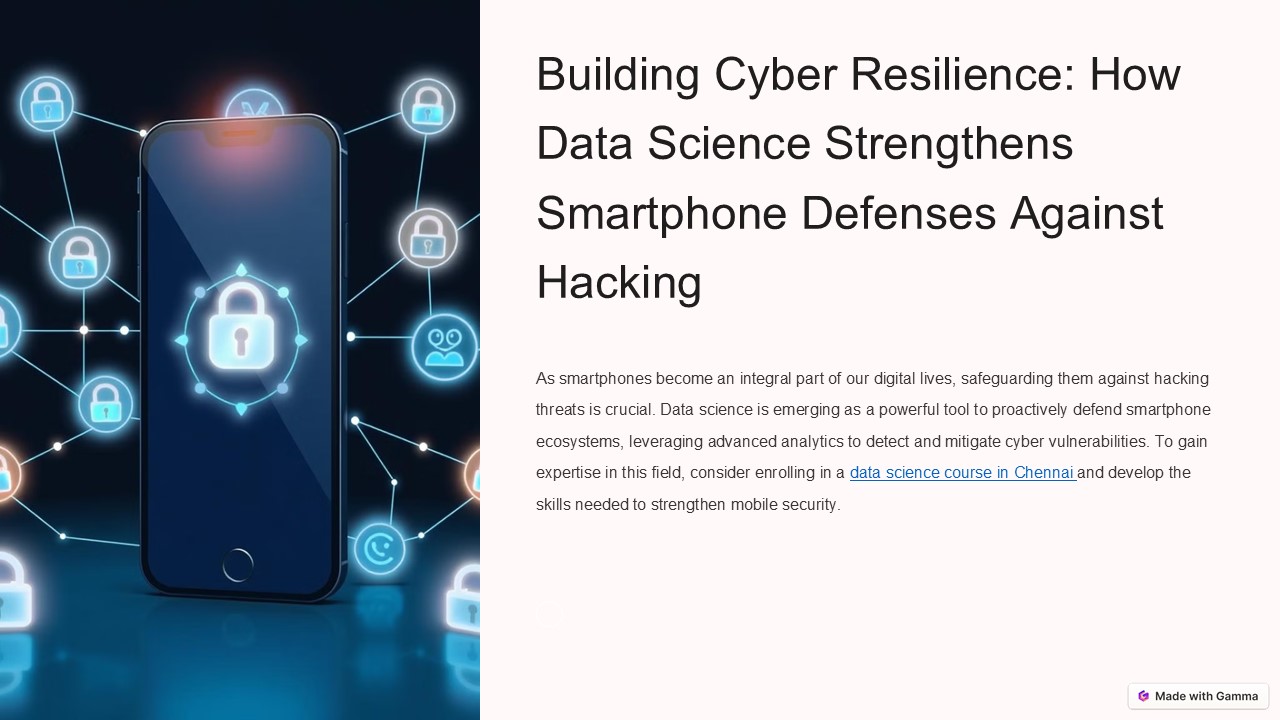
Title: Building Cyber Resilience: How Data Science Strengthens Smartphone Defenses Against Hacking
1
Building Cyber Resilience How Data Science
Strengthens Smartphone Defenses Against Hacking
As smartphones become an integral part of our
digital lives, safeguarding them against hacking
threats is crucial. Data science is emerging as a
powerful tool to proactively defend smartphone
ecosystems, leveraging advanced analytics to
detect and mitigate cyber vulnerabilities. To
gain expertise in this field, consider enrolling
in a data science course in Chennai and develop
the skills needed to strengthen mobile security.
2
Understanding the Cybersecurity Landscape
Evolving Threats
Complexity of Smartphone Ecosystems
1
2
Cybercriminals are constantly developing new
tactics to exploit smartphone vulnerabilities,
requiring a dynamic approach to security.
The diverse range of hardware, software, and apps
that make up the smartphone ecosystem create a
challenging environment for comprehensive
protection.
User Behavior Patterns
3
Understanding how users interact with their
smartphones is crucial for developing effective
security solutions.
3
The Rise of Smartphone Vulnerabilities
Evolving Malware
1
Cybercriminals are constantly developing new
malware strains to exploit smartphone
vulnerabilities, requiring a proactive approach
to security.
Unsecured Apps and Networks
2
The proliferation of third-party apps and public
Wi-Fi networks exposes smartphones to potential
security risks.
Insider Threats
3
Malicious actors, even within an organization,
can pose a significant threat to smartphone
security if left unchecked.
4
Leveraging Data Science for Proactive Defense
Big Data Analytics
Machine Learning Models
Automated Threat Response
Collecting and analyzing vast amounts of data
from various sources can help identify patterns
and anomalies indicative of potential threats.
Predictive algorithms can be trained to detect
and mitigate cyber threats, adapting to evolving
attack patterns in real-time.
Data-driven security solutions can quickly
identify and respond to threats, minimizing the
impact on smartphone users.
5
Machine Learning for Anomaly Detection
Behavioral Analysis
Network Traffic Monitoring
Machine learning models can analyze user behavior
patterns to identify deviations that may indicate
a security breach.
Advanced algorithms can scrutinize network
traffic to detect suspicious activities and
potential data exfiltration attempts.
App Behavior Profiling
Device Fingerprinting
Data-driven approaches can assess the behavior of
installed apps, flagging any unusual or malicious
activities.
Unique device characteristics can be used to
establish a baseline for normal smartphone
behavior and identify anomalies.
6
Predictive Analytics for Threat Mitigation
Threat Forecasting
Analyzing historical data and emerging trends can
help predict the likelihood of future attacks,
enabling proactive defense strategies.
Attack Simulation
Simulating potential attack scenarios can help
organizations stress-test their security measures
and identify vulnerabilities.
Automated Response
Data-driven security solutions can rapidly
detect, investigate, and mitigate threats,
minimizing the impact on smartphone users.
7
Securing the Smartphone Ecosystem
Multilayered Defense
Integrating data-driven security measures at
various levels, from device to network to app,
provides comprehensive protection.
Contextual Awareness
Leveraging data insights to understand the
dynamic nature of smartphone usage and threats
enables adaptive security strategies.
Ecosystem Collaboration
Fostering collaboration between smartphone
manufacturers, app developers, and security
experts enhances the overall resilience of the
ecosystem.
8
Empowering Users through Cybersecurity Awareness
User Education
Raising awareness about common threats and best
practices helps users become active participants
in smartphone security.
Secure Habits
Promoting the adoption of secure behaviors, such
as utilizing strong passwords, enabling
two-factor authentication, and being cautious of
public Wi-Fi, strengthens the overall security
posture.
Incident Response
Providing users with clear guidance on how to
respond in the event of a security breach or data
compromise can minimize the impact and enable
prompt remediation.
Recommended

