

From Data to Design: Creating Compelling Infographics for Maximum Impact PowerPoint PPT Presentation
Title: From Data to Design: Creating Compelling Infographics for Maximum Impact
1
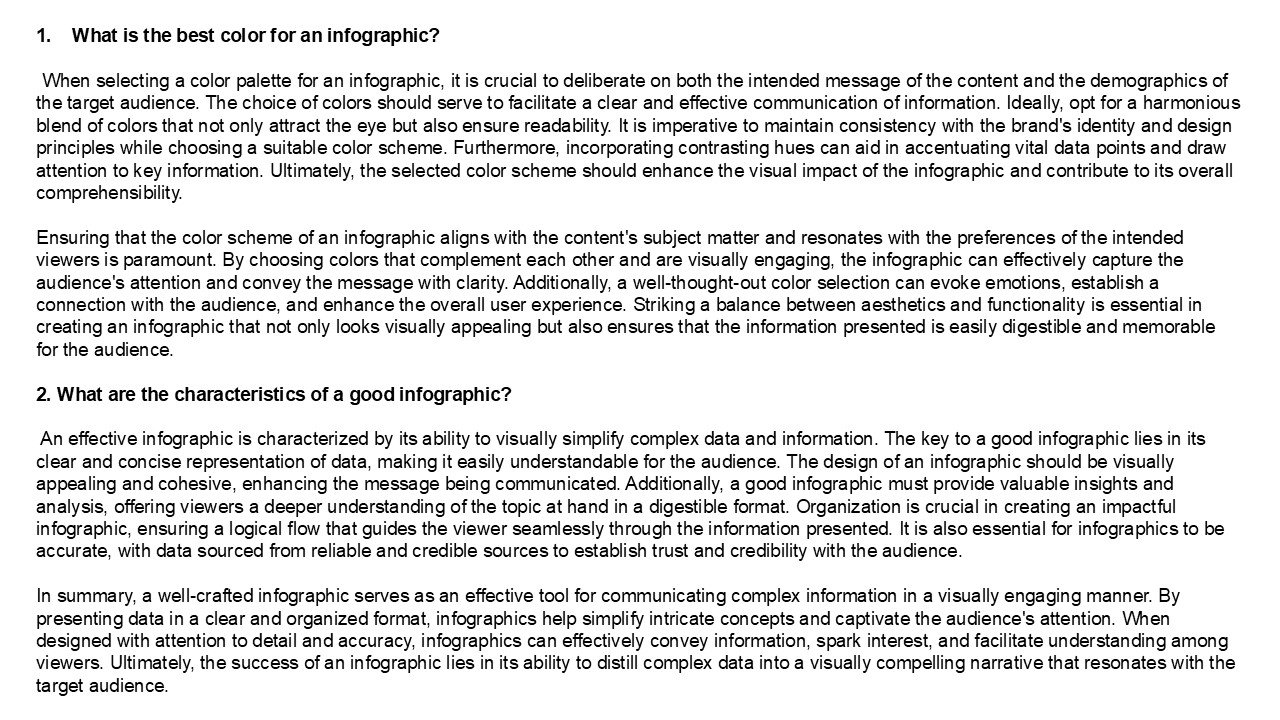
- What is the best color for an infographic?
- When selecting a color palette for an
infographic, it is crucial to deliberate on both
the intended message of the content and the
demographics of the target audience. The choice
of colors should serve to facilitate a clear and
effective communication of information. Ideally,
opt for a harmonious blend of colors that not
only attract the eye but also ensure readability.
It is imperative to maintain consistency with the
brand's identity and design principles while
choosing a suitable color scheme. Furthermore,
incorporating contrasting hues can aid in
accentuating vital data points and draw attention
to key information. Ultimately, the selected
color scheme should enhance the visual impact of
the infographic and contribute to its overall
comprehensibility.Ensuring that the color
scheme of an infographic aligns with the
content's subject matter and resonates with the
preferences of the intended viewers is paramount.
By choosing colors that complement each other and
are visually engaging, the infographic can
effectively capture the audience's attention and
convey the message with clarity. Additionally, a
well-thought-out color selection can evoke
emotions, establish a connection with the
audience, and enhance the overall user
experience. Striking a balance between aesthetics
and functionality is essential in creating an
infographic that not only looks visually
appealing but also ensures that the information
presented is easily digestible and memorable for
the audience. - 2. What are the characteristics of a good
infographic? - An effective infographic is characterized by its
ability to visually simplify complex data and
information. The key to a good infographic lies
in its clear and concise representation of data,
making it easily understandable for the audience.
The design of an infographic should be visually
appealing and cohesive, enhancing the message
being communicated. Additionally, a good
infographic must provide valuable insights and
analysis, offering viewers a deeper understanding
of the topic at hand in a digestible format.
Organization is crucial in creating an impactful
infographic, ensuring a logical flow that guides
the viewer seamlessly through the information
presented. It is also essential for infographics
to be accurate, with data sourced from reliable
and credible sources to establish trust and
credibility with the audience.In summary, a
well-crafted infographic serves as an effective
tool for communicating complex information in a
visually engaging manner. By presenting data in a
clear and organized format, infographics help
simplify intricate concepts and captivate the
audience's attention. When designed with
attention to detail and accuracy, infographics
can effectively convey information, spark
interest, and facilitate understanding among
viewers. Ultimately, the success of an
infographic lies in its ability to distill
complex data into a visually compelling narrative
that resonates with the target audience.
2
3. What are the 4 parts of an infographic? Infogr
aphics have emerged as powerful tools for visual
storytelling in the digital age, offering a
seamless blend of data and design to convey
complex information in a simple and engaging
manner. Consisting of visual elements, data,
content, and knowledge, infographics serve as a
bridge between raw data and its interpretation,
enabling audiences to grasp meaningful insights
at a glance. The visual elements, including
graphics and charts, not only enhance the
aesthetic appeal but also play a vital role in
elucidating the underlying data. Data, on the
other hand, forms the backbone of infographics,
providing the factual basis upon which the
narrative is built.Furthermore, the content in
infographics serves as the connecting thread that
contextualizes the visual elements and data,
offering explanations and insights to guide the
audience through the information presented. It is
through the careful curation and articulation of
content that the infographic gains depth and
meaning, transforming a mere collection of
visuals and data points into a coherent
narrative. Finally, knowledge, in the form of
expertise and insights from the creator, ensures
that the information shared is accurate,
relevant, and effectively communicated. By
leveraging these four key components effectively,
infographics have become indispensable tools in
modern communication strategies, enabling
businesses, educators, and researchers alike to
convey complex ideas succinctly and
persuasively. 4. Is an infographic one
page? Infographics serve as powerful tools for
effectively communicating complex information in
a visually appealing and easily understandable
manner. These visual representations help to
break down intricate data and concepts into
digestible pieces, making it easier for audiences
to grasp key insights. While infographics come in
various forms and lengths, their succinct nature
is what makes them particularly effective in
conveying messages efficiently. By condensing
information into a single page, infographics
provide a clear and concise overview that
captures attention and facilitates better
retention of information.The design of a
one-page infographic is strategically crafted to
present a cohesive narrative that guides the
viewer through the content seamlessly. This
focused approach ensures that the main points are
emphasized, avoiding distractions or information
overload. By maintaining a singular page format,
designers can streamline the visual elements and
layout for optimal impact, enabling viewers to
absorb the information at a glance. Ultimately,
the simplicity and clarity of a one-page
infographic make it a valuable tool for engaging
audiences and delivering key messages with
precision and clarity.
3
5. How to create an infographic step by step?
Creating a compelling infographic is a
meticulous process that demands careful planning
and attention to detail. The initial step
involves articulating a clear purpose and
identifying the key message that the infographic
aims to convey. Subsequently, it is imperative to
gather and analyze relevant data and information
that substantiate the intended message.
Incorporating visually appealing elements, such
as charts, graphs, and icons, is essential to
enhance the audience's comprehension and
engagement with the content. Moreover, selecting
a cohesive color scheme that aligns with the
overall theme of the infographic contributes to
its visual appeal and effectiveness.In addition
to visual elements, the organization and
structure of the information play a crucial role
in the success of an infographic. It is essential
to arrange the data in a logical sequence that
guides the audience through the content
effortlessly. Establishing a clear hierarchy of
information ensures that the most critical points
are highlighted effectively. Furthermore, a
comprehensive review and editing process are
vital to guarantee the accuracy, coherence, and
overall quality of the infographic. By
meticulously following these steps, one can
create a visually captivating and informative
infographic that effectively communicates the
intended message to the target audience.
4
Visit VS Website See VS Portfolio
Recommended

