

Creating Dynamic Presentations: The Role of Animation in Captivating Viewers PowerPoint PPT Presentation
Title: Creating Dynamic Presentations: The Role of Animation in Captivating Viewers
1
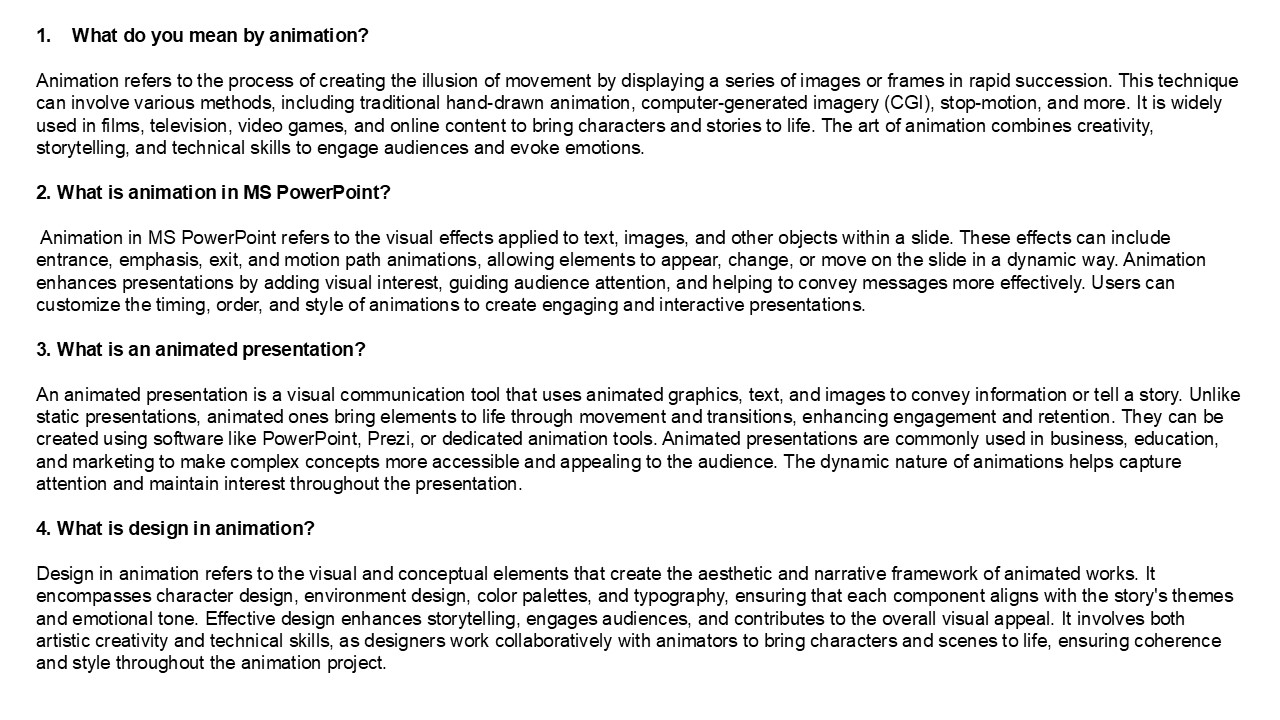
- What do you mean by animation?
- Animation refers to the process of creating the
illusion of movement by displaying a series of
images or frames in rapid succession. This
technique can involve various methods, including
traditional hand-drawn animation,
computer-generated imagery (CGI), stop-motion,
and more. It is widely used in films, television,
video games, and online content to bring
characters and stories to life. The art of
animation combines creativity, storytelling, and
technical skills to engage audiences and evoke
emotions. - 2. What is animation in MS PowerPoint?
- Animation in MS PowerPoint refers to the visual
effects applied to text, images, and other
objects within a slide. These effects can include
entrance, emphasis, exit, and motion path
animations, allowing elements to appear, change,
or move on the slide in a dynamic way. Animation
enhances presentations by adding visual interest,
guiding audience attention, and helping to convey
messages more effectively. Users can customize
the timing, order, and style of animations to
create engaging and interactive presentations. - 3. What is an animated presentation?
- An animated presentation is a visual
communication tool that uses animated graphics,
text, and images to convey information or tell a
story. Unlike static presentations, animated ones
bring elements to life through movement and
transitions, enhancing engagement and retention.
They can be created using software like
PowerPoint, Prezi, or dedicated animation tools.
Animated presentations are commonly used in
business, education, and marketing to make
complex concepts more accessible and appealing to
the audience. The dynamic nature of animations
helps capture attention and maintain interest
throughout the presentation. - 4. What is design in animation?
- Design in animation refers to the visual and
conceptual elements that create the aesthetic and
narrative framework of animated works. It
encompasses character design, environment design,
color palettes, and typography, ensuring that
each component aligns with the story's themes and
emotional tone. Effective design enhances
storytelling, engages audiences, and contributes
to the overall visual appeal. It involves both
artistic creativity and technical skills, as
designers work collaboratively with animators to
bring characters and scenes to life, ensuring
coherence and style throughout the animation
project.
2
5. What is the basic principle of animation?
The basic principle of animation is to create
the illusion of movement by displaying a series
of individual frames or images in quick
succession. This technique relies on the
persistence of vision, where the human eye
retains an image for a fraction of a second after
it disappears. By manipulating timing, spacing,
and fluidity between frames, animators can convey
emotions, actions, and depth, making the
characters and scenes come alive. Key principles,
such as squash and stretch, anticipation, and
easing, further enhance realism and engagement in
the animated sequences. Visit
VS Website See more Blog Visit VS
Website See VS Portfolio
Recommended

