

The Ultimate Guide To Spa Pool Water Heater Installation & Maintenance PowerPoint PPT Presentation
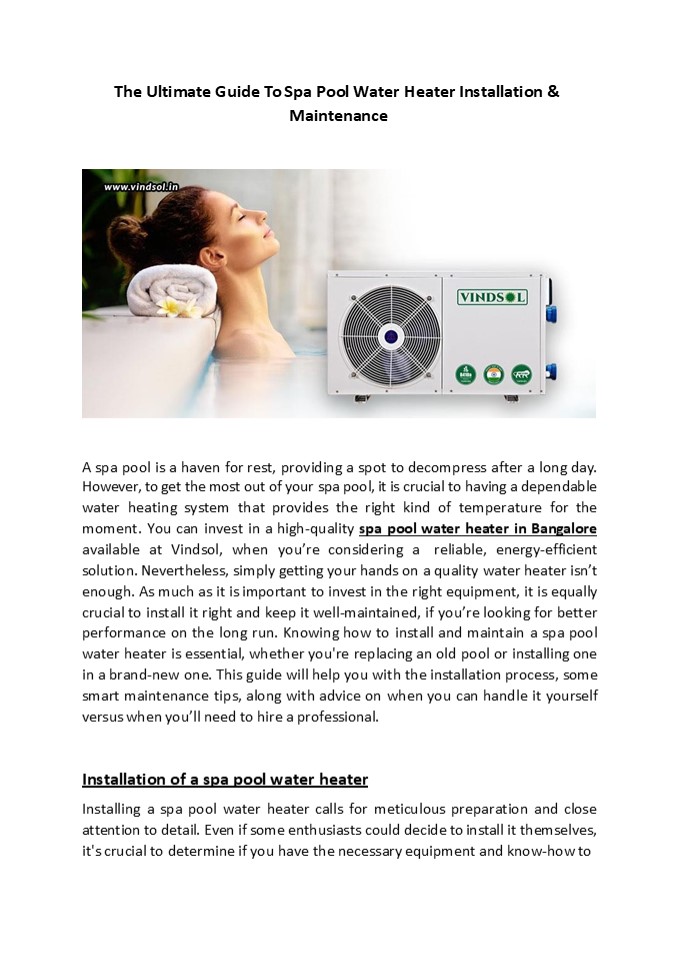
Title: The Ultimate Guide To Spa Pool Water Heater Installation & Maintenance
1
The Ultimate Guide To Spa Pool Water Heater
Installation Maintenance
A spa pool is a haven for rest, providing a spot
to decompress after a long day. However, to get
the most out of your spa pool, it is crucial to
having a dependable water heating system that
provides the right kind of temperature for the
moment. You can invest in a high-quality spa pool
water heater in Bangalore available at Vindsol,
when youre considering a reliable,
energy-efficient solution. Nevertheless, simply
getting your hands on a quality water heater
isnt enough. As much as it is important to
invest in the right equipment, it is equally
crucial to install it right and keep it
well-maintained, if youre looking for better
performance on the long run. Knowing how to
install and maintain a spa pool water heater is
essential, whether you're replacing an old pool
or installing one in a brand-new one. This guide
will help you with the installation process, some
smart maintenance tips, along with advice on when
you can handle it yourself versus when youll
need to hire a professional. Installation of a
spa pool water heater Installing a spa pool water
heater calls for meticulous preparation and close
attention to detail. Even if some enthusiasts
could decide to install it themselves, it's
crucial to determine if you have the necessary
equipment and know-how to
2
carry out the task safely. Here is a detailed
explanation on how to install a water heater for
a spa pool. Choosing the right heater Choosing
the best spa pool water heater for your
requirements is the first step in the
installation procedure. Consider factors like
your budget, the climate, and the size of your
spa pool. Gas heaters are appropriate for people
who require quicker heating times, but heat pumps
are typically the greatest option for energy
efficiency. Seek out energy-efficient heaters
that can lower your long- term operating expenses
for a more environmentally friendly
choice. Planning the location The water heater's
performance is significantly affected by its
placement. For effective water circulation and
minimal heat loss, the heater should ideally be
placed close to the spa pool. Make sure the unit
is positioned in a space with adequate airflow
for heat pump systems so it can efficiently draw
in air for heat exchange. The heater's efficiency
may be impacted if it is placed in direct
sunlight. Additionally, to prevent any strain on
the system, make sure the heater is on a level
surface. Electrical connections Proper electrical
connections are necessary when installing a spa
pool water heater, particularly an electric or
heat pump system. Though it is strongly advised
to engage a certified electrician to ensure
safety and compliance with local rules, you can
do this step yourself if you are confident of
your electrical abilities. Verify whether a
dedicated circuit is required for heat pumps and
make sure the power source satisfies the heater's
requirements. Plumbing connections Plumbing the
water heater to the spa pool is the next step,
which entails attaching the heater to the water
filtration system of the spa. The water inlet and
exit pipes for heat pumps must be connected to
the heater. Make use of sturdy, high-quality
plumbing supplies to guarantee a tight fit and
stop leaks. Make sure all fittings are snug while
doing this yourself, and following installation,
look for any possible leaks. Testing the heater
3
It's time to test the heater after the plumbing
and electrical connections are done. To make sure
the system is operating correctly, turn it on and
check the water temperature. Keep an eye out for
any odd sounds, vibrations, or leaks coming from
the unit. Your installation is complete if
everything seems to be operating as it
should. When to call a professional Even if
do-it-yourselfers can complete the aforementioned
tasks, there are situations in which hiring a
professional is advisable. To guarantee their
safe and efficient installation, complex plumbing
and electrical systems frequently need for
specialized understanding. Hiring an expert will
save you time and prevent expensive errors if you
are not familiar with the system or lack the
required equipment. In order to ensure that the
heater operates at its optimum, a professional
installer may also assist you in selecting the
ideal placement. Maintenance tips for a spa
pool water heater For your spa pool water heater
to last for a long time, and keep working
effectively, proper maintenance is essential.
Frequent maintenance can prolong the heater's
lifespan, enhance its effectiveness, and help
avoid expensive repairs. Regular
cleaning Maintaining optimal system performance
requires routine cleaning of the heater and
filter components. The efficiency of the heater
might decrease over time by dirt, debris, and
mineral deposits building up on the heat
exchanger. Turn off the heater's power and clear
the air intake region of any debris. To clean the
unit's exterior and get rid of any debris from
the filter, use a mild cleaning solution.
Depending on how frequently you use your spa
pool, make sure to clean or replace the filter
every one to three months. Checking for
leaks Leaks can severely affect the performance
of your spa pool heater. Check the heater's
connections for indications of water leaks on a
regular basis. Water accumulating around the
heater may be a sign of a broken or faulty
connection. To prevent more system damage,
tighten fittings and replace any worn-out
components right away.
4
Inspecting the airflow Ensuring adequate airflow
is essential for heat pumps to operate
efficiently. Dirt, leaves, and other debris might
eventually obstruct the unit's airflow, which
will lower its efficiency. Make sure there are no
obstacles by routinely inspecting the intake and
exhaust locations. Make sure there is no debris
in the vicinity of the heat pump and that there
are no tall grasses or plants surrounding the
unit. Checking the water chemistry The water
heater and the spa pool itself both depend on
maintaining the right water chemistry. Mineral
accumulation in the heater due to unbalanced
water chemistry might harm internal parts. Check
the alkalinity, pH, and chlorine levels
frequently and make any required adjustments.
This can help maintain the best possible
condition of your spa water and safeguard your
heater. When to seek professional servicing It's
a good idea to have your spa pool water heater
professionally serviced at least once a year,
even with routine cleaning and upkeep. A
qualified technician may do a comprehensive
examination of the device, look for wear and
tear, and confirm that every part is operating as
it should. In order to guarantee peak performance
for the approaching season, they can also carry
out duties like monitoring the refrigerant levels
in heat pump systems. In conclusion, the
efficient operation and long lifespan of your spa
pool water heater depend on proper installation
and routine maintenance. You can safely install
and maintain your heater to keep your spa pool at
the ideal temperature all year long by following
the instructions in this guide. Keep in mind that
even while do-it-yourselfers can handle some
installation-related tasks, it's always advisable
to get expert assistance when in
doubt. Resource Read more
Recommended

