

The Challenges of Custom Sock Sourcing for Small Brands PowerPoint PPT Presentation
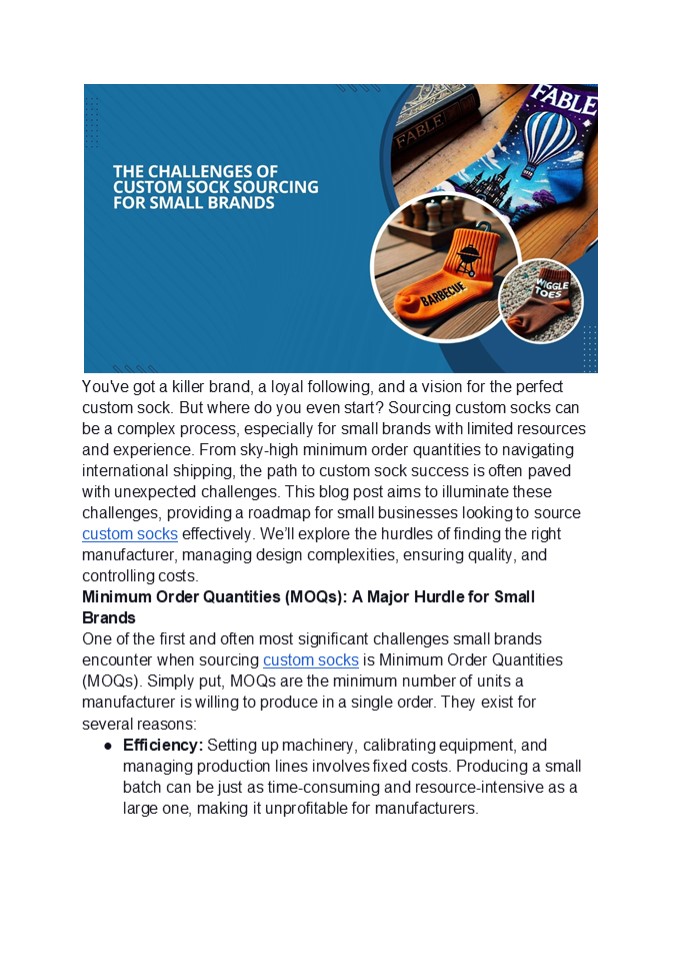
Title: The Challenges of Custom Sock Sourcing for Small Brands
1
- You've got a killer brand, a loyal following, and
a vision for the perfect custom sock. But where
do you even start? Sourcing custom socks can be a
complex process, especially for small brands with
limited resources and experience. From sky-high
minimum order quantities to navigating
international shipping, the path to custom sock
success is often paved with unexpected
challenges. This blog post aims to illuminate
these challenges, providing a roadmap for small
businesses looking to source custom socks
effectively. Well explore the hurdles of finding
the right manufacturer, managing design
complexities, ensuring quality, and controlling
costs. - Minimum Order Quantities (MOQs) A Major Hurdle
for Small Brands - One of the first and often most significant
challenges small brands encounter when sourcing
custom socks is Minimum Order Quantities (MOQs).
Simply put, MOQs are the minimum number of units
a manufacturer is willing to produce in a single
order. They exist for several reasons - Efficiency Setting up machinery, calibrating
equipment, and managing production lines involves
fixed costs. Producing a small batch can be just
as time-consuming and resource-intensive as a
large one, making it unprofitable for
manufacturers.
2
- Cost-effectiveness Manufacturers purchase raw
materials in bulk to obtain better prices. MOQs
ensure they use a sufficient amount of these
materials to justify the bulk purchase. - Streamlined Operations Large orders simplify
logistics, packaging, and shipping for
manufacturers. - For small brands, large MOQs can present a
significant obstacle. Here's why - Capital Tie-Up Meeting a high MOQ requires a
substantial upfront investment. This can tie up a
significant portion of a small brand's working
capital, limiting its ability to invest in other
areas like marketing or product development. - Storage Space Ordering a large quantity of socks
requires ample storage space. Small businesses
often operate from limited spaces, making it
difficult to accommodate large inventories. - Risk of Overstocking If the custom socks don't
sell as expected, small brands risk being stuck
with excess inventory, leading to financial
losses. - The Impact on Smaller Production Runs and Test
Orders MOQs severely limit the ability of small
brands to conduct smaller production runs or test
orders. This is crucial for - Market Testing Before committing to a large
order, brands often want to test the market with
a smaller batch to gauge customer demand. High
MOQs make this impossible, forcing them to take a
significant risk. - New Designs and Styles Small brands may want to
experiment with new designs or styles without
committing to a large inventory. MOQs hinder this
experimentation and stifle innovation. - Strategies for Navigating MOQs
- While MOQs can be challenging, there are
strategies small brands can employ to overcome
them - Finding Smaller Manufacturers or Specialized
Workshops Some manufacturers specialize in
smaller production runs, catering specifically to
small businesses or niche markets. While
3
- the unit cost might be slightly higher, it can be
a more manageable option than dealing with large
MOQs. - Exploring Group Orders or Collaborations
Partnering with other small brands to place a
combined order can help reach MOQs. This allows
each brand to obtain custom socks at a more
affordable price. - Negotiating with Manufacturers While not always
successful, it's worth trying to negotiate with
manufacturers. Some may be willing to offer
slightly lower MOQs for first-time orders or
establish a long-term partnership. - Considering Digital Printing (for some designs)
While traditional knitting has MOQs, digital
printing on finished socks sometimes allows for
smaller runs, though it has limitations in design
complexity and feel. - Using Stock Socks with Custom Labels/Embroidery
A less costly option is to buy plain stock socks
and then add custom labels or embroidery. This
offers some branding but doesn't allow for fully
custom sock designs. - Finding the Right Manufacturer A Crucial Step
- Finding a reliable and quality manufacturer is
arguably the most critical step in sourcing
custom socks. The right manufacturer can ensure
consistent quality, timely delivery, and smooth
communication, while the wrong one can lead to
costly mistakes, delays, and damaged brand
reputation. - Challenges in the Search, Especially Overseas
- Searching for manufacturers, especially those
overseas (often in countries like China, Turkey,
or Pakistan, known for textile production),
presents unique challenges - Distance and Logistics Geographical distance
makes it difficult to visit factories in person
and conduct thorough inspections. This increases
reliance on online communication and sample
reviews. - Language Barriers Communication can be
challenging due to language differences,
potentially leading to misunderstandings and
errors in production. - Time Zone Differences Coordinating communication
across different time zones can be inconvenient
and lead to delays in responses.
4
- Cultural Differences Business practices and
communication styles can vary significantly
between cultures, requiring patience and
adaptability. - Information Overload The sheer number of
manufacturers available online can be
overwhelming, making it difficult to filter out
reliable and reputable suppliers. - Verifying Credentials and Quality Standards A
Key Concern - One of the biggest concerns when working with
overseas manufacturers is verifying their
credentials and quality standards. It's crucial
to ensure that the manufacturer is legitimate,
adheres to ethical labor practices, and meets the
required quality standards. This can be difficult
to ascertain remotely. - Resources for Finding Manufacturers
- Despite the challenges, several resources can
help you find suitable manufacturers - Online B2B Directories Platforms like Alibaba,
Global Sources, and IndustryNet connect buyers
with suppliers worldwide. These platforms often
provide company profiles, product listings, and
sometimes even verified supplier status. However,
due diligence is still essential. - Industry Trade Shows Attending trade shows
related to textiles, apparel, or manufacturing
can provide valuable opportunities to meet
manufacturers in person, see samples of their
work, and establish relationships. - Referrals and Recommendations Seeking
recommendations from other businesses in the
apparel industry or contacting industry
associations can lead you to reliable
manufacturers. - Sourcing Agents Sourcing agents specialize in
finding and vetting manufacturers on behalf of
businesses. They can be particularly helpful when
working with overseas suppliers, handling
communication, negotiations, and quality control.
However, they charge a fee or commission. - Online Forums and Communities Online communities
and forums dedicated to e-commerce or small
business can be valuable sources of information
and recommendations.
5
- Key Steps in Vetting Potential Manufacturers
- Request Samples Always request samples of their
work to assess the quality of their materials,
craftsmanship, and attention to detail. - Check References Ask for references from
previous clients and contact them to inquire
about their experience working with the
manufacturer. - Verify Certifications Check if the manufacturer
has relevant certifications, such as ISO 9001
(quality management), WRAP (Worldwide Responsible
Accredited Production), or BSCI (Business Social
Compliance Initiative). - Communicate Clearly and Frequently Establish
clear communication channels and maintain
consistent contact throughout the process. - Consider Factory Audits (for larger orders or
ongoing relationships) If possible and budget
allows, consider conducting a factory audit,
either in person or through a third-party
inspection company, to verify their facilities,
production processes, and working conditions. - Design and Technical Specifications Turning
Ideas into Reality While a sock might seem like a
simple garment, its design and manufacturing
involve a surprising level of complexity. This
section will delve into the technical aspects of
sock design and the importance of clear
communication with manufacturers. - The Complexities of Sock Design
- Several factors contribute to the intricacies of
sock design - Knitting Patterns Socks are typically knitted
using circular knitting machines, which create a
seamless tube. Different knitting patterns (e.g.,
ribbing, jersey, terry) create different
textures, elasticity, and functionalities.
Understanding these patterns is crucial for
achieving the desired look and feel. - Yarn Types The type of yarn used significantly
affects the sock's comfort, durability, and
performance. Common materials include cotton,
wool, nylon, polyester, and blends. Each material
has its own properties regarding softness,
breathability, moisture-wicking, and warmth.
6
- Sizing and Fit Accurate sizing is essential for
comfortable and functional socks. Different
sizing systems exist (e.g., US, UK, EU), and it's
crucial to provide clear size charts to the
manufacturer. Factors like elasticity and
knitting pattern also influence the final fit. - Construction Different parts of the sock (toe,
heel, cuff) require different construction
techniques for durability and comfort. Reinforced
toes and heels are common features to prevent
wear and tear. - Translating Design Ideas into Technical
Specifications - The biggest challenge lies in translating
creative design ideas into precise technical
specifications that manufacturers can understand
and execute. This requires moving beyond simple
sketches or visual mockups. - The Importance of Accurate Measurements and
Detailed Tech Packs - A "tech pack" (technical package) is a
comprehensive document that provides all the
necessary information for manufacturing a
product. For custom socks, a tech pack should
include - Detailed Sketches or Illustrations Clear
drawings or illustrations of the sock from
different angles, showing all design elements and
details. - Material Specifications Precise information
about the yarn type, composition, and color codes
(e.g., Pantone codes). - Knitting Pattern Specifications Details about
the knitting patterns used in different parts of
the sock (e.g., ribbing for the cuff, jersey for
the foot). - Size Chart A detailed size chart with precise
measurements for each size. - Construction Details Information about the
construction of the toe, heel, and cuff,
including any reinforcements or special
techniques. - Logo Placement and Size Precise measurements and
placement instructions for any logos or branding
elements. - Packaging Specifications Details about the
desired packaging for the socks. - Potential Issues Color Matching and Achieving
Desired Textures - Even with detailed tech packs, some potential
issues can arise
7
- Color Matching Achieving exact color matches can
be challenging, especially when working with
different materials or dyeing processes.
Providing Pantone codes is essential, but it's
still recommended to request physical color
swatches for approval. - Achieving Desired Textures Translating a
specific texture from a visual reference to a
knitted fabric can be difficult. Clear
communication and sampling are crucial to ensure
the manufacturer understands the desired texture. - Quality Control and Consistency Ensuring a
Product You Can Be Proud Of - Quality control (QC) is paramount in custom sock
manufacturing. It's not just about avoiding
defects it's about upholding your brand's
reputation and ensuring customer satisfaction.
Consistent quality builds trust and encourages
repeat business. This section explores the
importance of QC and strategies for small brands
to maintain high standards, especially when
working with overseas manufacturers. - The Importance of Quality Control Throughout the
Production Process - Quality control should be an ongoing process, not
just a final inspection. Implementing QC measures
at each stage of productionfrom raw materials to
finished goodshelps prevent problems before they
escalate. Key stages include - Raw Material Inspection Checking the quality of
yarn and other materials before production
begins. - In-Process Inspection Monitoring the
manufacturing process to identify and correct any
issues during production. - Final Inspection Inspecting finished socks for
defects, sizing accuracy, and adherence to
specifications. - Challenges for Small Brands, Especially with
Overseas Manufacturers - Small brands face unique challenges in monitoring
quality, particularly when working with overseas
manufacturers - Distance and Communication Physical distance
makes it difficult to conduct on-site
inspections. Relying on remote communication can
lead to misunderstandings and delays in
addressing quality issues.
8
- Limited Resources Small businesses often lack
the resources to hire dedicated quality control
personnel or conduct frequent inspections. - Cultural Differences Different cultural
perspectives on quality standards can lead to
discrepancies in expectations. - Potential Inconsistencies Sizing, Color, and
Stitching - Without proper quality control, several
inconsistencies can arise - Sizing Inaccuracies Socks may not conform to the
specified size chart, leading to fit issues and
customer dissatisfaction. - Color Variations Colors may differ from the
approved samples due to variations in dyeing
processes or material batches. - Stitching Defects Issues like loose threads,
uneven stitching, or broken seams can affect the
sock's durability and appearance. - Material Defects Flaws in the yarn or other
materials can result in weak spots, snags, or
other imperfections. - Strategies for Ensuring Quality
- Despite these challenges, small brands can
implement several strategies to ensure quality - Request Pre-Production Samples (PPS) Before mass
production begins, request a pre-production
sample that represents the final product. This
allows you to identify and correct any issues
before a large order is produced. - Establish Clear Quality Standards and
Specifications Provide detailed tech packs and
clearly communicate your quality expectations to
the manufacturer. Use photos, diagrams, and
written descriptions to avoid misunderstandings. - Implement a Quality Control Checklist Create a
checklist that outlines all the key quality
points to be inspected. This can be used by both
you and the manufacturer. - Request Photos and Videos During Production Ask
the manufacturer to provide photos or videos of
the production process at different stages. This
allows you to monitor progress and identify
potential issues early on. - Conduct Third-Party Inspections For larger
orders or ongoing relationships, consider hiring
a third-party inspection company to conduct
on-site inspections at the factory. This provides
an independent assessment of quality.
9
- Build a Strong Relationship with the
Manufacturer Open communication, mutual respect,
and a long-term partnership can foster a culture
of quality and collaboration. - Start with Smaller Orders If possible, start
with a smaller initial order to assess the
manufacturer's quality and consistency before
committing to a larger production run. - Cost and Pricing Balancing Quality, Value, and
Profitability Understanding the cost factors
involved in custom sock production is crucial for
setting appropriate prices and achieving desired
profit margins. This section breaks down the
various costs and explores strategies for
managing them effectively. - Cost Factors in Custom Sock Production
- Several factors contribute to the overall cost of
producing custom socks - Materials The type and quality of yarn
significantly impact cost. Natural fibers like
cotton and wool are generally more expensive than
synthetic fibers like polyester and nylon.
Specialty yarns or blends can further increase
material costs. - Labor Labor costs vary depending on the country
of manufacture. Countries with lower labor costs,
like China or Vietnam, may offer lower production
prices but may have longer shipping times and
potential quality control challenges. - Knitting and Manufacturing Processes Complex
knitting patterns, special features (like
reinforced toes or heels), and additional
processes (like dyeing or printing) can increase
production costs. - Packaging The type of packaging chosen (e.g.,
simple polybags, custom boxes, or hang tags) adds
to the overall cost. - Shipping and Logistics Shipping costs depend on
the distance, shipping method (sea freight, air
freight, or courier), and weight/volume of the
shipment. Customs duties, tariffs, and import
taxes can also add to the final cost. - MOQs (Minimum Order Quantities) As discussed
previously, MOQs directly impact the unit cost.
Larger MOQs generally result in lower unit costs
due to economies of scale. - Sampling and Prototyping Creating samples and
prototypes incurs costs for materials, labor, and
shipping. These costs should be factored into the
overall budget.
10
- How MOQs and Other Factors Influence Pricing
- Economies of Scale As mentioned, larger MOQs
lead to lower unit costs. This is because fixed
costs (like machine setup) are spread across a
larger number of units. - Complexity of Design More complex designs with
intricate knitting patterns, multiple colors, or
special features require more time and resources
to produce, thus increasing costs. - Material Choices Using higher-quality or
specialty yarns will increase the cost of
materials and subsequently the unit price. - Manufacturer Location Labor costs and other
overhead expenses vary significantly between
countries, influencing the overall cost. - Balancing Cost with Quality and Profit Margins
- Finding the right balance between cost, quality,
and profit margins is essential for long-term
success. It's important to - Calculate all costs accurately Include all cost
factors mentioned above to determine the true
cost of production. - Research competitor pricing Analyze the pricing
of similar custom socks in the market to
understand the competitive landscape. - Determine desired profit margins Set realistic
profit margins that allow for business growth and
sustainability. - Tips for Negotiating Prices and Finding
Cost-Effective Solutions - Negotiate with Manufacturers Don't hesitate to
negotiate with manufacturers, especially for
larger orders or long-term partnerships. - Compare Quotes from Multiple Manufacturers
Obtain quotes from several different
manufacturers to compare pricing and find the
best deal. - Consider Alternative Materials Explore less
expensive but still suitable materials if
possible, without compromising on quality too
significantly. - Simplify Designs Opting for simpler designs can
reduce production costs without sacrificing
visual appeal. - Plan Ahead and Order in Advance Ordering well in
advance can help avoid rush fees and secure
better pricing.
11
- Consolidate Shipments If ordering other products
from the same region, consider consolidating
shipments to reduce shipping costs. - Shipping and Logistics Navigating the Final Mile
- Once your custom socks are manufactured, the next
critical step is getting them to your warehouse
or directly to your customers. This section
outlines the complexities of shipping and
logistics, particularly when dealing with
international shipments. - Complexities of International Shipping
- International shipping involves several
complexities that small brands need to be aware
of - Shipping Methods Several shipping methods are
available, each with its own advantages and
disadvantages - Sea Freight Cost-effective for large shipments
but has the longest transit times (several weeks
or even months). - Air Freight Faster than sea freight but more
expensive. Suitable for smaller or time-sensitive
shipments. - Courier Services (e.g., FedEx, DHL, UPS) Fastest
option but also the most expensive. Ideal for
small, urgent shipments or samples. - Customs Duties and Tariffs Importing goods into
another country involves paying customs duties
and tariffs, which are taxes levied on imported
goods. These costs vary depending on the product,
country of origin, and destination country. - Incoterms (International Commercial Terms)
Incoterms define the responsibilities of the
buyer and seller regarding shipping, insurance,
and customs clearance. Understanding Incoterms is
crucial to avoid misunderstandings and disputes.
Common Incoterms include FOB (Free on Board), CIF
(Cost, Insurance, and Freight), and DDP
(Delivered Duty Paid). - Documentation International shipping requires
various documents, including commercial invoices,
packing lists, certificates of origin, and
customs declarations. Accurate and complete
documentation is essential for smooth customs
clearance. - Potential for Delays and Unexpected Costs
- Several factors can cause delays and unexpected
costs in international shipping
12
- Customs Delays Customs inspections can cause
delays, especially if documentation is incomplete
or incorrect. - Port Congestion Congestion at ports can lead to
delays in loading and unloading cargo. - Weather Conditions Severe weather can disrupt
shipping schedules and cause delays. - Unexpected Fees Additional fees, such as
demurrage (charges for exceeding the allowed time
for container use) or storage fees, can arise
unexpectedly. - Currency Fluctuations Changes in exchange rates
can affect the final cost of goods and shipping. - Importance of Proper Packaging and Labeling
- Proper packaging and labeling are crucial for
protecting your goods during transit and ensuring
smooth customs clearance - Packaging Socks should be packaged securely to
prevent damage during shipping. This may involve
using sturdy boxes, protective wrapping, and
proper sealing. - Labeling Packages must be clearly labeled with
accurate information, including the product
description, quantity, country of origin, and any
required markings or warnings. Incorrect labeling
can lead to customs delays or fines. - Strategies for Managing Shipping and Logistics
- Work with a Freight Forwarder or Customs Broker
These professionals have expertise in
international shipping and customs regulations.
They can help you navigate the complexities of
shipping, handle documentation, and negotiate
with shipping companies. - Choose the Right Incoterms Select Incoterms that
clearly define the responsibilities of the buyer
and seller. DDP (Delivered Duty Paid) is often
the easiest option for buyers, as the seller
handles all shipping and customs clearance.
However, it can be more expensive. - Obtain Shipping Insurance Shipping insurance
protects you against loss or damage to your goods
during transit. - Track Your Shipments Use tracking numbers to
monitor the progress of your shipments and
anticipate any potential delays.
13
- Plan Ahead and Allow Sufficient Time
International shipping takes time. Plan ahead and
allow sufficient time for production, shipping,
and customs clearance to avoid delays in meeting
deadlines. - Building Long-Term Relationships The Foundation
of Success While finding a manufacturer is a
significant achievement, building a strong,
long-term relationship with them is even more
valuable. This section emphasizes the importance
of fostering positive relationships with your
manufacturing partners and how it can benefit
your business in the long run. - The Value of Strong Relationships
- Treating your manufacturer as a true partner,
rather than just a supplier, can yield
significant benefits. A strong relationship is
built on mutual respect, trust, and open
communication. - Benefits of Consistent Communication and Clear
Expectations Consistent communication and clear
expectations are the cornerstones of a successful
manufacturer relationship. This includes - Regular Communication Maintaining regular
contact, even when there are no immediate issues,
helps build rapport and strengthens the
relationship. Regular updates on production
progress, even brief check-ins, can prevent
misunderstandings and build trust. - Clear and Detailed Specifications Providing
comprehensive tech packs, clear instructions, and
detailed quality standards minimizes confusion
and ensures the manufacturer understands your
requirements. - Prompt Responses Responding promptly to the
manufacturer's inquiries and addressing any
concerns they may have shows respect and fosters
a collaborative environment. - Constructive Feedback Providing constructive
feedback, both positive and negative, helps the
manufacturer improve their processes and meet
your expectations. - Open Dialogue Being open to discussing
challenges and finding solutions together
strengthens the partnership and fosters a sense
of shared responsibility. - How Building Trust Leads to Better Outcomes
- Building trust with your manufacturer can lead to
several tangible benefits
14
- Better Pricing Over time, as trust and mutual
understanding grow, manufacturers may be more
willing to offer better pricing or discounts.
They recognize the value of a long-term
partnership and are more likely to invest in
maintaining it. - Improved Quality When a strong relationship
exists, manufacturers are more likely to go the
extra mile to ensure quality. They understand
your expectations and are more invested in your
success. They may also be more proactive in
identifying and addressing potential quality
issues before they become major problems. - Priority Service In busy periods, manufacturers
are more likely to prioritize orders from their
trusted partners. This can lead to faster lead
times and more flexible scheduling. - Greater Flexibility Strong relationships foster
greater flexibility in dealing with unexpected
changes or challenges. Manufacturers may be more
willing to accommodate last-minute changes,
adjust production schedules, or offer alternative
solutions. - Early Access to New Products or Technologies
Manufacturers may offer trusted partners early
access to new materials, technologies, or
production processes, giving them a competitive
edge. - Proactive Problem Solving A strong relationship
means open communication, making it easier to
address and resolve issues quickly and
effectively. The manufacturer is more likely to
proactively communicate any potential problems
and work with you to find solutions. - Investing in the Relationship
- Building strong relationships takes time and
effort. It's an investment that pays off in the
long run. Showing appreciation for the
manufacturer's work, recognizing their
contributions, and treating them with respect
goes a long way in building a successful
partnership. This can include simple gestures
like sending thank-you notes, acknowledging their
efforts during challenging times, or even
visiting their facilities when possible. - Conclusion Partnering for Sock Success
- Sourcing custom socks for your small brand can be
a complex undertaking, but with careful planning,
thorough research, and a focus
15
- on building strong manufacturer relationships,
its absolutely achievable. From navigating MOQs
and finding the right manufacturer to ensuring
quality control and managing shipping logistics,
each step plays a vital role in bringing your
sock vision to life. By understanding the
challenges and implementing the strategies
outlined in this blog post, you can confidently
embark on your custom sock journey and create a
product that resonates with your audience. - Ready to take the next step? EverLighten is here
to help you navigate the world of custom sock
manufacturing. We offer a comprehensive suite of
services designed to make the process seamless
and stress-free for small brands. - Why Choose EverLighten?
- 100 Customization Bring your unique vision to
life with fully customizable sock designs, from
intricate knitting patterns to vibrant colors and
personalized packaging. - 100 Quality Check We maintain strict quality
control standards throughout the production
process to ensure every sock meets your
expectations. - Free Design Help Our expert design team is ready
to assist you in creating the perfect sock
design, offering guidance and support every step
of the way. - Worldwide Delivery We offer reliable and
efficient worldwide shipping to get your custom
socks to you, no matter where you are. - 24/7 Support Our dedicated support team is
available around the clock to answer your
questions and address any concerns you may have. - Unlimited Revisions We offer unlimited revisions
to your designs until you are completely
satisfied with the final product. - Low MOQs We understand the challenges small
brands face with high MOQs, which is why we offer
flexible and low minimum order quantities. - Connect with EverLighten today to start creating
your perfect custom socks! - FAQs
- 1. What is the typical lead time for custom sock
production?
16
- Lead times vary depending on the complexity of
the design, order quantity, and the
manufacturer's current production schedule.
Generally, you can expect lead times of a few
weeks to a few months. It's always best to
discuss lead times with your manufacturer
upfront. - How do I provide my design to the manufacturer?
- The best way to provide your design is through a
detailed tech pack that includes sketches,
material specifications, size charts, and other
relevant information. This ensures clear
communication and minimizes the risk of errors. - What are the different types of sock knitting?
- Common sock knitting types include plain knit
(jersey), rib knit (for elasticity), terry knit
(for cushioning), and jacquard knit (for complex
patterns). Each knit has different properties and
affects the sock's feel and function. - What are some common materials used for custom
socks? Common materials include cotton, wool,
nylon, polyester, bamboo, and various blends. The
choice of material depends on the desired
properties of the sock, such as softness,
durability, moisture-wicking, and warmth. - How can I ensure the colors of my custom socks
match my brand colors? - Providing Pantone color codes to your
manufacturer is essential for accurate color
matching. Requesting physical color swatches for
approval before production begins is also highly
recommended.
Recommended

