

New Holland DC150 Crawler Dozer Service Repair Manual Instant Download PowerPoint PPT Presentation
Title: New Holland DC150 Crawler Dozer Service Repair Manual Instant Download
1
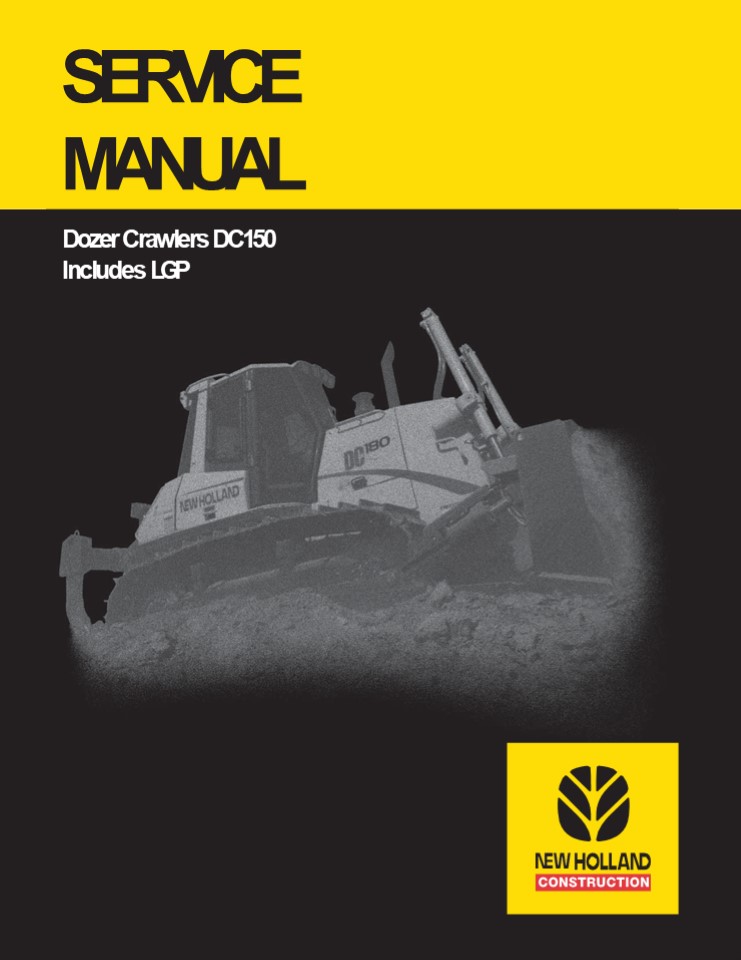
SERVICE MANUAL
Dozer Crawlers DC150 Includes LGP
2
PROPRIETARY NOTICE The contents of this manual
are proprietary data of New Holland Construction.
Reproduction or use of any part for other than
the operation and maintenance of New Holland
Construction equipment is permissible only if
expressly authorized in writing by New Holland
Construction. Additional copies may be obtained
from your New Holland Construction Dealer.
Address requests for copies to your Dealer and
refer to the publication number appearing on the
bottom of the manual cover. COMPANY
POLICY Company policy, which is one of continuous
improvement, reserves the right to change prices
and to make changes in design and specification
at any time without notice and without obligation
to modify units previously built. All data given
in this book is subject to production variations.
Dimensions and weights are approximate only and
the illustrations do not necessarily show
machines in standard condition. For exact
information about any particular machine please
consult your New Holland Construction
Dealer. PARTS AND ACCESSORIES Genuine parts and
accessories have been specifically designed for
these machines. We would like to point out that
non-genuine parts and accessories have NOT been
examined and released by the Company. The
installation and or use of such products could
have negative effects upon the design
characteristics of your machine and thereby
affect its safety. The company is not liable for
any damage caused by the use of non-genuine
parts and accessories. MODEL CODES The range of
machines listed may not be available in all
countries or markets therefore, for the latest
information consult your local New Holland
Construction Dealer. MODEL ENGINE TYPE -
H.P. DC150 CUMMINS 6BT 5.9 (150 H.P.)
1999 NEW HOLLAND CONSTRUCTION
3
- OWNER ASSISTANCE
- We at New Holland and your New Holland dealer
want you to be completely satisfied with your
investment. Normally any problems with your
equipment will be handled by your dealer's
Service Department. Sometimes, however,
misunderstandings can occur. If your problem has
not been handled to your satisfaction, we suggest
the following. - Contact the owner or General Manager of the
dealership, explain the problem, and request
assistance. When additional assistance is needed,
your dealer has direct access to our office. - If you cannot obtain satisfaction by doing this,
contact the New Holland Construction office and
provide them with - Your name, address, and telephone number
- Machine model and serial number
- Dealership name and address
- Machine purchase date and amount of use
- - Nature of problem
- NEW HOLLAND CONSTRUCTION
- 245 E North Ave Carol Stream, IL 60188
- Ph (630) 260-4000
- To maintain operating efficiency, use NEW HOLLAND
original spare parts. When ordering parts, give
the following information - Machine model
- Machine and engine serial numbers
- Part number from the Parts Catalog
1999 NEW HOLLAND CONSTRUCTION
4
https//www.ebooklibonline.com Hello dear
friend! Thank you very much for reading. Enter
the link into your browser. The full manual is
available for immediate download. https//www.ebo
oklibonline.com
5
TO THE OWNER The warranty coverage that is
extended to your machine is explained in the
Warranty and Limitation of Liability form. Your
dealer will provide you with a copy of the
warranty and retain a copy which you have signed.
After you read the warranty, ask your dealer to
explain any points that you may not
understand. The machine was designed to power
and propel itself. It is intended to move
material in the normal and customary
applications. Do not modify or alter or permit
anyone else to modify or alter this machine or
any of its com- ponents mechanical function with
first consulting an authorized New Holland
Construction dealer. If you have any questions
regarding machine modifications, contact New
Holland Construction, 245 E. North Ave., Carol
Stream, IL 60188. Your safety and the safety of
those around you depend upon the care and good
judgment you use while operating this equipment.
Read the safety precautions carefully. After you
have operated the machine for 50 hours, take your
machine and this manual to your selling dealer.
He will perform the factory recommended 50-hour
service. You will be respon- sible for the cost
of lubricants, fluids, filters and other items
replaced as part of normal maintenance. Prior to
taking the machine to your selling dealer for
service, it is recommended that you contact them
to determine any other charges for which you may
be responsible. All data given in this book is
subject to product variations. Dimensions and
weights are ap- proximate only and the
illustrations do not necessarily show machines in
standard condition. For exact information about
any particular machine, please consult your New
Holland Con- struction dealer. CAUTION THIS
SYMBOL IS USED THROUGHOUT THIS BOOK WHENEVER
PERSONAL SAFETY IS INVOLVED. TAKE TIME TO READ
AND FOLLOW THE INSTRUCTIONS. BE
CAREFUL! CAUTION PICTURES IN THIS MANUAL MAY
SHOW PROTECTIVE SHIELDING OPEN OR REMOVED TO
BETTER ILLUSTRATE A PARTICULAR FEATURE OR
ADJUSTMENT. BE CERTAIN, HOWEVER, TO CLOSE OR
REPLACE ALL SHIELDING BEFORE OPERATING THE
MACHINE. IMPROVEMENTS New Holland Construction is
continually striving to improve its products. We
reserve the right to make improvements or changes
when it becomes practical and possible to do so,
without incurring any obligation to make changes
or additions to the equipment sold previously.
1999 NEW HOLLAND CONSTRUCTION
6
PRECAUTIONARY STATEMENTS PERSONAL SAFETY
Throughout this manual and on machine decals, you
will find precautionary statements (CAUTION,
WARNING, and DANGER) followed by specific
instructions. These precautions are intended for
the personal safety of you and those working with
you. Please take the time to read them.
CAUTION THE WORD CAUTION IS USED WHERE A SAFE
BEHAVIORAL PRACTICE ACCORDING TO OPERATING AND
MAINTENANCE INSTRUCTIONS AND COMMON SAFETY
PRACTICES WILL PROTECT THE OPERATOR AND OTHERS
FROM ACCIDENT INVOLVEMENT.
WARNING THE WORD WARNING DENOTES A POTENTIAL OR
HIDDEN HAZARD WHICH HAS A POTENTIAL FOR SERIOUS
INJURY. IT IS USED TO WARN OPERATORS AND OTHERS
TO EXERCISE EVERY APPROPRIATE MEANS TO AVOID A
SURPRISE INVOLVEMENT WITH MACHINERY.
DANGER THE WORD DANGER DENOTES A FORBIDDEN
PRACTICE IN CONNECTION WITH A SERIOUS
HAZARD. FAILURE TO FOLLOW THE CAUTION,
WARNING, DANGER, AND STOP INSTRUCTIONS MAY
RESULT IN SERIOUS BODILY INJURY OR DEATH. MACHINE
SAFETY Additional precautionary statements
(ATTENTION and IMPORTANT) are followed by
spe- cific instructions. These statements are
intended for machine safety. ATTENTION The word
ATTENTION is used to warn the operator of
potential machine damage if a certain procedure
is not followed. IMPORTANT The word IMPORTANT
is used to inform the reader of something he
needs to know to prevent minor machine damage if
a certain procedure is not followed.
1999 NEW HOLLAND CONSTRUCTION
7
SAFETY RULES This symbol is your safety alert
sign. It means ATTENTION! BECOME ALERT! YOUR
SAFETY IS INVOLVED! Read and heed all safety
instruction carrying the signal words WARNING and
DANGER. STUDY THE OPERATION AND MAINTENANCE
INSTRUCTION MANUAL THROUGHLY BEFORE STARTING,
OPERATING, MAINTAINING, FUELING OR SERVICING THIS
MACHINE.
MOST ACCIDENTS ARE CAUSED BY FAILURE OF SOME
INDIVIDUAL TO FOLLOW SIMPLE AND FUNDAMENTAL
SAFETY RULES OR PRECAUTION. FOR THIS REASON MOST
ACCIDENTS CAN BE PREVENTED BY RECOGNIZING THE
REAL CAUSE AND DOING SOMETHING ABOUT IT BEFORE
ACCIDENT OCCURS. REGARDLESS OF THE CARE USED IN
THE DESIGN AND CONSTRUCTION OF ANY TYPE OF
EQUIPMENT THERE ARE MANY CONDITIONS THAT CAN'T BE
COMPLETELY SAFEGUARDED AGAINST WITHOUT
INTERFERING WITH REASONABLE ACCESSIBILITY AND
EFFICIENT OPERATION.
1999 NEW HOLLAND CONSTRUCTION
8
CALIFORNIA PROPOSITION 65 WARNING Diesel engine
exhaust and some of its constituents are know to
the State of California to cause cancer, birth
defects, and other reproductive harm.
1999 NEW HOLLAND CONSTRUCTION
9
- SAFETY PRECAUTION INFORMATION
- UNSAFE OPERATING PRACTICES AND IMPROPER USE OF
THE MACHINE AND ITS ATTACHMENTS ON THE PART OF
THE OPERATOR OR SERVICE TECHNICIAN CAN RESULT IN
INJURIES. OBSERVE THE FOLLOWING SAFETY
PRECAUTIONS AT ALL TIMES - FOR SERVICING, THE MACHINE SHOULD BE ON LEVEL
TERRAIN, ENGINE STOPPED WITH THE WHEELS BLOCKED
OR THE ENTIRE MACHINE SOLIDLY SUPPORTED WITH THE
WHEELS OFF THE GROUND BEFORE SERVICING ANY
COMPONENT OF THE DRIVETRAIN. - FOR SERVICING UNDER THE MOVABLE EQUIPMENT, SUCH
AS OPERTORS SEAT, ENGINE HOODS, ETC. MOVE THE
EQUIPMENT ASSEMBLY TO THE LATCHED POSITION AND
SECURELY LATCH. - DO NOT OPERATE THE MACHINE UNLESS ALL MOVABLE
EQUIPMENT IS LATCHED IN THE OPERATE POSITION. - DO NOT SERVICE THE MACHINE WITH A RAISED
HYDRAULIC EQUIPMENT UNLESS THE HYDRAULIC
EQUIPMENT IS RESTING ON LOCK PINS OR CYLINDER
LOCKING TOOLS OR FIXTURES. - DO NOT SERVICE THE MACHINE WITH THE ENGINE
RUNNING UNLESS THE MACHINE IS PROPERLY AND
SECURELY SUPPORTED WITH ALL FOUR WHEELS OFF THE
GROUND. - USE CAUTION WHEN SERVICING THE UNIT AROUND MOVING
PARTS. - DO NOT TILT ANY MOVABLE EQUIPMENT WITHOUT PROPER
INSTRUCTION. - DO NOT TILT ANY MOVABLE EQUIPMENT WITHOUT USING
THE PROPER TOOLS.
1999 NEW HOLLAND CONSTRUCTION
10
- GIVE COMPLETE AND UNDIVIDED ATTENTION TO THE JOB
AT HAND SO THAT COMPLETE CONTROL OF THE MACHINE
IS MAINTAINED AT ALL TIMES. - DRIVE SLOWLY OVER ROUGH GROUND AND ON SLOPES
KEEP ALERT FOR HOLES, DITCHES AND OTHER
IRREGULARITIES THAT MAY CAUSE THE MACHINE TO
OVERTURN. - AVOID STEEP HILLSIDE OPERATION WHICH COULD CAUSE
THE MACHINE TO OVERTURN. - NEVER TRANSPORT A LOADED BUCKET AT FULL HEIGHT.
OPERATE THE MACHINE WITH THE LOAD AS LOW AS
POSSIBLE UNTIL IT BECOMES NECESSARY TO RAISE THE
BOOM TO DISCHARGE THE LOAD INTO A TRUCK,
CONTAINER, ETC. - REDUCE SPEED WHEN TURNING SO THERE IS NO DANGER
OF OVERTURNING. - NEVER DRIVE UP OR BACK UP A HILL OR INCLINE WITH
A RAISED BOOM OR THE MACHINE COULD OVERTURN. - ALWAYS LOOK BEHIND YOU BEFORE BACKING UP THE
MACHINE. - MAINTAIN PROPER FLUID LEVELS TO PREVENT LOSS OF
POWER, BRAKING OR OTHER FUNCTIONS. - DO NOT ALLOW PASSENGERS TO RIDE ON THE MACHINE AT
ANY TIME. - DO NOT ALLOW CHILDREN TO OPERATE THE MACHINE OR
RIDE ON THE MACHINE AT ANY TIME.
1999 NEW HOLLAND CONSTRUCTION
11
- WEAR AN APPROVED SAFETY HAT WHEN OPERATING THE
MACHINE AND WHILE IN ANY WORK AREA. - WHEN DRIVING THE MACHINE ON A ROAD OR HIGHWAY,
USE WARNING LIGHTS OR WARNING DEVICES AS MAY BE
REQUIRED BY LOCAL OR STATE GOVERNMENT
REGULATIONS. HEADLIGHTS, WARNING LIGHTS AND SMV
SIGNS ARE AVAILABLE THROUGH YOUR NEW HOLLAND
DEALER. - KEEP THE MACHINE CLEAN. DO NOT ALLOW TRASH,
DEBRIS OR OTHER ARTICLES TO ACCUMU- LATE IN THE
CAB, FLOOR OR FOOT CONTROL PEDAL AREA THAT MAY
HINDER SAFE MACHINE OPERATION. - NEVER OPERATE THE MACHINE WITH ANY OF THE
SHIELDING REMOVED. - NEVER OPERATE THE MACHINE WITHOUT WINDOWS AND/OR
SCREENS IN PLACE. - NEVER EXTEND ANY PART OF THE BODY OUTSIDE OF THE
OPERATORS AREA. - ALWAYS PROPERLY TIE DOWN THE MACHINE TO A TRUCK
OR TRAILER BEFORE TRANSPORT. - MAKE SURE ALL BYSTANDERS ARE AT A SAFE DISTANCE
AWAY FROM THE MACHINE BEFORE STARTING THE
ENGINE. - DO NOT ALLOW ANYONE NEAR THE MACHINE WHILE THE
ENGINE IS RUNNING AND THE MACHINE IS
OPERATIONAL. - WHEN USING THE MACHINE TO CRANE OBJECTS, DO NOT
ALLOW ANYONE TO RIDE ON OBJECTS BEING CRANED.
CAUTION! SOME PICTURES IN THIS MANUAL SHOW
SAFETY SHIELDS REMOVED OR OPEN TO SHOW PARTS
BEING SERVICED OR FOR CLARITY. ALL SHIELDS SHOULD
BE CLOSED OR RE- PLACED PRIOR TO OPERATING THE
MACHINE. DANGER! FASTEN SEAT BELT BEFORE
STARTING ENGINE!
1999 NEW HOLLAND CONSTRUCTION
12
SUMMARY
GENERALITIES
SECT. 0
ENGINE
SECT. 1
TRANSMISSION
SECT. 2
FINAL DRIVES
SECT. 3
STEERING CLUTCHES - BRAKES
SECT. 4
UNDERCARRIAGE
SECT. 5
DOZER EQUIPMENT HYDRAULIC SYSTEM
SECT. 6
ELECTRICAL SYSTEM
SECT. 7
7 1 6
4
5
3
2
13
SECTION 0 GENERALITIES TABLE OF CONTENTS
SUBJECT PAGE
SAFETY RULES ..................................................................................................... I - VIII
TABLE OF TECHNICAL DATA ................................................................................. 1 - 12
GENERAL INSTRUCTIONS ..................................................................................... 14 - 18
TROUBLESHOOTING ............................................................................................. 19
UNITS OF MEASURE ............................................................................................ 20
CLASSIFICATION OF STANDARD COMPONENTS ................................................ 20 - 21
TABLE OF TIGHTENING TORQUES ....................................................................... 22
14
WARNING
Study this Manual carefully before starting,
operating, maintaining, fueling or servicing the
machine. Read and heed all safety rules before
any intervention. SAFETY RULES
- Be sure all protective guards or panels are in
place, and all safety devices provided are in
place and in good operating conditions.
- Do not allow unauthorized personnel to operate
service or maintain this machine.
- Do not wear rings, wrist watches, jewelery,
loose or hanging apparels, such as ties, torn
clothing, scarves, unbuttoned or unzipped jackets
that can catch on mov- ing parts. Wear proper
safety equipment as recom- mended for the job.
Examples hard hat, heavy gloves, ear protection,
safety glasses or goggles, reflector vests,
respirator. Consult your employer for specific
safety equipment requirements.
- Be sure exposed personnel in the area of
operation are clear of the machine before moving
it or its attachments. WALK COMPLETELY AROUND the
machine before mounting. Sound horn.
- Before starting machine, check, adjust and lock
the operator's seat for maximum comfort and
control of the machine.
- Fasten your seat belt (when provided).
- Keep operator's compartment, stepping points,
grab- rails and handles clear of foreign objects,
oil, grease, mud or snow accumulation to minimize
the danger of slipping or stumbling. Clean mud or
grease from shoes before attempting to mount or
operate the machine.
- Obey all flag signals and signs.
- Due to the presence on the machine of flammable
fluids, never check or fill fuel reservoirs or
batteries near open flames, smoking materials or
sparks.
- Do not jump on or off the machine. Keep two
hands and one foot, or two feet and one hand in
contact with step grab rails and handles at all
times.
- REMEMBER THAT STARTING FLUID IS FLAMMA- BLE.
Follow strictly the recommendations printed on
containers and in the Operation and Maintenance
Man- ual.
- Do not use controls or hoses as hand holds when
climbing on or off machine. Hoses and controls
are movable and do not provide a solid support.
Also, controls may be inadvertently moved causing
accidental machine or equipment movement.
- DO NOT PUNCTURE OR BURN CONTAINERS.
- Containers must be stored in fresh, well
ventilated places, out of reach of unauthorized
persons. Follow the instructions provided by the
Manufacturer strictly.
- Never attempt to operate the machine or its
tools from any position other than seated in the
operator's seat.
- Never use these products near open flames,
smoking materials or sparks.
- Keep head, body, limbs, hands and feet inside
opera- tor's compartment at all times, to reduce
exposure to hazards outside the operator's
compartment.
- Be careful of slippery conditions on stepping
points, hand rails, and on the ground. Wear
safety boots or shoes that have a high slip
resistant sole material.
OPERATION - Do not run the engine of this machine
in closed areas without proper ventilation to
remove deadly exhaust gases.
- Do not leave the machine until it is completely
stopped.
- Check the seat safety belt at least twice a
year. If there are signs of wear or fraying or
other signs of weakness that could lead to
failure, replace it.
- Roll Over Protective Structures are required on
loaders, dozers, graders, excavators. NEVER
OPERATE machines without ROPS.
- Make sure the Operator's compartment is free of
foreign objects, especially if not firmly
secured. Never use the machine to transport
objects, unless proper securing points are
provided.
STARTING
- NEVER START OR OPERATE AN UNSAFE MA- CHINE.
Before operating a machine, always ensure that
any unsafe condition has been satisfactorily
remedied.
- Check monitoring instruments at start-up and
frequently during operations. in case the brake
pressure gauge shows a pressure lower than the
minimum operating pressure, stop the machine
immediately . - DO NOT CARRY RIDERS ON MACHINE
- Check brakes, steering and attachment controls
before moving. Advise the proper maintenance
authority of any malfunctioning part or system.
15
SAFETY RULES
GUARDED AGAINST POTENTIAL CABLE OR CHAIN BACKLASH.
- Study and familiarize with escape routes
alternate to normal exit routes. - Seat belts are required by current regulations to
be provided with Roll Over Protection Structures
or cabs. Keep safety belts fastened around you
during operation. - For your personal protection, do not climb on or
off machine while machine is in motion.
- Be alert to soft ground conditions close to
newly con- structed walls. The fill material and
weight of the ma- chine may cause the wall to
collapse under the machine.
- In darkness, check area of operation carefully
before moving in with machine. Use all lights
provided. Do not move into area of restricted
visibility.
- Make sure that exposed persons in the area of
operation are clear of the machine, before
starting the engine and operating the equipment.
Sound horn. Obey all indica- tions provided by
flags and signals. - NEVER COAST the machine down grades and slopes
with the transmission in neutral or neutralized. - Choose and shift into the most appropriate gear
to keep the speed required, thus preventing any
loss of control. - Do not operate machinery in a condition of
extreme fatigue or illness. Be especially
careful towards the end of working shift. - Do not operate machine with brakes out of
adjustment. - Operate the machine at speeds slow enough to
ensure complete control at all times. - Travel slowly over rough terrain, on slopes or
near drop- offs, in congested areas or on ice or
slippery surfaces. - When backing, always look to where the machine is
to be moved. Be alert to the position of exposed
personnel. DO NOT OPERATE if exposed personnel
enter the immediate work area. STOP THE MACHINE. - Maintain a safe distance from other machines.
Provide sufficient clearance for ground and
visibility conditions. Yield right-of-way to
loaded machines. - Maintain a clear vision of areas of travel or
work. Keep cab windows clean and repaired. - When machines are operating in tandem, the pusher
(rear) must be equipped with the appropriate
deflectors to protect the unit in front from the
air stream coming from the radiator. - When pulling or towing with a cable or chain, do
not start suddenly at full throttle take-up
slack carefully. - Inspect carefully for flaws or troubles before
using.
- If engine has a tendency to stall for any
reason under load or idle, report this for
adjustment to proper mainte- nance authority
immediately. Do not continue to operate machine,
until condition has been corrected.
- On machines supplied with suction radiator
fans, be sure to periodically check engine
exhaust parts for leaks, as exhaust fumes are
dangerous to the operator.
- In case of closed type cabs, always keep an
opening with the outside, to ensure a constant
air circulation.
- Operators must know the performances of the
machine they are operating thoroughly. When
working on slopes or near sudden level drops of
the terrain, avoid areas where ground is loose or
soft since rolling-over or loss of control of
machine could result.
- Where noise exposure exceeds 90 dBA for 8
hours, wear approved ear protection.
- When counterweights are provided, do not work
ma- chine if they have been removed.
- Overtaking maneuvers must be performed only
when absolutely necessary and unavoidable. Beware
of pos- sible uneven terrains, poor visibility
conditions, the presence of other machinery or
personnel out of sight.
- Operate the machine at a speed adequate to the
working conditions in the site and slow enough to
ensure complete control at all times.
- Never use the machine as a work platform or
scaffold- ing, nor other inappropriate operations
(i.e. pushing railway cars, trucks or other
machines).
- Be alert of people in the operating area of the
machine.
- When operating a machine, know in advance what
clearances will be encountered, overhead doors,
ca- bles, pipes, bearing load limitations of
ground, bridges, floors or ramps.
- Avoid kinking chains or cables. Do not pull
useing a kinked chain or cable due to the high
stresses and possibility of failure of the
kinked area. Always wear heavy gloves when
handling chains or cables. - Be sure chains and cables are anchored and the
anchor points are strong enough to handle the
expected load. Keep exposed personnel clear of
anchor points and cables or chains.
- When roading, find-out what conditions are
likely to be encountered, clearances, traffic
congestion, type of road surfacing, etc. Beware
of fog, smoke or dust elements that obscure
visibility.
- When crossing gullies or ditches, move at an
angle with
- DO NOT PULL UNLESS OPERATOR'S COMPART- MENT OF
MACHINES INVOLVED ARE PROPERLY
16
SAFETY RULES
reduced speed after ensuring ground conditions
will permit a safe traverse.
unit) etc..
STOPPING
- Explore the working area to identify potential
risks such as slopes, overhangs, pits,
demolition rubble, fires, ravines, ditches, soft
terrain, heavy traffic, crowded parking areas,
closed area. In such conditions, proceed with
extreme care.
- When the machine is stopped for whatever reason,
follow the instructions of chapters "Stopping the
ma- chine" and "Stopping the engine" of the
Operation and Maintenance Instruction Manual. - Always remember to position the transmission
drive control in neutral and engage the control
lock to secure the machine.
- Whenever possible, avoid going over obstacles
such as rough terrain, rocks, logs highly
irregular ground, steps, ditches, railroad
tracks. When obstructions must be crossed, do so
with extreme care at an angle, if possible.
Reduce speed, shift-down. Ease up to the break
over point, pass the balance point slowly on the
obstruction and ease down on the other side.
- The parking brake is automatically set, when
the trans- mission safety lever is lowered.
- NEVER LEAVE THE MACHINE UNATTENDED with
the engine running.
- In steep down-hill operation, do not allow
engine to over- speed. Select proper gear before
starting down grade.
- Before leaving the operator's seat and after
making sure all personnel are clear of the
machine, always slowly lower the attachments or
tools flat to the ground in a positive ground
support position.
- Avoid side hill travel, whenever possible.
Drive up and down the slope. Should the machine
slipping sideways, turn it immediately downhill.
- The grade of slope you should attempt will be
limited by factors such as condition of the
ground, load being handled, type of machine,
speed of machine and visibil- ity.
- Return the controls to rest position. Place the
gearshift lever in neutral. Disconnect the master
switch and extract the key.
- There is no substitute for good judgement when
working on slopes.
- Park in a non-operating and no-traffic area or
as instructed. Park on firm level ground if
possible. Where not possible, position machine at
a right angle to the slope, making sure there is
no danger of uncontrolled sliding movements.
- Avoid operating equipment too close to an
overhang or high wall, either above or below the
machine. Be on the look-out for caving edges,
falling objects and slides. Beware of concealment
by brush and undergrowth of these danger.
- If parking in traffic lanes cannot be avoided,
provide appropriate flags, barriers, flares and
signals as re- quired. Also provide advance
warning signals in the traffic lane of
approaching traffic.
- When pushing over trees, the machine must be
equipped with proper overhead guarding. Never
allow a machine to climb up on the root structure
particularly while the tree is being felled.
- Keep head, body, limbs, feet, fingers or hands
away from bucket, blade or ripper when in raised
position.
- When pushing trees with dead limbs, proceed
with extreme care. Avoid brush piles, logs or
rocks.
- Always disconnect the master switch before any
work (i.e. cleaning, repairing, maintaining,
refuelling etc.). Do the same when parking for
prolonged periods of time to avoid accidental or
unauthorized starting.
- NEVER DRIVE OVER THEM or other surface
irregular- ities that brake traction with the
ground, especially when on slopes or near
drop-offs.
- Never lower attachments or tools other than
seated in operator's seat. Sound horn. Make sure
area near the attachment is clear. Lower the
attachment slowly. DO NOT USE FLOAT POSITION of
hydraulic system.
- Be alert to avoid changes in traction
conditions that could cause loss of control. DO
NOT DRIVE on ice or frozen ground when working
the machine on steep slopes or near drop-offs.
- Place master switch in OFF, securely block the
machine and lock it every time you leave it
unattended. Return keys to authorized security.
Heed all shut down opera- tions of the Operation
and Maintenance Instruction Manual are followed.
- Working in virgin and rough terrains is
characterized by the presence of all the perils
and risks listed above. In these conditions, it
is emphasized by the danger repre- sented by
large tree limbs (possibly falling on the
machine), large roots (acting as a leverage under
the machine when up-rooted causing the roll-over
of the
17
SAFETY RULES
MAINTENANCE
- Always block booms or parts of the machine
which must be raised to perform work under them
with external devices. Do not allow persons to
move into the vicinities or standing under
equipment not being blocked. Unless you are
totally sure about your safety, avoid staying
under raised equipment, even in case it is
blocked.
GENERALITIES
- Before operating or performing any work on the
machine
- carefully read all the rules contained by this
Manual
- Do not place the body, limbs or fingers into
sharp articulation,uncontrolled openings of the
machine and without proper protections, unless
they are blocked in a safe manner.
- read and obey all safety related plates and
instruc- tions located on the machine.
- Do not allow unauthorized personnel to perform
any maintenance operation. Do not perform
maintenance operation without prior
authorisation. Follow all recom- mended
maintenance and service procedures.
- Never perform work with engine running, except
as called for in a Manual. Do not wear loose
clothing or jewelery near moving parts.
- When servicing or maintenance require access to
areas that cannot be reached from the ground, use
a ladder or step platform that meet local and
national regulations, to reach the service point.
If such ladder or platform are not available, use
the machine hand holds and steps as provided.
Perform all service or maintenance carefully.
- Keep operator's compartment free of all loose
objects that are not properly secured.
- Do not wear rings, wrist watches, jewelery,
loose or hanging apparels, such as ties, torn
clothing, scarves, unbuttoned or unzipped jackets
that can catch on mov- ing parts. Wear proper
safety equipment as recom- mended for the job.
Examples hard hat, heavy gloves, ear protection,
safety glasses or goggles, reflector vests,
respirator. Consult your employer for specific
safety equipment requirements.
- Shop and/or field service platforms or ladders
must be constructed and maintained in accordance
with local and national regulations.
- Disconnect batteries and tag all controls
according to current regulations to warn that
work is in progress. Block machine and all
attachments that must be raised according to
current regulations.
- Do not use controls or hoses as hand holds when
climbing on or off machine. Hoses and controls
are movable and do not provide a solid support.
Also, controls may be inadvertently moved causing
accidental machine or equipment movement.
Due to the presence of flammable fluids, never
check or fill fuel tanks, batteries, nor use
starting fluid near lighted smoking materials or
open flames.
- Do not jump on or off the machine. Keep two
hands and one foot, or two feet and one hand in
contact with step grab rails and handles at all
times.
- BRAKES ARE INOPERATIVE when manually released
for servicing. Provisions must be made to
maintain control of the machine by blocking or
other means.
- Do not perform any service operation on the
machine with a person seated in the operator's
compartment, unless he is an authorized operator
co-operating in the operation to be performed.
- The fuel filling nozzle must be kept constantly
inside the filling neck. Keep this contact from
the beginning to the end of the fueling operation
to avoid the possibility that sparks due to
static electricity are generated.
- Keep operator's compartment, stepping points,
grab- rails and handles clear of foreign objects,
oil, grease, mud or snow accumulation to minimise
the danger of slipping or stumbling.
- Use only designated towing or attaching points.
Use care in making attachments. Make sure pins
and/or locks are secure before pulling. Stay
clear of drawbars, cables or chains under load.
- Keep shoes free of mud or grease before
climbing or driving the machine.
- To move a disabled machine, use a trailer or a
low-boy, if available. In case towing is needed ,
use all necessary signals required by local and
national regulations, and follow the directions
provided in this Manual.
- Never attempt to operate the machine or its
tools from any position other than seated in the
operator's seat.
- When maintenance operations require moving
hydrau- lically operated attachments by means of
machine's hydraulic system remember that all
maneuvers must be made only when seated in the
operator's seat. Before starting machine or
moving attachment or tools, set brakes,sound horn
and call for an all clear. Raise attachment
slowly.
- To load/unload a machine from transporter,
choose a level surface ensuring firm support to
the wheels of truck or trailer. Use strong access
ramps, with adequate height and angle. Keep
surface free of mud, oil or slippery materials.
18
Suggest If the above button click is invalid.
Please download this document first, and then
click the above link to download the complete
manual. Thank you so much for reading
19
SAFETY RULES
- Anchor the machine securely to the bed of truck
or trailer and block wheels or tracks with
appropriate wedges.
not use them for lifting or pulling operations.
To handle them, always use heavy gloves.
- Be sure chains and cables are anchored and the
anchor points are strong enough to handle the
expected load. Keep exposed personnel clear of
anchor points and cables or chains.
- Never align holes with fingers or hands always
use appropriate aligning tools.
- Eliminate all sharp edges and burrs from
re-worked parts.
- No personnels are allowed near the hooking
points, chains or cables.
- Use only approved grounded auxiliary power
sources for heaters, chargers, pumps and similar
equipment to reduce the hazards of electrical
shocks.
- DO NOT TOW UNLESS OPERATOR's COMPART- MENT OF
MACHINES INVOLVED ARE PROPERLY GUARDED AGAINST
POTENTIAL CABLE OR CHAIN BACKLASH.
- Lift and handle heavy parts with a lifting
device of proper capacity. Be sure parts are
supported by proper slings and hooks. Use lifting
eyes if provided. Watch-out for people in the
vicinity.
- Keep the area where maintenance operations are
per- formed CLEAN and DRY. Eliminate immediately
all water and oil spillages.
- Never pour gasoline or diesel fuel into open,
wide and low containers. Never use gasoline,
solvent or other flammable fluid to clean parts.
Use exclusively qualified, non-flammable,
non-toxic commercial solvents.
- Do not pile oily or greasy rags they represent
a fire hazard. Store in closed metal container.
- Before starting machine, check, adjust and lock
the operator's seat for maximum comfort and
control of the machine. Be sure exposed personnel
in the area of operation are clear of the machine
before moving it or its attachments. Sound horn.
- When using compressed air for cleaning parts,
use safety glasses with side shields or goggles.
Limit pres- sure to 2 bar (29.00 psi), in
accordance with local and national regulations.
- Do not run the engine in closed areas without
proper ventilation to remove deadly exhaust fumes.
- Rust inhibitors are volatile and flammable Use
only in well ventilated areas. Keep open flames
away - DO NOT SMOKE - Store containers in a cool
well ventilated place, secure against
unauthorised personnel.
- Do not smoke or permit any open flames or spark
near when refueling or handling flammable
materials.
- Do not use an open flame as a light source to
look for leaks or for inspection anywhere on the
machine.
- Do not carry loose objects in pockets that
might fall unnoticed into open compartments.
- Make sure that all mechanic's tools are in good
condi- tions. NEVER USE tools with mushroomed
heads or frayed. Always wear eye protections.
- Wear proper protective equipment such as safety
gog- gles or safety glasses with side shields,
hard hat, safety shoes, heavy gloves when metal
or other particles are apt to fly or fall.
- Move with extreme care when working under the
ma- chine, its attachments and or on or near
them. Always wear protective safety equipment as
required, such as hard hat, goggles, safety
shoes, ear plugs.
- Wear welders protective equipment such as dark
safety glasses, helmets, protective clothing,
gloves and safety shoes, when welding or burning.
Wear dark safety glasses near welding zones. DO
NOT LOOK AT ARC WITHOUT PROPER EYE PROTECTION.
When performing operations requiring running of
the engine, have a qualified operator in the
operator's seat at all times with the mechanic on
sight. Place the transmission in neutral and set
the brakes and safety lock.
- Know your jacking equipment and its capacity.
Be sure the jacking point used on the machine is
appropriate for the load to be applied. Be sure
the support of the jack at the machine and under
jack is appropriate and stable.
- KEEP HANDS AND CLOTHING AWAY FROM MOV- ING
PARTS.
- The load lifted by jacks is always dangerous
it is necessary to transfer loads to appropriate
blocking as a safety measure, before proceeding
with service or maintenance work, according to
local or national regu- lations.
- For field service, move machine to level
ground, if possible, and block it. If work on an
incline is absolutely necessary, first block
machine and its attachments securely, than move
it to level ground as soon as possible.
- Steel cables are frayed after prolonged use
always wear appropriate protections (heavy
gloves, goggles etc.).
- Do not trust worn and /or kinked chains and
cables do
V
20
https//www.ebooklibonline.com Hello dear
friend! Thank you very much for reading. Enter
the link into your browser. The full manual is
available for immediate download. https//www.ebo
oklibonline.com
Recommended

