

The Role of Protein in Weight Management and Fat Loss PowerPoint PPT Presentation
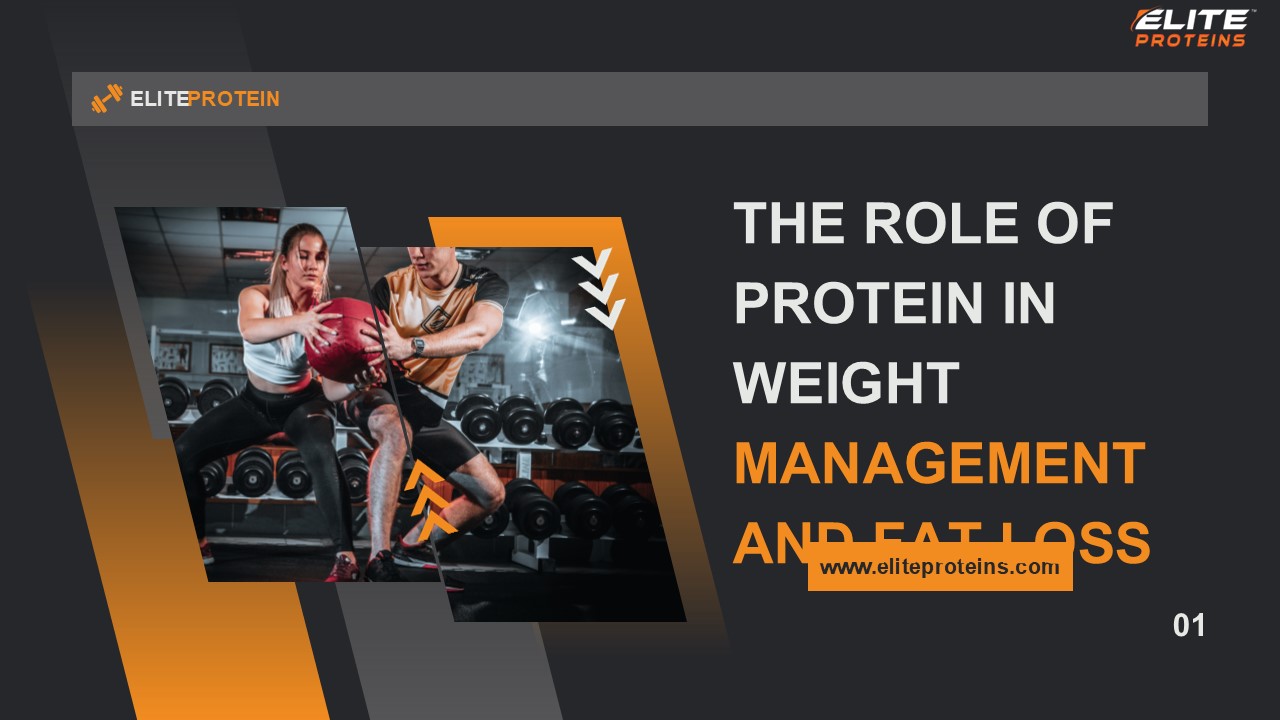
Title: The Role of Protein in Weight Management and Fat Loss
1
ELITE
PROTEIN
THE ROLE OF PROTEIN IN WEIGHT MANAGEMENT AND FAT
LOSS
www.eliteproteins.com
01
2
UNDERSTANDING PROTEIN'S IMPACT ON WEIGHT
MANAGEMENT
The Role of Protein in Weight Management and Fat
Loss begins with its unique ability to boost
metabolism. When we consume protein, our bodies
expend more energy processing it compared to
carbohydrates and fats. This higher thermic
effect means that roughly 20-30 of protein's
calories are burned during digestion, making it
an efficient nutrient for weight management.
02
www.eliteproteins.com
3
SATIETY AND APPETITE CONTROL
One of the most significant aspects of The Role
of Protein in Weight Management and Fat Loss is
its ability to promote feelings of fullness and
reduce hunger. Protein triggers the release of
satiety hormones while reducing the hunger
hormone ghrelin, helping individuals naturally
consume fewer calories throughout the day.
03
www.eliteproteins.com
4
MUSCLE PRESERVATION DURING WEIGHT LOSS
When examining The Role of Protein in Weight
Management and Fat Loss, we must consider its
crucial function in preserving lean muscle mass
during caloric deficits. Adequate protein intake
becomes even more vital during weight loss
phases, as it helps prevent muscle breakdown
while the body uses fat stores for energy.
Structured Weight Loss
Recovery Rehabilitation
Spinning Pilates Class
Children Youth Fitness
04
www.eliteproteins.com
5
METABOLIC BENEFITS
The Role of Protein in Weight Management and Fat
Loss extends to maintaining a healthy metabolic
rate. Since muscle tissue is metabolically
active, preserving it through sufficient protein
intake helps maintain a higher resting metabolic
rate, making weight management more effective in
the long term.
05
www.eliteproteins.com
6
OPTIMAL TIMING AND DISTRIBUTION
Understanding The Role of Protein in Weight
Management and Fat Loss involves knowing when and
how to consume protein. Spreading protein intake
throughout the day, rather than consuming it all
at once, helps maximize its benefits for muscle
synthesis and metabolic health.
06
www.eliteproteins.com
7
RECOVERY AND EXERCISE PERFORMANCE
The Role of Protein in Weight Management and Fat
Loss becomes particularly important for active
individuals. Proper protein consumption supports
muscle recovery after exercise, helps reduce
muscle soreness, and enables better adaptation to
training, all of which contribute to improved
body composition.
www.eliteproteins.com
07
8
PRACTICAL IMPLEMENTATION
When implementing The Role of Protein in Weight
Management and Fat Loss strategies, focus on
consuming high-quality protein sources such as
lean meats, fish, eggs, dairy, legumes, and
plant-based alternatives. For those struggling to
meet their protein needs through whole foods
alone, quality protein supplements can be
beneficial.
THE FUTURE OF PROTEIN RESEARCH
The Role of Protein in Weight Management and Fat
Loss continues to be an active area of research,
with new studies consistently revealing
additional benefits of adequate protein intake
for weight management and overall health.
08
www.eliteproteins.com
9
CONCLUSION
Understanding and implementing proper protein
strategies is crucial for successful weight
management and fat loss. By maintaining adequate
protein intake, individuals can better preserve
muscle mass, control appetite, and optimize their
metabolism for long-term success in their weight
management journey. Remember that while protein
is essential, it should be part of a balanced,
sustainable approach to nutrition that includes
all necessary nutrients for optimal health and
performance. Remember, consulting with
healthcare professionals or registered dietitians
can help determine individual protein needs based
on factors such as age, activity level, and
specific health goals. This personalized approach
ensures the most effective implementation of
protein strategies for weight management and fat
loss.
09
www.eliteproteins.com
10
THANK YOU
www.eliteproteins.com
10
Recommended

