

The Role of Child Psychologists in Child Development and Well-Being PowerPoint PPT Presentation
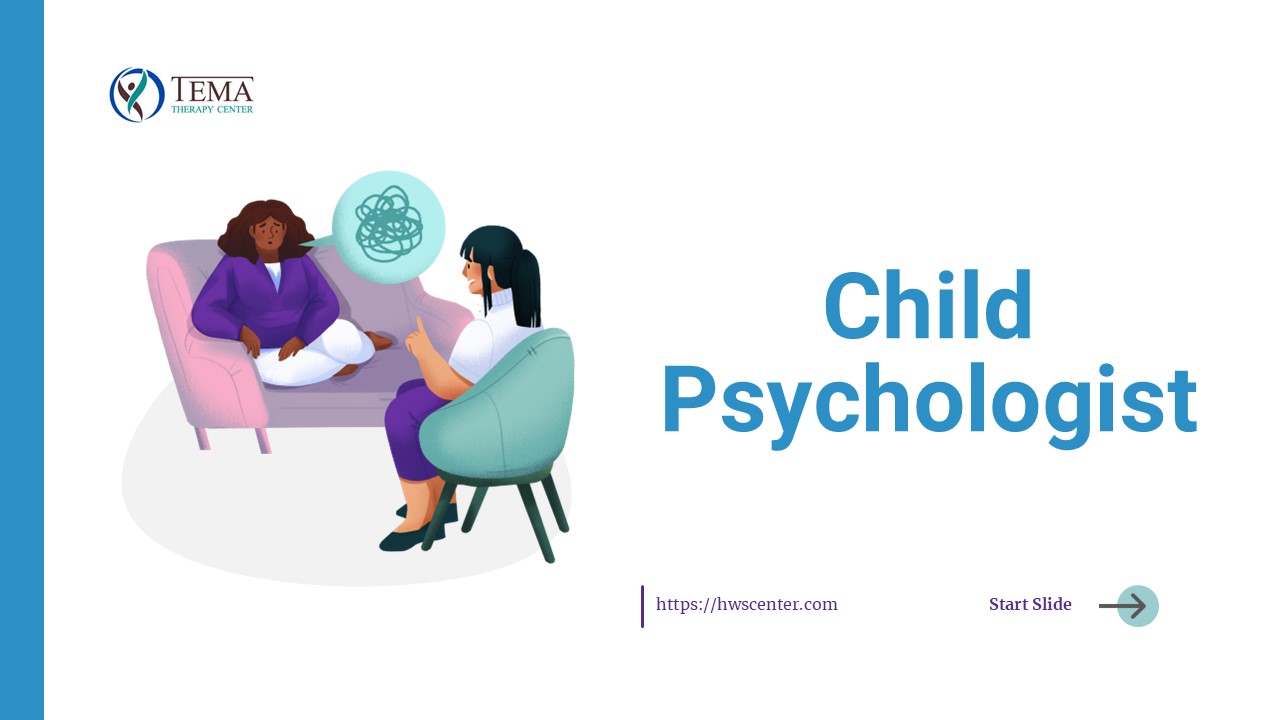
Title: The Role of Child Psychologists in Child Development and Well-Being
1
Child Psychologist
Start Slide
https//hwscenter.com
2
Child Psychologists and Their Impact
Child psychologists help children overcome mental
health and developmental challenges, fostering
growth and supporting families. This blog
highlights their role and benefits.
Read More...
02
3
Key Responsibilities of a Child Psychologist
Conducting evaluations to identify psychological,
behavioral, or developmental issues.
Developing tailored intervention strategies that
address specific challenges.
Working closely with parents, teachers, and
healthcare providers to create a unified support
system.
03
4
Specialized Areas in Child Psychology
Focusing on how children grow and change over
time, including their cognitive, emotional, and
social development.
Addressing problematic behaviours and developing
strategies to encourage positive behaviour
patterns.
Helping children develop skills for building
healthy relationships and managing emotions.
03
5
Effective Techniques and Therapies in Child
Psychology
Child psychologists use tailored techniques and
therapies based on a child's age, development,
and specific challenges.
- This technique uses play as a medium to help
children express their emotions and experiences
in a safe and non-threatening way. - A structured approach that helps children
identify and change negative thought patterns and
behaviours. - Implementing strategies to reinforce positive
behaviors and reduce problematic ones.
Read More...
06
6
Advantages of Consulting a Child Psychologist
Consulting a child psychologist benefits
children and families by providing a supportive
space to address concerns and foster growth.
- Early Intervention Identifying and addressing
issues early can prevent them from escalating
into more significant problems. - Improved Emotional Regulation Helping children
manage their emotions effectively, reducing
instances of anxiety, anger, or sadness. - Enhanced Social Skills Teaching children how to
build healthy relationships and interact
positively with others.
Read More...
07
7
The Role of Child Psychologist Professionals
Assessing Emotional and Behavioral Issues
01
Child psychologists evaluate childrens emotions,
behaviors, and developmental stages to identify
underlying issues such as anxiety, depression, or
social challenges.
Providing Tailored Therapy
02
They use various therapeutic techniques, such as
play therapy and cognitive-behavioral therapy, to
help children cope with emotional or behavioral
difficulties.
Addressing Trauma and Stress
03
They help children process and heal from
traumatic experiences, such as abuse, grief, or
parental separation, through specialized
therapeutic methods.
Building Self-Esteem
04
Through therapy and support, they help children
build confidence and self-esteem, encouraging
resilience in the face of challenges.
05
Guiding Parents and Families
Psychologists offer guidance to parents,
providing strategies to manage challenging
behaviors and create a supportive home
environment.
08
8
Treating Child Psychologist Disorders
Child psychological disorders are treated with
therapies like CBT, play therapy, TMS, and Tema
Therapy, along with medication, lifestyle
changes, and parental support.
Lifestyle Changes
Mindfulness and Relaxation Techniques
Medication
Teaching children mindfulness and relaxation
exercises can help them manage stress, reduce
anxiety, and develop coping mechanisms for
difficult emotions.
Child psychologists may recommend changes in
daily routines to support mental well-being. This
can include adjustments in sleep schedules,
healthy eating habits, physical activity, and
structured downtime to enhance overall
development and emotional regulation.
In some cases, medication may be prescribed
alongside therapy to manage symptoms of disorders
like ADHD, depression, or anxiety. Medications
are carefully monitored and used as part of a
comprehensive treatment plan.
09
9
Contact Tema Therapy
Phone
347-879-0202
Email Address
tematherapy.seo_at_gmail.com
Consultation Room
440 West Street, Suite 318 Fort Lee, New Jersey,
NJ 07024, United States
https//tematherapy.com/
End Slide
Recommended

