

The Hidden Factor in Custom Plush Toy Quality: Fabric Processing PowerPoint PPT Presentation
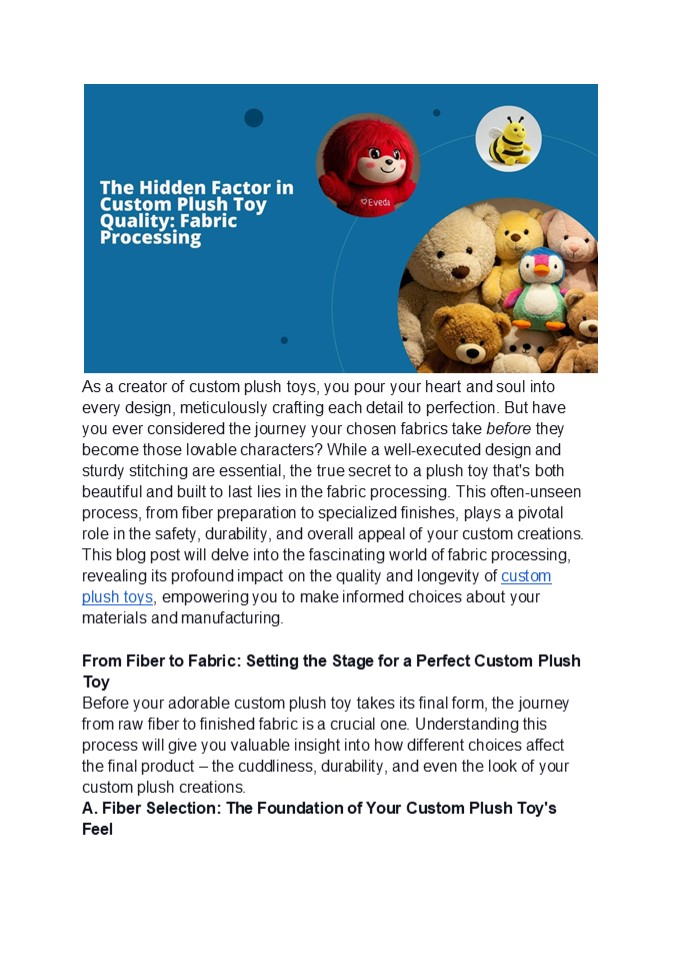
Title: The Hidden Factor in Custom Plush Toy Quality: Fabric Processing
1
As a creator of custom plush toys, you pour your
heart and soul into every design, meticulously
crafting each detail to perfection. But have you
ever considered the journey your chosen fabrics
take before they become those lovable characters?
While a well-executed design and sturdy stitching
are essential, the true secret to a plush toy
that's both beautiful and built to last lies in
the fabric processing. This often-unseen process,
from fiber preparation to specialized finishes,
plays a pivotal role in the safety, durability,
and overall appeal of your custom creations. This
blog post will delve into the fascinating world
of fabric processing, revealing its profound
impact on the quality and longevity of custom
plush toys, empowering you to make informed
choices about your materials and
manufacturing. From Fiber to Fabric Setting the
Stage for a Perfect Custom Plush Toy Before your
adorable custom plush toy takes its final form,
the journey from raw fiber to finished fabric is
a crucial one. Understanding this process will
give you valuable insight into how different
choices affect the final product the
cuddliness, durability, and even the look of your
custom plush creations. A. Fiber Selection The
Foundation of Your Custom Plush Toy's Feel
2
- The type of fiber used in your custom plush toy
is the foundational building block, influencing
everything from softness and texture to pile
height and durability. Here are some common
choices - Plush Often made from polyester, the plush
fabric is known for its high pile, creating that
classic "plush" feel. It's soft, cuddly, and a
popular choice for a wide range of custom plush
toys. The specific type of polyester and the pile
height will impact the final texture. A shorter
pile plush might be used for details, while a
longer pile creates a more luxurious feel. - Fleece A knitted fabric, typically made from
polyester, fleece offers a soft, warm, and cozy
texture. It's a great choice for custom plush
toys designed for snuggling. The weight and
thickness of the fleece will influence its warmth
and drape. A lighter fleece might be used for a
summer toy, while a heavier fleece is perfect for
a winter companion. - Velboa A smooth, short-pile fabric, velboa has a
velvety texture and is often used for
realistic-looking custom plush toys. It's a good
choice for detailed designs where a clear image
is important. The direction of the pile can
affect how the fabric reflects light and the
overall look of the toy. - Cotton A natural fiber, cotton can be used for
plush toys where a natural feel is desired. It's
soft and breathable, making it a good option for
custom plush toys for babies or those with
sensitive skin. Organic cotton is a popular
choice for eco-conscious brands. - It's important to remember that the fiber choice
interacts directly with the processing steps. For
example, polyester plush will react differently
to dyeing than a cotton velboa. The fiber's
inherent properties influence how it responds to
finishing treatments. Thinking about the intended
"feel" of your custom plush toy is key when
selecting the fiber. - B. Yarn Spinning (If Applicable) The Twist in
the Tale of Your Custom Plush Toy - If the plush fabric for your custom toy is
knitted (rather than woven or non-woven), then
the yarn-spinning process becomes relevant. How
the fibers are spun into yarn significantly
impacts the texture and drape of the fabric. - Yarn Type Different spinning methods create
different yarn types, impacting the fabric's
texture. A tightly spun yarn will create a
3
- firmer fabric, while a loosely spun yarn will be
softer and fluffier. The yarn type will influence
the "cuddliness" of your custom plush toy. - Yarn Twist The amount of twist applied during
spinning also affects the yarn's properties. A
tighter twist creates a stronger, more durable
yarn, while a looser twist results in a softer,
fluffier yarn. The right twist is crucial for the
intended use of your custom plush toy from
delicate decorative toys to robust playthings. - For custom plush toys, yarn spinning is a key
consideration only if you're using a knitted
fabric. Most plush toys utilize non-woven
fabrics, which don't involve yarn spinning. - C. Fabric Construction (Knitting/Weaving/Non-woven
) Building the Structure of Your Custom Plush
Toy - The way the yarn (or fibers in the case of
non-woven fabrics) is constructed into fabric is
the next critical step in creating your custom
plush toy. Here's a breakdown of the common
constructions - Knitting Knitting creates a fabric with loops,
providing excellent stretch and drape. Knitted
plush fabrics are often used for toys where
flexibility and a soft hand are desired. The knit
structure can impact the toy's overall shape and
how it "gives" when hugged. - Weaving Weaving involves interlacing yarns at
right angles, creating a more structured and less
stretchy fabric. Woven plush fabrics are less
common for cuddly toys but might be used for
specific applications where durability and a more
defined shape are required. - Non-woven Non-woven fabrics are made by bonding
fibers together through various methods (e.g.,
heat, pressure, adhesives). These fabrics are
often used for plush toys due to their
affordability and ease of production. The
specific bonding method and fiber type will
drastically influence the texture and durability
of the non-woven fabric. Many plush toys use
non-woven fabrics due to their cost-effectiveness.
- For custom plush toys, fabric construction is a
vital choice. Do you want the stretch and drape
of a knitted fabric, the structure of a woven, or
the cost-effectiveness of a non-woven? The
construction will significantly impact the final
feel and look of your custom plush toy. Most
plush toys
4
- utilize knitted or non-woven fabrics due to their
softness and suitability for creating cuddly
shapes. - The Crucial Steps Fabric Processing and Their
Impact on Your Custom Plush Toys - The magic of creating a truly special custom
plush toy lies not just in the design, but also
in the often-unseen fabric processing steps.
These processes transform raw materials into the
soft, safe, and durable fabrics that make your
plush creations so lovable. - Pre-Treatment Processes Preparing the Plush
Canvas - These pre-treatment steps are essential for
preparing the fabric to receive dyes and finishes
effectively, creating the perfect base for your
custom plush toys. - Scouring Cleaning the Way for Beautiful Plush
Toys Scouring is like giving the fabric a deep
clean, removing impurities such as oils, waxes,
and dirt. Proper scouring is crucial for even dye
uptake. If the fabric isn't thoroughly cleaned,
the dye may not penetrate evenly, resulting in
patchy or uneven color in your custom plush toy.
Scouring also contributes to the fabric's
softness. Inadequate scouring can leave the
fabric feeling harsh or scratchy. Think of how
much more appealing a clean, - well-prepared canvas is for painting the same
applies to fabric for your plush toys. - Bleaching (Optional) Brightening Up Your Custom
Plush Toy Designs Bleaching is used to whiten
the fabric, often necessary for achieving
bright, vibrant colors, especially when working
with lighter-colored plush. However, bleaching
should be done carefully. Over-bleaching can
weaken the fibers, making your custom plush toy
less durable. It's important to consider
eco-friendly bleaching options, such as
oxygen-based bleaches, which are gentler on the
environment and the fabric. Discussing bleaching
with your plush toy manufacturer is essential to
ensure the process is done correctly and
sustainably. - Dyeing and Printing Bringing Your Custom Plush
Toy Visions to Life - Once the fabric is pre-treated, it's ready for
dyeing and printing, the processes that will
bring your custom plush toy designs to life.
5
- Dyeing Methods Achieving the Perfect Hues for
Your Plush Creations Different dyeing methods
offer varying degrees of colorfastness
(resistance to fading) and evenness. Choosing the
right dye is critical for child safety. - Fiber dyeing dyes the fibers before they are spun
into yarn (if applicable). This method provides
excellent colorfastness. - Yarn dyeing dyes the yarn before it is knitted or
used in other fabric construction. This method
offers good colorfastness. - Piece dyeing dyes the finished fabric. This is
the most common and cost-effective method. It is
important to use non-toxic dyes specifically
designed for children's toys. - Printing (for Details) Adding Character to
Custom Plush Toys Printing allows you to add
intricate designs, logos, and patterns to your
custom plush toys. The printing quality directly
affects the toy's visual appeal and longevity. - Screen printing is a traditional method that uses
stencils to apply ink to the fabric. - Digital printing allows for highly detailed and
intricate designs. - Sublimation printing is used for all-over prints
and creates a vibrant, long-lasting design.
Ensure the inks used are safe for children. Poor
printing can crack or fade quickly, diminishing
the toy's look. - C. Finishing Processes The Final Touches for
Cuddly Custom Plush Toys - Finishing processes enhance the feel,
performance, and safety of your custom plush
toys. - Softening Making Your Custom Plush Toys Extra
Cuddly Softening treatments are used to make
the fabric softer and more huggable. However,
over-softening can reduce the fabric's
durability or lead to pilling, so a balance must
be struck. - Brushing/Shearing Creating the Perfect Plush
Texture Brushing or shearing adjusts the pile
height and texture of the plush fabric, creating
different levels of fluffiness and feel. - Anti-static Treatments (Optional) Reducing Cling
and Dust Anti-static finishes can reduce static
cling and dust attraction, keeping your custom
plush toys cleaner.
6
- 4. Flame Retardant Treatments (Crucial) Ensuring
Safety for Children's Plush Toys Flame retardant
treatments are essential for children's toys to
meet safety regulations and reduce fire hazards.
Compliance with relevant safety standards (e.g.,
ASTM, EN71) is non-negotiable. - D. Quality Control Safety Protecting Children
and Ensuring Quality - Quality control and safety testing are paramount
throughout the fabric processing journey,
especially for toys intended for children. - Fabric Inspection Catching Defects Before They
Become a Problem Inspecting the processed
fabric for any defects before it's used is
essential for maintaining quality. - Safety Testing Prioritizing Child Safety
Various fabric safety tests are conducted - Flammability testing Ensures the fabric meets
flammability standards. - Tear strength testing Evaluates the fabric's
resistance to tearing. - Colorfastness testing Check the dye's resistance
to fading. - Chemical content testing Verifies the fabric is
free from harmful chemicals. Rigorous safety
testing is crucial for protecting children and
building trust in your custom plush toys. - The Plush Toy's Story How Processing Affects
Playtime From Safety to Cuddles - The fabric processing your custom plush toys
undergo has a profound impact on how they perform
during playtime from ensuring their safety and
durability to enhancing their cuddliness and
visual appeal. It's the unseen magic that
transforms raw materials into cherished
companions. - A. Safety Protecting Little Hands and Hugs with
Safe Fabrics Safety is paramount, especially when
it comes to toys intended for children. Fabric
processing plays a critical role in ensuring your
custom plush toys meet the highest safety
standards. - Non-Toxic Dyes Using non-toxic dyes is
absolutely essential for children's toys. Proper
dyeing processes ensure that these dyes are
bonded securely to the fabric and won't leach out
during play
7
- or washing. Imagine a child snuggling their
beloved custom plush toy you want to be
confident that the colors are safe and won't harm
their skin. - Flame Retardant Treatments Flame retardant
treatments are crucial for minimizing fire
hazards. These treatments, applied during fabric
processing, help to slow down the spread of
flames in case of a fire, protecting children
from potential harm. Meeting flammability
regulations is non-negotiable for children's
custom plush toys. - Tear Strength The fabric's tear strength,
enhanced through proper processing, ensures that
seams won't easily rip or tear during play. This
prevents small parts from becoming detached,
posing a choking hazard for young children. A
well-processed fabric contributes to a robust and
safe custom plush toy. - B. Durability Withstanding Years of Love and
Play - Custom plush toys are meant to be loved, cuddled,
and played with for years to come. Fabric
processing contributes significantly to their
durability, ensuring they can withstand the
rigors of childhood adventures. - Strength Strong fibers and proper fabric
construction, enhanced through processing, make
the plush toy more resistant to tearing and
ripping. This is crucial for ensuring the toy can
withstand rough play and maintain its shape over
time. A well-made custom plush toy is an
investment in lasting memories. - Abrasion Resistance Abrasion resistance refers
to the fabric's ability to withstand rubbing and
friction. This is particularly important for
plush toys that are constantly being held,
cuddled, and dragged around. Specific finishing
treatments can enhance abrasion resistance,
making your custom plush toys more durable and
long-lasting. - Dimensional Stability Dimensional stability
ensures that the plush toy maintains its shape
and size even after repeated washing and drying.
Pre-shrinking and other finishing processes
contribute to dimensional stability, preventing
your custom plush toys from becoming misshapen or
too small over time. - C. Appearance Capturing a Child's Imagination
with Vibrant Colors and Textures
8
- The visual appeal of a custom plush toy is
crucial for capturing a child's imagination and
sparking their interest. Fabric processing plays
a vital role in enhancing the toy's aesthetic
appeal. - Color Vibrancy Proper dyeing methods and
high-quality dyes, applied during fabric
processing, result in vibrant, long-lasting
colors that won't fade quickly. This ensures that
your custom plush toys maintain their visual
appeal and continue to delight children for years
to come. Bright, engaging colors can make a plush
toy even more captivating. - Luster The fabric's luster, or sheen, can add an
extra touch of magic to a custom plush toy.
Certain finishing treatments can enhance the
fabric's luster, making it more visually
appealing and luxurious. - Overall Aesthetic Appeal The combined effect of
all the processing steps contributes to the
overall aesthetic appeal of your custom plush
toys. From the softness of the fabric to the
vibrancy of the colors and the durability of the
construction, fabric processing plays a crucial
role in creating toys that are both beautiful and
functional. - D. Cuddliness The Irresistible Softness of a
Cherished Companion Cuddliness is a key factor in
a plush toy's appeal. Fabric processing plays a
significant role in creating that irresistible
softness that children crave. - Softening Softening treatments, applied during
fabric processing, make the plush fabric extra
soft and huggable. This is essential for creating
custom plush toys that are comforting and
inviting. - Brushing/Shearing Brushing or shearing the
fabric after processing creates the perfect pile
height and texture, enhancing the toy's cuddly
feel. The right combination of softening and
brushing/shearing can make a custom plush toy
truly irresistible. - Choosing the Right Partner Questions to Ask Your
Plush Toy Manufacturer (About Fabric Processing
and Safety) - Creating truly exceptional custom plush toys
requires careful consideration of materials and
manufacturing processes. Asking the right
questions about fabric processing, safety
testing, and regulatory compliance is crucial for
ensuring your vision translates into a
9
- high-quality, safe, and cherished product. Here's
a list of questions to empower you to make
informed decisions - About Fiber and Fabric
- What types of fabrics do you offer for custom
plush toy production? (e.g., plush, fleece,
velboa, cotton, etc.) - Can you provide details about the specific fiber
types used? (e.g., specific polyester types,
organic cotton, etc.) - What fabric construction methods do you use?
(e.g., knitted, woven, non-woven) How does this
affect the final toy? - Can you provide samples of different fabric types
and constructions? - About Pre-Treatment Processes
- What scouring process do you use? How do you
ensure the thorough removal of impurities? - Is bleaching used? If so, what type of bleaching
agent is used (e.g., oxygen-based)? Is it safe
for children? - What other pre-treatment processes are used, and
why? - About Dyeing and Printing
- What dyeing methods do you employ? (e.g., fiber
dyeing, yarn dyeing, piece dyeing) - What dyes do you use? Are they non-toxic and
specifically designed for children's toys? Can
you provide certifications? - What printing methods do you offer for custom
designs? (e.g., screen printing, digital
printing, sublimation) What are the limitations
and benefits of each? - What inks are used for printing? Are they
non-toxic and safe for children? - What is the colorfastness rating of your dyes?
How do you ensure long-lasting color? - About Finishing Processes
- What softening treatments do you use? How do you
balance softness with durability and safety? - What brushing or shearing techniques are used?
How does this affect the plush fabric's texture?
10
- Crucially What flame retardant treatments do you
use? Are they compliant with relevant safety
standards? Can you provide documentation? - About Quality Control and Safety Testing
- What quality control measures do you have in
place throughout the fabric processing and toy
production stages? - Do you conduct fabric safety testing? What
specific tests are performed (e.g., flammability,
tear strength, colorfastness, chemical content)? - Can you provide test reports or certifications
for the fabrics you use and the finished toys? - What safety standards do you comply with? (e.g.,
ASTM, EN71, etc.) Can you provide documentation
of compliance? - What is your process for handling fabric defects
or safety issues? - About Manufacturing and Sourcing
- Where are your manufacturing facilities located?
- What are your sourcing practices for fibers,
dyes, and other materials? Do you prioritize
sustainable and ethical suppliers? - Do you have any certifications related to ethical
manufacturing or environmental sustainability? - Other Important Questions
- What is your minimum order quantity (MOQ) for
custom plush toys? - What is your lead time for production?
- What are your pricing terms and conditions?
- Can you provide samples of previously produced
custom plush toys? - Crafting Cherished Custom Plush Toys with Care
and Quality - Fabric processing is the unsung hero of plush toy
manufacturing, playing a crucial role in the
safety, durability, cuddliness, and overall
appeal of your custom creations. By understanding
the journey from fiber to finished fabric, and by
partnering with a knowledgeable and ethical
manufacturer, you can create custom plush toys
that are not only loved but also cherished for
years to come. Don't underestimate the power of
proper fabric processing it's the key to
crafting plush toys that are truly special.
11
- Ready to bring your plush toy visions to life
with exceptional quality and care? Connect with
EverLighten today! We're passionate about helping
you create custom plush toys that are both
beautiful and safe. We offer - 100 Customization Design every detail of your
custom plush toys, from the fabric and colors to
the size, shape, and added features. - 100 Quality Check We maintain rigorous quality
control standards at every stage of production,
ensuring your custom plush toys meet our high
standards and yours. - Free Design Help Our experienced design team is
here to assist you with bringing your creative
vision to life, from concept to final product. - Worldwide Delivery We ship your custom plush
toys anywhere in the world, making it easy to
reach your customers or distribute your
creations. - 24/7 Support Our dedicated support team is
available around the clock to answer your
questions and provide assistance throughout the
process. - Unlimited Revisions We'll work with you until
you're completely satisfied with your custom
plush toy design. - Low MOQ We offer flexible minimum order
quantities, making it easier for businesses of
all sizes to create custom plush toys. - Contact EverLighten today to get started on your
custom plush toy project! - FAQs
- What are the most important safety considerations
for custom plush toys? - The most important safety considerations include
using non-toxic dyes, ensuring flame retardant
treatments, verifying tear strength to prevent
small parts from detaching and complying with
relevant safety standards (e.g., ASTM, EN71). - How can I tell if a plush toy fabric is high
quality? - Look for fabrics that are soft, have a good pile
height (if applicable), and are free from
defects. Ask your manufacturer about the fabric's
composition, weight, and any certifications it
holds.
12
- Why is fabric processing so important for plush
toys? - Fabric processing impacts everything from the
toy's softness and durability to its color
vibrancy and safety. Proper processing ensures
the fabric is ready to receive dyes and finishes
correctly, and that it meets safety and quality
standards. - What questions should I ask my plush toy
manufacturer about their fabric processing? - Ask about the types of fabrics they offer, their
pre-treatment processes (scouring, bleaching),
dyeing and printing methods, finishing treatments
(softening, flame retardants), and their quality
control and safety testing procedures. Inquire
about their compliance with relevant safety
regulations. - What are the key steps in creating a custom plush
toy? - The key steps include design development, fabric
selection, fabric processing (including dyeing
and printing), cutting and sewing, stuffing,
quality control, and packaging. Partnering with a
reputable manufacturer who prioritizes each of
these steps is essential for creating a
high-quality custom plush toy.
Recommended

