

Portugal Lisboa30 PowerPoint PPT Presentation
Title: Portugal Lisboa30
1
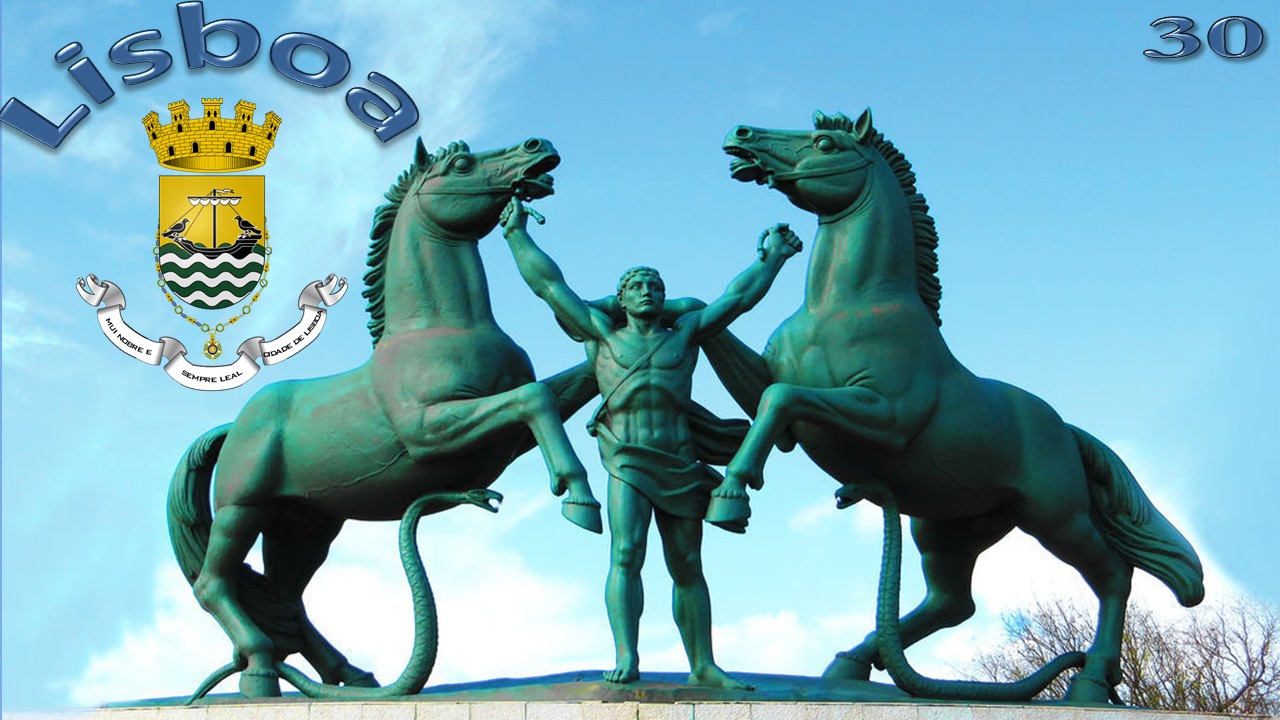
Lisboa
30
2
Rua Augusta
3
the Commerce Square
Rua Augusta has on both extremes two magnificent
squares the Commerce Square and the Rossio Square
4
The Baixa district
5
Rua Augusta
6
The old architectural style of Rua Augusta,
originally from the reconstruction of Lisbon made
by Marquês do Pombal after the 1755 earthquake,
is still intact, so you can see many of the
buildings as they originally were
7
Closed to traffic, this pedestrian street has all
sorts of shops for all sorts of tastes, flower
peddlers, hot chestnuts sellers, street cafés,
independent street Artists like the "statue man"
or the familiar harmonica player and many, many
more
8
The Baixa district is considered as the central,
downtown area Lisbon. The district extends from
the banks of the Tejo Estuary in the south, up to
the Marquis de Pombal Square in the north and is
positioned between the two hills of the Alfama
and Chiado districts. For tourists, there are
four main plazas Praça do Comércio Praça Dom
Pedro IV (Rossio) Praça Dos Restauradores
Praça Figueira While there are two main
avenues Avenida da Liberdade Rua Augusta
9
Praça Dom Pedro IV (Rossio)
10
Elevador de Santa Justa, also called Carmo Lift
connects the lower streets of the Baixa with the
higher Largo do Carmo. The lift is decorated in
a Neo-Gothic style in iron
11
Rossio railway station
12
Rossio railway station
13
Rossio train station is the terminus of the
Lisbon to Sintra railway line, José Luís Monteiro
as the architect. His design was influenced by
the 16th century Portuguese Manueline style and
construction of the railway and station was
completed in 1888
14
Rossio railway station
15
Rossio train station details
16
Rossio Square - Theater D. Maria II
17
Rossio Square is the popular name of the Pedro IV
Square
18
(No Transcript)
19
(No Transcript)
20
(No Transcript)
21
(No Transcript)
22
Rossio Square - The Column of Pedro IV
23
The Elevador da Glória links Baixa to Bairro Alto
24
Castelo de São Jorge (Castle of Saint George)
seen from inside Rossio station
25
Praca dos Restauradores
26
Praca dos Restauradores - Teatro Eden - VIP
Executive Éden Aparthotel 4
27
Praca dos Restauradores - Teatro Eden VIP
Executive Éden Aparthotel 4
28
Teatro Eden was used as a location in the Wim
Wenders movie Until the End of the World (1991)
29
(No Transcript)
30
This was one of Lisbons major cinema/theatre
buildings and its imposing facade still dominates
the main city square Praca dos Restauradores. It
opened in 1931 and was designed by architects
Cassiano Branco and Carlo Florencio Dias
31
(No Transcript)
32
Praca dos Restauradores
33
Monument to the Calceteiro, Baixa
34
Monument to the Calceteiro, Baixa, Rua da
Vitória Art in Cobblestones one of the endearing
hallmarks of Portugal's streets is their
decorated pavements. Limestone is hewn into tiny
blocks creating beautiful patterned compositions,
traditional and modern designs, street numbers,
and business logos
35
Palacete Conceição e Silva
Avenida da Liberdade is an important avenue in
central Lisbon
36
The Avenida da Liberdade, as well as the
Restauradores Square, have their origins in a
public park (Passeio Público) inaugurated in the
area in 1764
37
La Plaza de toros de Campo Pequeño
38
La Plaza de toros de Campo Pequeño Retractable
Roof
After a profound renovation, it re-opened as a
multi-event venue in 2006, designed to be used
for various events apart from bull fighting
39
Lisbon's bullring was built between 1890 and 1892
under the supervision of Portuguese architect
António José Dias da Silva
40
His design was inspired by the old bullring of
Madrid, by Emilio Rodriguez Ayuso, later
demolished. The style is the neo-Mudéjar. The
inner arena has 80 metres of diameter and is
covered with sand
41
Unlike Spanish bullfighting, in Portugal the bull
is not killed at the end of the fight. This was
decreed by king Miguel of Portugal during his
reign of 18281834 as he considered it inhumane
to the animal
42
Campo Grande
43
Jacarandá-mimoso (Jacaranda mimosifolia) Jardim
do Campo Grande
44
Campo Grande Pórtico (1995) by João Charters de
Almeida (1935)
45
Pórtico
Praça de Entrecampos Monument to the Heroes of
the Peninsular War by the brothers Francisco and
José de Oliveira Ferreira
Pórtico and University Rectory
46
Praça de Entrecampos
47
The Guerra Peninsular (or Peninsular War in
English) refers to the invasion of Portugal by
France during Napoleons rule. From 1807 to 1814,
the French army occupied Portugal, and was later
driven out of the country by the Portuguese,
British and Spanish armies. The Monument to the
Guerra Peninsular, located right in the heart of
Lisbon in Entrecampos, is a tribute to the heroes
of that war. The immense sculptural structure was
inaugurated in 1933, and it is one of the most
dramatic monuments in Lisbon
48
Gulbenkian
Palácio da Justiça
Eduardo VII Park
Avenida da Liberdade is a 90 metre-wide boulevard
, 1100 m long, with ten lanes divided by
pedestrian pavements decorated with gardens. It
links Praca Restauradores with Marquis of Pombal
Square
Avenida da Liberdade
49
Pombal
Eduardo VII Park
Main prison
Palácio da Justiça and the main prison
50
Palácio da Justiça
51
Palácio da Justiça or Palace of Justice (Rua
Marquês da Fronteira), constructed between
1966-1969 and designed by Januário Godinho and
João Andresen
52
A Justiça by Leopoldo de Almeida em 1982
53
Palácio da Justiça or Palace of Justice (Rua
Marquês da Fronteira), constructed between
1966-1969 Azulejos by Querubim Lapa
54
Palace of Justice (Rua Marquês da Fronteira),
constructed between 1966-1969 Azulejos by
Querubim Lapa
55
Azulejos by Jorge Barradas
56
Palácio da Justiça Rua Marquês da Fronteira
Azulejos by Jorge Barradas
57
Main prison
58
Text Internet Pictures Sanda Foisoreanu
Gabriela Cristescu
Internet All copyrights belong
to their respective owners Presentation
Sanda Foisoreanu
2017
Sound Dulce Pontes - Ai Solidom Fado
Portugues
Recommended

