

ERP for E-Commerce: How It Streamlines Inventory & Order Management PowerPoint PPT Presentation
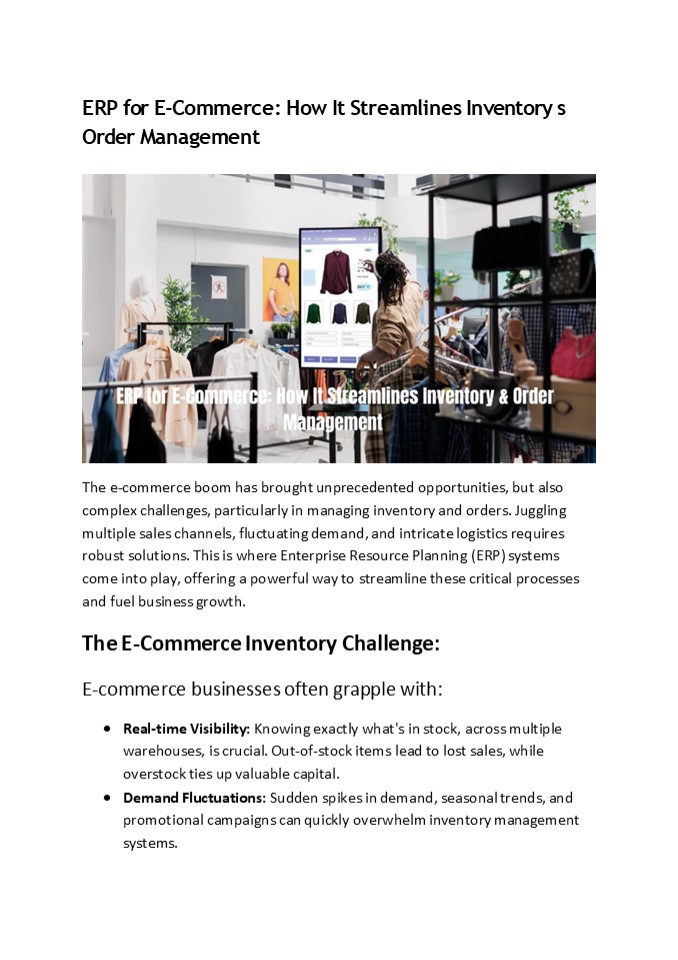
Title: ERP for E-Commerce: How It Streamlines Inventory & Order Management
1
ERP for E-Commerce How It Streamlines Inventory
s Order Management
- The e-commerce boom has brought unprecedented
opportunities, but also complex challenges,
particularly in managing inventory and orders.
Juggling multiple sales channels, fluctuating
demand, and intricate logistics requires robust
solutions. This is where Enterprise Resource
Planning (ERP) systems come into play, offering a
powerful way to streamline these critical
processes and fuel business growth. - The E-Commerce Inventory Challenge
- E-commerce businesses often grapple with
- Real-time Visibility Knowing exactly what's in
stock, across multiple warehouses, is crucial.
Out-of-stock items lead to lost sales, while
overstock ties up valuable capital. - Demand Fluctuations Sudden spikes in demand,
seasonal trends, and promotional campaigns can
quickly overwhelm inventory management systems.
2
- Multi-Channel Complexity Selling across
websites, marketplaces, and social media
platforms multiplies the complexity of tracking
inventory and fulfilling orders. - Integration Issues Connecting e-commerce
platforms with separate inventory management
systems can be a nightmare, leading to data silos
and errors. - How ERP Solves the Inventory Puzzle
- ERP systems offer a centralized platform to
address these challenges - Real-time Inventory Tracking ERP provides a
single, unified view of inventory across all
locations. Features like barcode scanning and
RFID integration automate stock updates, ensuring
accuracy and minimizing manual errors. This is
crucial for businesses looking for ERP software
for inventory management in Mumbai - Automated Stock Replenishment ERP systems can
automate purchase orders based on pre-defined
thresholds, demand forecasts, and lead times,
preventing stockouts and optimizing inventory
levels. - Demand Forecasting Leveraging historical sales
data and advanced analytics, ERP systems can
predict future demand, enabling businesses to
proactively adjust inventory levels and optimize
stock allocation. - Warehouse Management ERP integrates with
warehouse management systems (WMS) to streamline
warehouse operations, including receiving,
putaway, picking, packing, and shipping. This is
especially relevant for businesses needing ERP
for inventory and production management in India. - Multi-Channel Inventory Management ERP systems
can manage inventory across multiple sales
channels, ensuring consistent stock information
and preventing overselling. - The E-Commerce Order Management Maze
3
- Order management in e-commerce can be equally
complex, involving - Order Processing Efficiently processing orders
from various sales channels is essential for
timely fulfilment. - Shipping and Logistics Coordinating shipping,
tracking packages, and managing returns can be a
logistical challenge. - Customer Communication Keeping customers
informed about order status and delivery updates
is crucial for customer satisfaction. - How ERP Streamlines Order Management
- Automated Order Processing ERP systems automate
order processing, from order capture to invoice
generation, reducing manual effort and minimizing
errors. - Integrated Shipping and Logistics ERP integrates
with shipping carriers and logistics providers to
automate shipping processes, track shipments, and
manage returns. - Real-time Order Tracking Customers can track
their orders in real-time through the ERP system,
improving transparency and enhancing customer
experience. - Centralized Customer Data ERP systems store
customer data in a centralized database, enabling
businesses to personalize customer interactions
and provide better customer service. - Improved Order Accuracy Automated processes and
data validation minimize errors in order
fulfillment, reducing returns and improving
customer satisfaction. This is a key benefit for
businesses looking for ERP software for inventory
and order management in distribution business. - Choosing the Right ERP
4
- Selecting the right ERP system is crucial.
Consider factors like - Scalability Choose a system that can grow with
your business. - Integration Capabilities Ensure the ERP system
can integrate with your e-commerce platform, CRM,
and other essential business applications. - Industry-Specific Features Look for an ERP
solution that caters to the specific needs of
your industry. - Vendor Reputation and Support Choose a reputable
vendor that offers reliable support and training. - Conclusion
- In the fast-paced world of e-commerce, ERP
systems are no longer a luxury, but a necessity.
By streamlining inventory and order management,
ERP empowers businesses to optimize operations,
improve customer satisfaction, and achieve
sustainable growth. Investing in the right ERP
solution can be a game-changer for e-commerce
businesses of all sizes
Recommended

