

Acasa 16 Greetings from Romania8 PowerPoint PPT Presentation
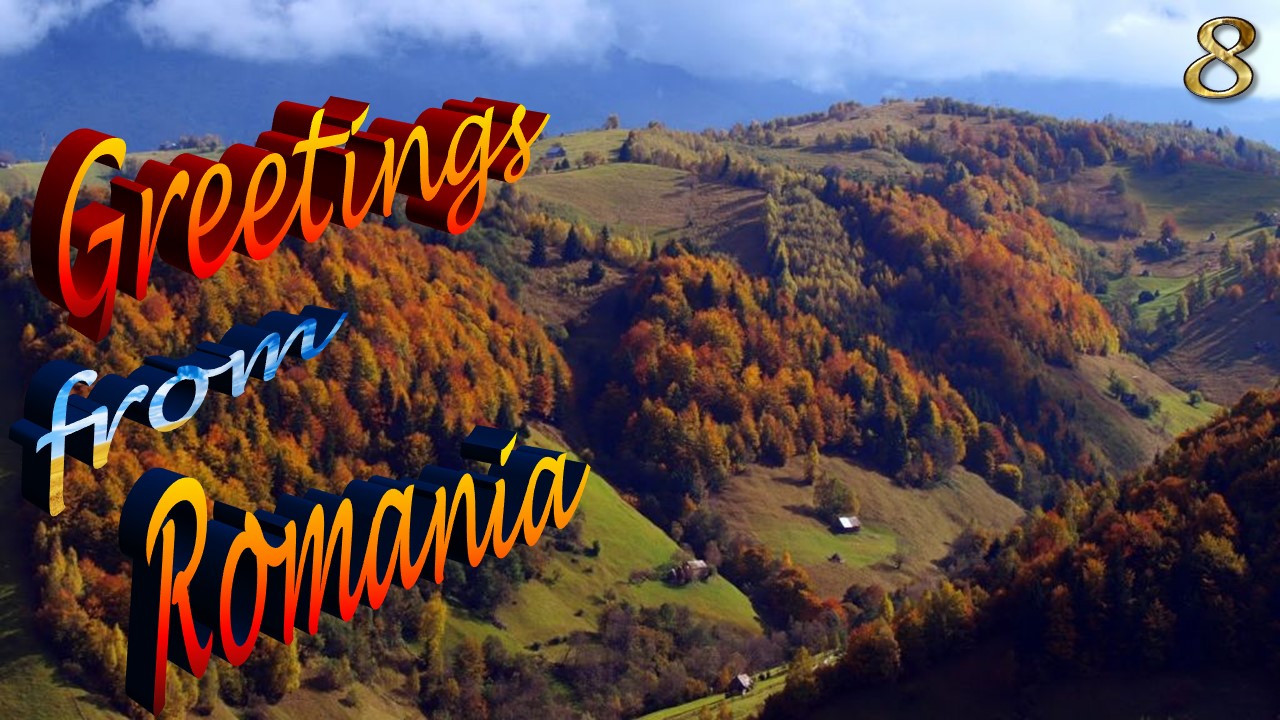
Title: Acasa 16 Greetings from Romania8
1
8
Greetings
from
Romania
2
(No Transcript)
3
Medias is the second largest city in Sibiu
County, Transylvania. In the 13th century, the
kings of Hungary invited German settlers known as
Transylvanian Saxons to the area, who settled in
the valley of the Târnava Mare River. According
to the tradition, the town was founded in 1146,
being so one of the oldest cities in Transilvania
4
1414 The St. Margaret church was the first
church built in Medias
5
(No Transcript)
6
St. Margaret church
7
(No Transcript)
8
(No Transcript)
9
1490-1534 The city is fortified, after a
document signed in 1477 by the king Matthias
Corvinus's office
10
(No Transcript)
11
1586 the first mentioning of a school in Medias
("Schola civitatis)
12
The first document that notes the presence of a
hospital in the city is dated 1487
13
One of the most important buildings in the
Transylvanian Renaissance style is located on the
north eastern side of the central market, the
Schuller House, mayor of Medias at the time, and
is documentary attested in 1588. But in the old
chronicles it is mentioned long before the year
1588
14
The Schuller House
15
In the heart of the medieval city the evangelical
church dedicated to St. Margaret
16
Tourist Guest House Honterus
17
Holy Trinity Church (Biserica Ortodoxã Sfânta
Treime)
18
The Pedestrian bridges over Târnave (one in the
country that suspended climbing spiral inclined
to district Field mouth) 1977
19
The Orthodox Cathedral, 1935 Sf. Mihail si
Gavril
20
Stephan Ludwig Roth high school
21
Stephan Ludwig Roth house
22
Stephan Ludwig Roth (1796, in Medias - 1849 in
Cluj) was a Transylvanian Saxon intellectual,
pedagogue and Lutheran pastor
23
(No Transcript)
24
Medias Museum was founded in 1950, having an
older collection (first half of the nineteenth
century) of the Evangelical Gymnasium from
Medias. Over time, the collection was completed
with pieces from Biertan Museum
25
Medias Museum
26
Prejmer Fortified Church - (UNESCO World Heritage
Site) Prejmer is noted for its fortified church,
one of the best preserved of its kind in Eastern
Europe. Between 19621970, was carefully restored
it to its present condition The church is
modeled after churches of Jerusalem, as well as
built in the style of Late Gothic churches from
the Rhineland
27
In the 15th century, it was surrounded by a wall
12m high, forming a quadrilateral with rounded
corners. The wall was reinforced by four
horseshoe-shaped towers, two of which have since
disappeared. The entrance - a vaulted gallery -
is protected by a barbican and flanked by a
lateral wall. The defensive structure is
strengthened by embrasures and bartizans, while
the covered way is surrounded by a parapet
28
(No Transcript)
29
The largest fortified church in southeastern
Europe, Prejmer was built by Teutonic knights in
1212-1213. The powerful surrounding walls are 40
feet high and 10-15 feet thick. Historical
records attest that in its 500 years of
existence, the fortress was besieged 50 times.
However, it was only captured once, in 1611 by
Gabriel Báthori, Prince of Transylvania
30
(No Transcript)
31
Prejmer Fortified Church - (UNESCO World Heritage
Site)
32
(No Transcript)
33
Polyptych altar, the oldest in Transylvania
(dated to the middle of the fifteenth century)
34
The granaries and rooms that accommodated the
villagers are arranged on four levels above the
cellars
35
(No Transcript)
36
Each village family had a designated room for
shelter in case of attack. The red-roofed wall
accommodated 272 rooms, stacked over four stories
and linked by wooden staircases
37
(No Transcript)
38
Valea Viilor, Sibiu County, Village of Valea
Viilor
Transylvania is home to nearly two hundred
villages with fortified churches built by the
Saxons between the 13th and 15th centuries.
Having to withstand constant invaders, the
villages central areas, where the church was
located most of the time, were fortified with
defense walls, having the capacity to shelter a
large number of people
39
Seven of the fortified churches have been
designated by UNESCO as World Heritage Sites. A
visit to these quaint villages, placed amidst
lush farmland and green rolling hills, will give
travelers a taste of the long-gone medieval times
Valea Viilor, Sibiu County, Village of Valea
Viilor
40
Valea Viilor
41
Valea Viilor (Vorumloc)
42
In Transylvania, the main focus of UNESCO relies
on the Saxon fortress churches. The Saxons, after
settling in Transylvania in the early 11th
century, started to build fortified cities while
the people in the villages fortified their
churches against migratory people. Only a few of
the over 500 German fortifications are now listed
by UNESCO but probably the most representative is
the city of Sighisoara, as the fortress is
considered the best preserved, continuously
inhabited, early middle age city in Europe
43
(No Transcript)
44
(No Transcript)
45
Text and pictures Internet All copyrights belong
to their respective owners Presentation Sanda
Foisoreanu
2013
Sound Gheorghe Zamfir - Sus Pe Culmea
Dealului
Recommended

