

How Stress Affects Your Health & How to Manage It PowerPoint PPT Presentation
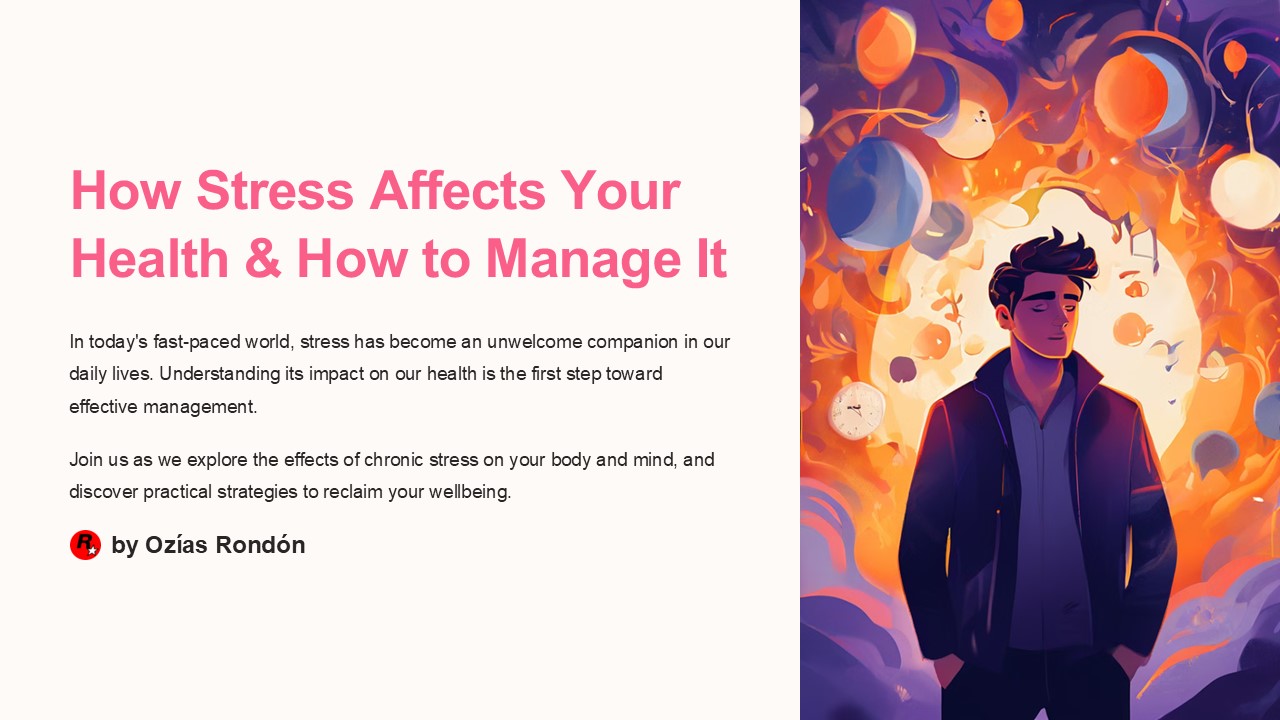
Title: How Stress Affects Your Health & How to Manage It
1
How Stress Affects Your Health How to Manage It
In today's fast-paced world, stress has become an
unwelcome companion in our daily lives.
Understanding its impact on our health is the
first step toward effective management.
Join us as we explore the effects of chronic
stress on your body and mind, and discover
practical strategies to reclaim your wellbeing.
by Ozías Rondón
2
What is Stress?
Definition
Your body's physical, mental, and emotional
response to any demand or challenge.
Acute Stress
Short-term response to immediate threats. Helpful
in dangerous situations.
Chronic Stress
Ongoing pressure that persists over time. Harmful
to health when unmanaged.
3
The Prevalence of Stress
62
411B
Global Sleep Issues
Economic Impact
Adults worldwide reporting sleep problems due to
stress
Annual economic loss from sleep deprivation
77
Work-Related
Americans experiencing physical symptoms from
workplace stress
4
Physical Effects of Chronic Stress
Cardiovascular Issues
Digestive Problems
Elevated blood pressure, increased heart rate,
higher risk of heart disease
Irritable bowel syndrome, acid reflux, stomach
ulcers
Weakened Immunity
Weight Gain
More frequent infections, slower healing
Increased cortisol levels promoting fat storage,
especially abdominal fat
5
Mental Health Impact
Anxiety and Depression
Memory and Concentration
Chronic stress is a key contributor to anxiety
disorders and depression. The constant state of
alertness can rewire brain circuitry.
Stress hormones impair the prefrontal cortex,
affecting decision-making and focus. Brain fog
becomes common.
Sleep Disturbances
Racing thoughts and physical tension lead to
insomnia. Poor sleep further increases stress,
creating a vicious cycle.
6
Stress and Your Heart
Chronic stress triggers inflammation in blood
vessels. This damages arterial walls over time.
Stress also prompts unhealthy coping behaviors
like poor diet and smoking.
7
Stress and Your Digestive System
The Gut-Brain Connection
Your digestive system is highly sensitive to
stress through the gut-brain axis. This
communication network means emotional stress
directly impacts digestive function.
- Increased stomach acid production
- Slowed digestion and absorption
- Altered gut microbiome composition
Chronic stress can lead to various functional
gastrointestinal disorders. These include
irritable bowel syndrome, gastritis, and acid
reflux.
8
Stress and Your Immune System
Suppressed Immune Function
Stress hormones reduce the number and
effectiveness of immune cells.
Increased Infection Risk
Less protection against pathogens leads to more
frequent illnesses.
Delayed Healing
Wounds and infections take longer to resolve
under chronic stress.
Chronic Inflammation
Prolonged stress response keeps inflammatory
processes active.
9
Stress and Your Hormones
Reproductive System
1
Disrupted menstrual cycles and fertility issues
Thyroid Function
2
Altered metabolism and energy regulation
Insulin Sensitivity
3
Increased blood sugar and diabetes risk
Stress Hormones
4
Elevated cortisol and adrenaline
Hormonal imbalances from chronic stress affect
multiple body systems. This creates a cascade of
health issues that compound over time.
10
The Importance of Stress Management
Enhanced Mental Clarity
Better Physical Health
Improved Quality of Life
Effective stress management improves focus and
decision-making. Mental fog lifts as stress
hormone levels normalize.
Reduced inflammation and improved immune function
protect against chronic disease. Blood pressure
and heart rate stabilize.
Better sleep quality and emotional regulation
lead to greater life satisfaction. Relationships
and productivity improve.
11
Stress Management Technique Exercise
Start Small
Begin with short walks or gentle stretching
Build Consistency
Aim for 30 minutes daily, 5 days a week
Add Variety
Include both cardio and strength training
Exercise releases endorphins, your body's natural
mood elevators. It also reduces stress hormones
like cortisol and adrenaline.
The effects are both immediate and cumulative.
Even a single session can improve your mood for
hours.
12
Stress Management Technique Relaxation
Deep Breathing
Inhale slowly for 4 counts, hold for 7, exhale
for 8. Repeat 5 times when feeling stressed.
Meditation
Start with just 5 minutes daily. Focus on your
breath or use guided sessions.
Progressive Muscle Relaxation
Tense and then release each muscle group. Work
from toes to head.
Nature Exposure
Spend time outdoors daily. Even brief exposure to
natural settings reduces stress.
13
Stress Management Technique Time Management
Prioritize
Break Down
Identify your most important tasks first
Divide large projects into smaller steps
Set Boundaries
Schedule
Learn to say "no" to unnecessary commitments
Block specific times for focused work
Poor time management creates unnecessary
pressure. Setting realistic expectations prevents
overwhelm.
14
Stress Management Technique Social Support
Strong social connections are powerful stress
buffers. Regular meaningful interaction with
others improves resilience.
Sharing your feelings with trusted people
prevents isolation. The simple act of talking
about stress can reduce its impact.
15
Stress Management Technique Healthy Lifestyle
Balanced Diet
Quality Sleep
Hydration
Emphasize whole foods rich in stress-fighting
nutrients. Include omega-3s, antioxidants, and
complex carbohydrates.
Aim for 7-9 hours nightly. Maintain consistent
sleep-wake times, even on weekends.
Drink adequate water throughout the day.
Dehydration can mimic and worsen stress symptoms.
Limit Stimulants
Reduce caffeine, alcohol, and nicotine. These can
amplify the body's stress response.
16
The Role of Supplements in Stress Management
Nutrient
Benefit
Food Sources
Magnesium
Muscle relaxation, mood support
Leafy greens, nuts, seeds
B Vitamins
Energy production, nervous system support
Whole grains, meat, eggs
Vitamin C
Adrenal support, immune function
Citrus fruits, berries, peppers
Omega-3s
Inflammation reduction, brain health
Fatty fish, flaxseeds, walnuts
Adaptogens
Stress hormone regulation
Moringa, ashwagandha, rhodiola
Supplements can fill nutritional gaps in your
diet. They work best alongside healthy lifestyle
practices.
17
Introducing Moringa Magic
100 Natural Formulation
Pure Moringa oleifera leaf extract, grown
organically and minimally processed to preserve
nutrients
Superfood Status
Contains over 90 nutrients, 46 antioxidants, and
all 9 essential amino acids
Adaptogenic Properties
Helps the body adapt to stress by supporting
adrenal function and hormone balance
Convenient Daily Support
Easy-to-take capsules that fit seamlessly into
your wellness routine
18
Benefits of Moringa Magic
Reduces Oxidative Stress
Powerful antioxidants neutralize free radicals
that damage cells
Supports Immune Function
Rich in immune-boosting vitamins and minerals
Promotes Heart Health
May help maintain healthy cholesterol and blood
pressure levels
Aids Blood Sugar Management
Contains compounds that may help stabilize
glucose levels
19
Why Choose Moringa Magic?
Completely Natural
100 organic ingredients with no fillers,
preservatives, or artificial additives. Pure
plant power.
Quality Assured
Third-party tested for purity and potency. Every
batch meets strict quality standards.
Sustainably Sourced
Environmentally responsible farming practices
that protect the planet and support local
communities.
Simple Integration
Easy to incorporate into your daily routine. Just
two capsules daily with or without food.
20
Take Action for Your Health Today!
Reclaim Your Vitality
Special Offer
Visit Our Website
Start your journey toward better stress
management and improved wellbeing with Moringa
Magic.
Use code STRESSLESS for 15 off your first order.
Satisfaction guaranteed or your money back.
Learn more and order now at www.officialmoringamag
ic.com
Recommended

