

Indonesia Smart Home Market | 2028 Growth & Forecast PowerPoint PPT Presentation
Title: Indonesia Smart Home Market | 2028 Growth & Forecast
1
Decoding Consumer Behavior in the Indonesia Smart
Home Market- Key Trends and Insights The
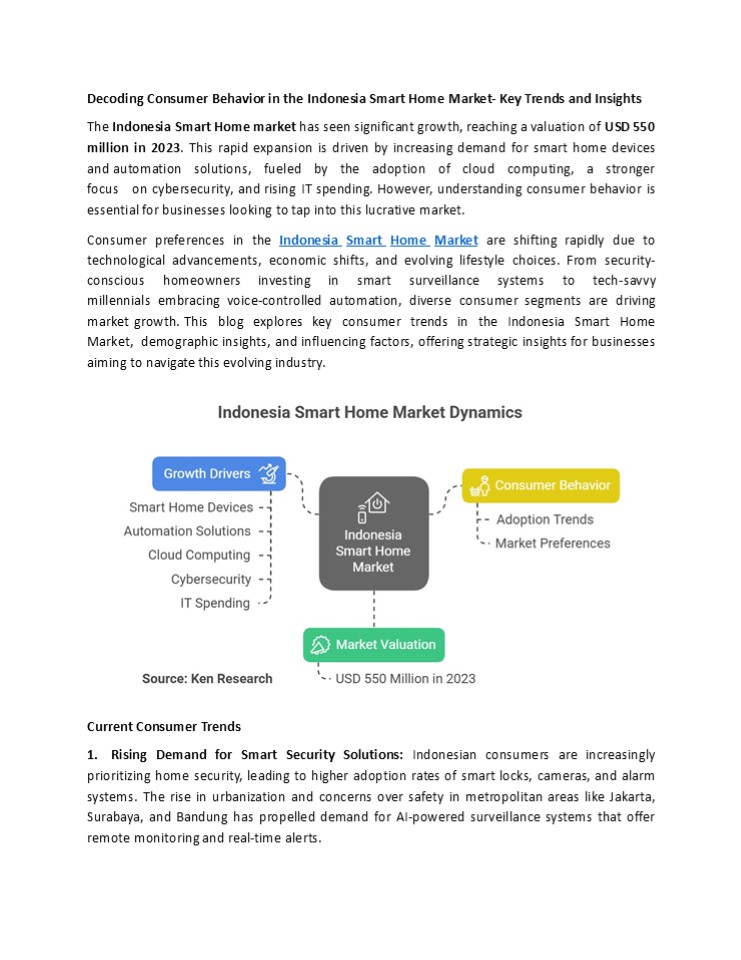
Indonesia Smart Home market has seen significant
growth, reaching a valuation of USD 550 million
in 2023. This rapid expansion is driven by
increasing demand for smart home devices and
automation solutions, fueled by the
adoption of cloud computing, a stronger
focus on cybersecurity, and rising IT
spending. However, understanding consumer
behavior is essential for businesses looking to
tap into this lucrative market. Consumer
preferences in the Indonesia Smart Home
Market are shifting rapidly due to
technological advancements, economic shifts,
and evolving lifestyle choices. From
security- conscious homeowners investing in
smart surveillance systems to
tech-savvy millennials embracing
voice-controlled automation, diverse consumer
segments are driving market growth. This blog
explores key consumer trends in the
Indonesia Smart Home Market, demographic
insights, and influencing factors, offering
strategic insights for businesses aiming to
navigate this evolving industry.
Current Consumer Trends 1. Rising Demand for
Smart Security Solutions Indonesian
consumers are increasingly prioritizing home
security, leading to higher adoption rates of
smart locks, cameras, and alarm systems. The rise
in urbanization and concerns over safety in
metropolitan areas like Jakarta, Surabaya, and
Bandung has propelled demand for AI-powered
surveillance systems that offer remote monitoring
and real-time alerts.
2
- Growing Preference for Energy-Efficient Smart
Devices Sustainability is becoming a
significant decision-making factor for consumers.
Smart lighting, thermostats, and energy-
monitoring devices are gaining popularity as
homeowners look for cost-saving solutions that
reduce electricity bills. The Indonesian
government's push toward green energy
initiatives are further accelerating this trend. - Voice-Controlled and AI-Integrated Automation
With increasing penetration of smart
assistants like Google Assistant and Amazon
Alexa, voice-controlled automation is - becoming mainstream. Consumers are now
investing in AI-driven smart home hubs,
allowing seamless integration of multiple devices
for an improved home experience. - Affinity for Smart Entertainment Systems
The growing middle-class population in
Indonesia is fueling demand for high-end
smart TVs, home theaters, and streaming
devices. Consumers are willing to spend
more on immersive digital entertainment
experiences, leading to higher adoption rates of
IoT-connected entertainment solutions. - The Shift to Subscription-Based Smart Services
Consumers are increasingly subscribing - to home automation as a service, where
companies offer device maintenance, cloud
storage, and security updates as part of monthly
or yearly plans. This trend is shaping a new
revenue model for businesses in the smart home
industry. - Also read the market analysis of Vietnam Smart
Home Industry Future Opportunities - Demographic Insights
- Age-Based Segmentation
- Millennials (2540 years old) The primary
adopters of smart home technology, driven by
convenience and tech enthusiasm. - Gen Z (1824 years old) Growing interest in
smart entertainment and voice-controlled gadgets. - Gen X Baby Boomers (40 years old) Higher
adoption of smart security and energy- saving
devices, motivated by home safety and efficiency. - Income and Spending Patterns
- Upper-middle-class and affluent consumers More
inclined toward premium smart home solutions,
such as home automation ecosystems and AI-driven
devices. - Middle-income households Prioritize
cost-effective smart security and
energy-saving devices that offer long-term
savings. - Geographic Breakdown
3
- Urban Centers (Jakarta, Surabaya, Bandung)
Higher penetration of complete smart home
ecosystems due to better infrastructure and
higher disposable income. - Suburban Rural Areas Slower adoption but
growing demand for affordable smart security
systems and energy-efficient appliances. - Factors Influencing Consumer Behavior
- Technological Advancements
- The increasing availability of 5G
connectivity, AI-driven automation, and cloud
computing is significantly influencing consumer
interest in smart home devices. - Economic Factors
- Indonesias rising middle class and growing
disposable income are enabling more households to
invest in smart home solutions. - Cultural Shifts and Lifestyle Changes
- As work-from-home and hybrid work models
gain traction, consumers are seeking smart
solutions to enhance productivity and comfort. - Brand Loyalty and Price Sensitivity
- Consumers in Indonesia tend to be
brand-conscious, preferring reputable global
brands such as Samsung, Xiaomi, and Google
Nest. However, price sensitivity remains a
key consideration, leading to increasing demand
for affordable local alternatives. - Market Implications and Business Strategies
- Product Development Strategies
- Focus on energy-efficient and AI-integrated
solutions to align with sustainability and
automation trends. - Introduce modular smart home ecosystems that
allow consumers to build and customize their
setups gradually. - Marketing and Consumer Engagement
- Localized advertising campaigns emphasizing
security, energy savings, and convenience will
resonate with Indonesian consumers. - Influencer marketing and social media
engagement can help drive brand awareness,
especially among younger demographics.
4
- Pricing and Subscription Models
- Offer tiered pricing models to cater to both
premium and budget-conscious consumers. - Develop subscription-based services to
enhance customer retention and generate
recurring revenue. - Conclusion
- The Indonesia Smart Home market is undergoing a
consumer-driven transformation, shaped by
technology adoption, economic growth, and
lifestyle changes. Understanding consumer
behavior trends is critical for businesses
looking to thrive in this evolving landscape. By
leveraging these insights, companies can develop
targeted marketing strategies, innovative product
offerings, and flexible pricing models to stay
ahead of the competition. - Read my other blogs in APAC Marketing Automation
Software Market Trends and Opportunities
Recommended

