

Understanding Pancreatitis Symptoms & Treatment PowerPoint PPT Presentation
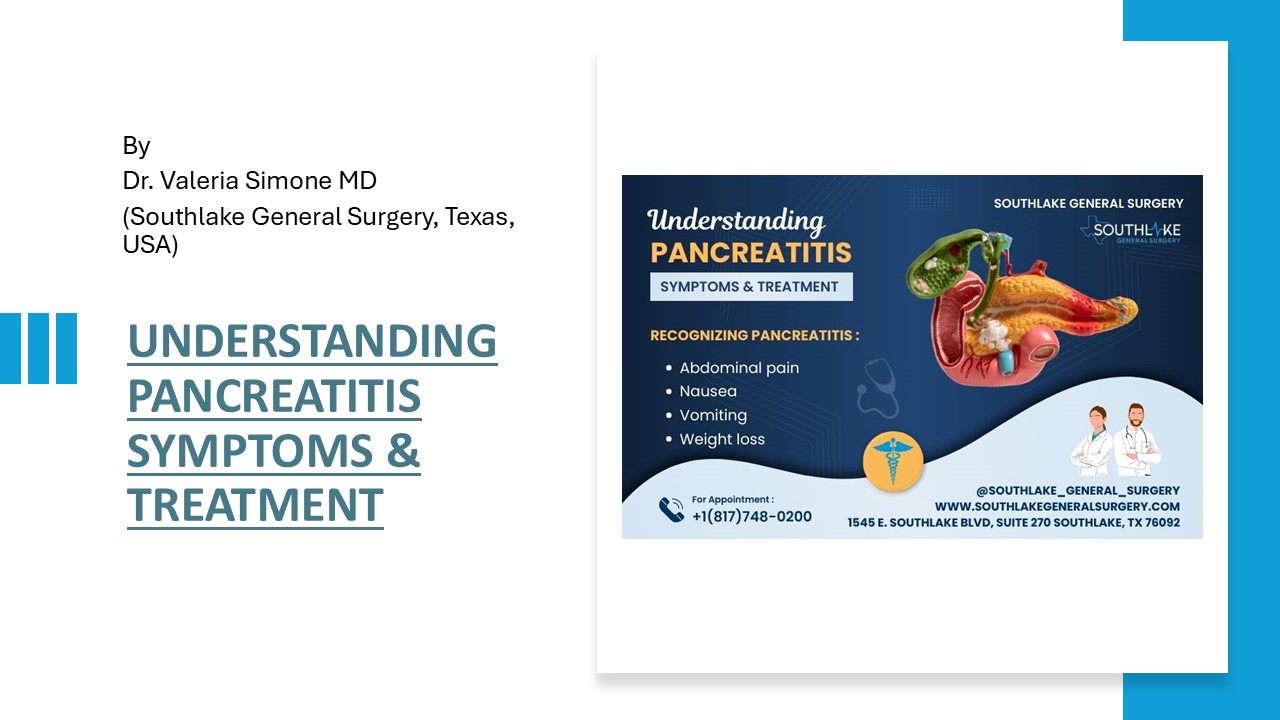
Title: Understanding Pancreatitis Symptoms & Treatment
1
UNDERSTANDING PANCREATITIS SYMPTOMS TREATMENT
- By
- Dr. Valeria Simone MD
- (Southlake General Surgery, Texas, USA)
2
Overview
- Pancreatitis symptoms can be debilitating and
often require immediate medical attention. This
is a serious problem for many people each year.
The inflammation of the pancreas can cause
intense abdominal pain, nausea, vomiting, and
significant weight loss. - It is crucial to identify the symptoms early on,
as prompt treatment can help prevent further
complications.
3
Key Highlights
- Pancreatitis happens when the pancreas becomes
swollen. It can be acute, which is short-term, or
chronic, which is long-term. - Some common signs are terrible abdominal pain
that might feel like it goes to the back, nausea,
vomiting, and weight loss. - The main causes are gallstones that can block the
pancreatic duct and heavy alcohol consumption. - To find out if someone has it, doctors will do
blood tests for pancreatic enzymes and take
imaging scans with CT or MRI. They might also use
endoscopic methods. - Treatment focuses on managing pain, handling any
problems that come up, making lifestyle changes,
and in severe cases, surgery might be required.
4
Understanding Pancreatitis An Overview
- The pancreas is important for digestion and
controlling blood sugar. It makes digestive
enzymes that help break down food in the first
part of the small intestine. The pancreas also
creates hormones such as insulin, which help
manage blood sugar levels. If the pancreas gets
inflamed, it can damage these key functions. Many
health issues can follow from this. - Pancreatitis happens when digestive enzymes start
working inside the pancreas instead of the
intestines. This causes irritation and swelling
of the pancreas. There are two kinds of
pancreatitis. The first is acute pancreatitis,
which may occur only once. - The second is chronic pancreatitis, which can
happen several times and cause long-term harm.
Knowing the difference between these types is
important for the right diagnosis and treatment.
5
What is Pancreatitis?
- Pancreatitis is when your pancreas becomes
inflamed. The pancreas is a large gland that sits
behind your stomach and close to the small
intestine. This inflammation happens when the
digestive enzymes from the pancreas start working
too early. When that occurs, it can harm and
damage the pancreas tissue. - The main sign of pancreatitis is abdominal pain.
This pain often feels sharp and can feel like a
stabbing feeling that goes to the back. It can
start mild, but it can also be very strong,
depending on how bad the inflammation is. - Acute pancreatitis can heal in just a few days if
you get the right treatment. In contrast, chronic
pancreatitis can cause long-lasting damage to the
pancreas. This harm can make it hard for the
pancreas to produce digestive enzymes and
hormones. Because of this, you may face issues
like malnutrition, diabetes, and a higher chance
of pancreatic cancer.
6
The Importance of Recognizing Pancreatitis Early
- The timely detection of acute pancreatitis is
important. It helps to prevent serious problems.
Mild cases usually improve with simple treatment.
However, severe cases can lead to big issues.
These issues include tissue damage, infections,
and organ failure. - Chronic pancreatitis is a condition where ongoing
inflammation damages the pancreas over time. - This damage changes how the pancreas produces
enzymes and hormones. It can cause issues like
not absorbing enough nutrients, a risk of
malnutrition, diabetes, and a greater chance of
pancreatic cancer. - Recognizing early signs of pancreatitis, such as
- Abdominal pain
- Nausea
- Vomiting
- Weight loss
- Getting medical help fast is important. It can
help you feel better and manage your condition.
Finding out about issues early and getting
treatment can lower the risks of severe cases and
long-term problems. This can lead to a better
outcome for you.
7
Identifying Pancreatitis Symptoms
- Recognizing the symptoms of pancreatitis is
important to get help right away. Both acute
pancreatitis and chronic pancreatitis have some
similar symptoms, such as abdominal pain. But
they also have specific symptoms that are
different from each other. - Understanding these signs helps people receive
medical help more quickly. A fast reaction
results in an early diagnosis and proper
treatment. Taking these actions is important
because it can improve health outcomes and
quality of life.
8
Common Symptoms of Acute Pancreatitis
- The signs of acute pancreatitis can show up
quickly. You might feel pain that varies from
mild to very intense. Its important to notice
these signs soon. Seeking medical help fast is
the best way to get effective treatment. - The key sign of acute pancreatitis is intense
pain in your upper abdomen. This pain can feel
sharp and may spread to your back. Eating might
make the pain feel even worse. - Here are some common signs of acute pancreatitis
- Severe abdominal pain This pain often stays the
same and can feel worse if you lie flat. - Nausea and vomiting.
- Fever.
- Fast heartbeat.
- Tenderness in the abdomen when you touch it.
9
Chronic Pancreatitis Symptoms What to Look For
- Chronic pancreatitis develops slowly over time.
This is not the same as acute pancreatitis. In
the beginning, the signs can be mild and easy to
miss. As the pancreas continues to get damaged,
it fails to make enough digestive enzymes and
hormones. These are important for breaking down
food and absorbing nutrients. - Chronic pain is a main sign. It feels like a
steady ache in the upper abdomen. Sometimes, it
can also move to the back. This type of pain can
make daily activities challenging and can hurt
overall well-being. - Other signs of chronic pancreatitis can be
- Weight loss This occurs when the digestive tract
has difficulty breaking down food and taking in
nutrients. - Oily or fatty stools The pancreas may not make
enough enzymes to digest fats properly. - Diarrhea
- Nausea and vomiting
- Jaundice (yellow skin and eyes) This can happen
if a bile duct gets blocked.
10
Pancreatitis Causes
- Identifying the cause of pancreatitis is very
important. It helps plan treatments and stops it
from coming back. Lifestyle choices, genetics,
health problems, and other factors can affect
pancreatitis. - By knowing these causes, people can make better
health choices. They can reduce their risks by
changing their habits and managing their health
better.
11
Factors Leading to Acute Pancreatitis
- Acute pancreatitis happens when the pancreas gets
injured or blocked quickly. This injury affects
how the pancreas functions and causes it to
become swollen. Often, gallstones are the main
reason for this condition. When gallstones cause
this issue, it is called gallstone pancreatitis. - Heavy alcohol use is a big reason for acute
pancreatitis. When you drink too much alcohol, it
can cause the digestive enzymes in the pancreas
to start working too soon. - This leads to inflammation, and the pancreas may
start to break down itself. Also, having high
levels of calcium in the blood, known as
hypercalcemia, can cause acute pancreatitis too. - Some different reasons for acute pancreatitis
include - Medications
- High triglycerides
- Infections
- Injury to the belly
- Genetic disorders
12
Chronic Pancreatitis Causes and Prevention
- Chronic pancreatitis happens when the pancreas is
damaged for a long time. This often follows
several cases of acute pancreatitis. A big risk
factor is drinking too much alcohol over the
years. Other factors can be genetics, certain
health problems, and body shape. - Cystic fibrosis is a genetic condition that
impacts different parts of the body. It can lead
to ongoing inflammation in the pancreas,
resulting in chronic pancreatitis. - If a family member has this condition, you may be
more likely to develop it. - There are some causes of chronic pancreatitis
that you cannot change. Still, leading a good
life will assist. - This includes drinking less alcohol, maintaining
a healthy weight, and seeking medical advice
early for any related problems. - By following these steps, you can reduce risks
and manage symptoms more effectively.
13
What are the most common causes of pancreatitis?
- Pancreatitis can occur for many reasons. The two
main causes are alcohol use and gallstones. These
factors lead to a lot of cases. This makes it
important to consider them when diagnosing and
preventing this condition. - Excessive alcohol use, especially for a long
time, can lead to pancreatitis. When alcohol
breaks down, it creates harmful substances. These
substances can damage the pancreas cells. This
damage leads to inflammation and can cause both
acute and chronic pancreatitis. - Gallstones are tiny, hard stones that can form in
the gallbladder. Sometimes, they can get trapped
in the bile duct. When this happens, it can block
the flow of digestive juices and irritate the
pancreas. This irritation might lead to acute
pancreatitis. - Cause Description
- Alcohol use Excessive and chronic alcohol
consumption is a primary cause, damaging
pancreatic cells and triggering inflammation. - Gallstones These small, hardened deposits can
obstruct the bile duct, leading to pancreatic
inflammation and acute pancreatitis.
14
Diagnosing Pancreatitis Effectively
- Diagnosing pancreatitis takes several steps.
First, doctors check your medical history. Next,
they perform a physical exam. Blood tests are
also important. Imaging scans are helpful, too. - These steps help confirm if you have pancreatitis
and find other illnesses that might have similar
symptoms. It is important to figure out the
cause. This information helps create a good
treatment plan and manage the condition better.
15
Initial Diagnosis Steps for Suspected Pancreatitis
- Diagnosing pancreatitis begins by checking
symptoms and medical history. Severe abdominal
pain in the upper abdomen may mean you have
pancreatitis. Doctors will ask about the pain.
They want to know what it feels like, when it
started, how long it lasts, and if you have other
symptoms like nausea, vomiting, or fever. - Blood tests are important to help us see what is
wrong. - High levels of amylase and lipase can mean the
pancreas is inflamed. - These tests check how well organs work and look
for issues with electrolytes. - A CT scan is required to take a closer look at
the pancreas. - It shows how much inflammation is there and finds
issues like fluid buildup or damaged tissue. This
helps determine how serious it is and what
treatment to provide.
16
Advanced Diagnostic Techniques for Comprehensive
Assessment
- In some cases, when doctors are not certain about
a diagnosis, they may run extra tests. These
tests check the pancreatic and bile ducts. One of
these tests is called endoscopic retrograde
cholangiopancreatography, or ERCP. This test uses
an endoscope to look at these ducts and to treat
gallstones that block the bile duct. - Pancreatic function tests check how good the
pancreas is at making enzymes. - A hormone helps to wake up the pancreas. Then,
doctors look at the enzyme levels in the fluid
taken from the pancreas. This test shows if there
is any damage to the pancreas and helps to guide
treatments for digestion issues. - Advanced imaging methods, like Magnetic Resonance
Cholangiopancreatography (MRCP), provide clear
images of the ducts. This method does not need an
endoscope. - It assists doctors in understanding how the
pancreas works. With this information, they can
create personalized treatment plans for their
patients.
17
Comprehensive Treatment Approaches
- Treating pancreatitis requires a complete
approach. This means reducing symptoms, solving
issues, and addressing the main cause to prevent
it from returning. The treatment varies for acute
and chronic pancreatitis based on each patients
needs. - Lets explore more Pancreatitis Symptoms A
Comprehensive Guide - Southlake General Surgery
18
Make an Appointment
- To get expert help for pancreatitis symptoms, you
can visit Dr. Valeria Simone, MD, at Southlake
General Surgery in Texas, USA. Dr. Simone helps
with both acute and chronic pancreatitis. She
provides thorough evaluations and custom
treatment plans. - If you are concerned about weight loss, abdominal
pain, or other signs, please call 1 (817)
748-0200. You can also make an online
appointment with us. Getting professional advice
is important for managing pancreatitis and
avoiding problems. Timely visits and personal
care can make a big difference.
19
- Medically Reviewed By Dr. Valeria Simone MD
- Board-certified General Surgeon at Southlake
General Surgery, Texas, USA. - Follow us on Facebook and YouTube.
- Source Pancreatitis Symptoms A Comprehensive
Guide - Southlake General Surgery
20
THANK YOU!
SOUTHLAKE GENERAL SURGERY
1545 E. Southlake Blvd, Suite 270 Southlake, TX
EMAIL info_at_southlakegeneralsurgery.com
VISIT US AT www.southlakegeneralsurgery.com
Recommended

