

Achieve Your PMP Certification: A Step-by-Step Guide PowerPoint PPT Presentation
Title: Achieve Your PMP Certification: A Step-by-Step Guide
1
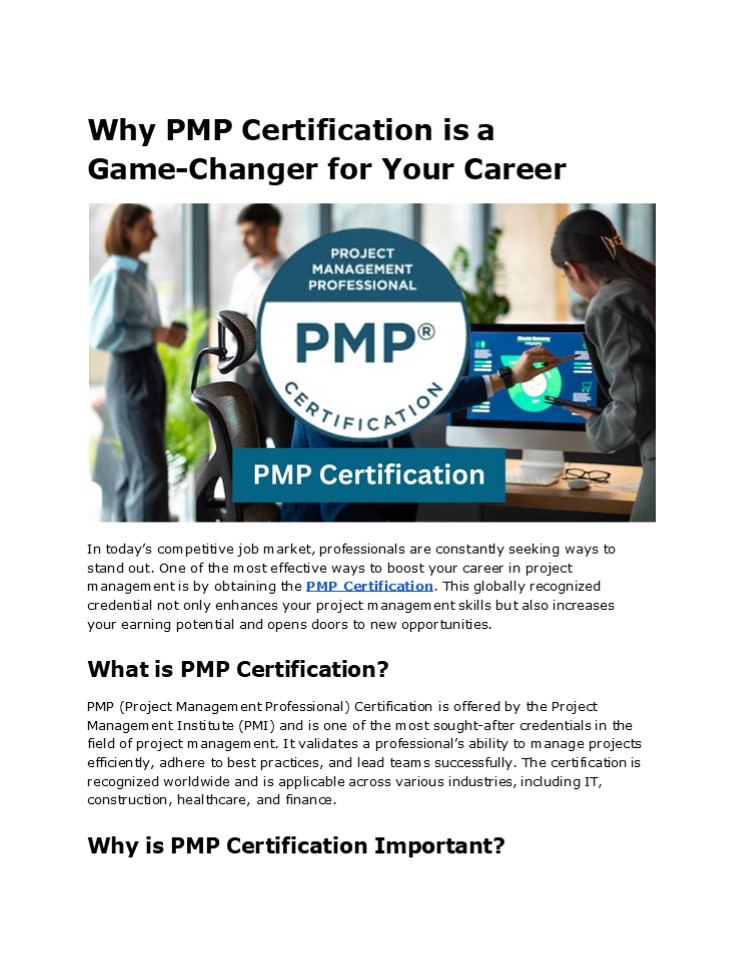
Why PMP Certification is a Game-Changer for Your
Career
In todays competitive job market, professionals
are constantly seeking ways to stand out. One of
the most effective ways to boost your career in
project management is by obtaining the PMP
Certification. This globally recognized
credential not only enhances your project
management skills but also increases your earning
potential and opens doors to new
opportunities. What is PMP Certification? PMP
(Project Management Professional) Certification
is offered by the Project Management Institute
(PMI) and is one of the most sought-after
credentials in the field of project management.
It validates a professionals ability to manage
projects efficiently, adhere to best practices,
and lead teams successfully. The certification is
recognized worldwide and is applicable across
various industries, including IT, construction,
healthcare, and finance.
Why is PMP Certification Important?
2
- Global Recognition PMP Certification is
recognized and respected across industries
worldwide. It signifies that you have the
expertise to manage projects successfully,
making you a valuable asset to any organization. - Higher Earning Potential According to PMIs
salary survey, PMP-certified professionals earn
significantly more than their non-certified
counterparts. The certification enhances your
credibility and increases your chances of
securing high-paying jobs. - Improved Project Management Skills The
certification process equips you with advanced
project management knowledge, including risk
management, time management, budgeting, and
leadership skills. - Better Job Opportunities Many employers prefer
or even require PMP Certification when hiring
project managers. Having this credential on your
resume can give you a competitive edge in the
job market. - Networking Opportunities Being PMP-certified
allows you to connect with other certified
professionals, giving you access to a strong
network of industry experts and career growth
opportunities.
- Eligibility Requirements for PMP Certification
- To qualify for the PMP exam, candidates must meet
specific educational and professional experience
requirements - A four-year degree with at least 36 months of
project management experience and 35 hours of
project management education. - A high school diploma or associate degree with 60
months of project management experience and 35
hours of project management education.
How to Obtain PMP Certification? 1. Meet the
Eligibility Criteria Ensure that you meet the
necessary education and experience requirements.
3
- Complete the Application Process Submit your
application to PMI with the required details and
supporting documents. - Prepare for the Exam Study the PMBOK (Project
Management Body of Knowledge) Guide and take
practice exams to familiarize yourself with the
exam format. - Take the Exam The PMP exam consists of 180
multiple-choice questions covering project
management processes, methodologies, and best
practices. - Maintain Your Certification PMP Certification
is valid for three years. To maintain it, you
must earn 60 Professional Development Units
(PDUs) within this period.
- PMP Certification Exam Structure
- The PMP exam is designed to test a candidates
knowledge in three primary domains - People (42) Covers leadership and team
management skills. - Process (50) Focuses on the technical aspects
of managing projects. - Business Environment (8) Examines the impact
of projects on organizational goals and business
strategies.
- Tips for Passing the PMP Exam
- Create a Study Plan Set a schedule and allocate
sufficient time for each knowledge area. - Use PMP Exam Prep Materials Invest in quality
study guides, online courses, and practice exams. - Join Study Groups Engaging with other PMP
candidates can provide valuable insights and
support.
4
- Take Practice Tests Simulating real exam
conditions can help improve your confidence and
performance. - Focus on Understanding Concepts Memorization
alone is not enough ensure you understand how to
apply project management principles. - Attend PMP Bootcamps Many candidates benefit
from attending PMP training programs that provide
intensive exam preparation and expert guidance. - Utilize PMI Resources PMI offers valuable study
materials and online forums where you can
interact with experts and clarify doubts.
- Industries That Value PMP Certification
- PMP Certification is highly regarded across
various industries. Some of the key sectors that
actively seek PMP-certified professionals
include - Information Technology (IT) Software
development, IT infrastructure, and cybersecurity
projects. - Construction Large-scale building and
infrastructure projects require strong project
management expertise. - Healthcare Managing medical research, hospital
administration, and healthcare technology
projects. - Finance Overseeing financial projects, risk
assessment, and corporate planning. - Manufacturing Production planning, supply chain
management, and quality control initiatives.
Conclusion PMP Certification is a valuable asset
for professionals looking to advance their
careers in project management. It provides global
recognition, enhances earning potential, and
equips you with essential project management
skills. Whether you are an experienced project
manager or aspiring to become one, obtaining a PMP
5
Certification can significantly boost your career
prospects. Additionally, with industries
increasingly valuing structured project
management approaches, now is the perfect time to
invest in this certification. If youre ready to
take the next step in your career, start your PMP
certification journey today!
Recommended

