

Asia-Pacific Pacemakers Market | 2028 Growth & Forecast PowerPoint PPT Presentation
Title: Asia-Pacific Pacemakers Market | 2028 Growth & Forecast
1
The Asia-Pacific Pacemakers Market Landscape in
2028- Key Trends and Opportunities The
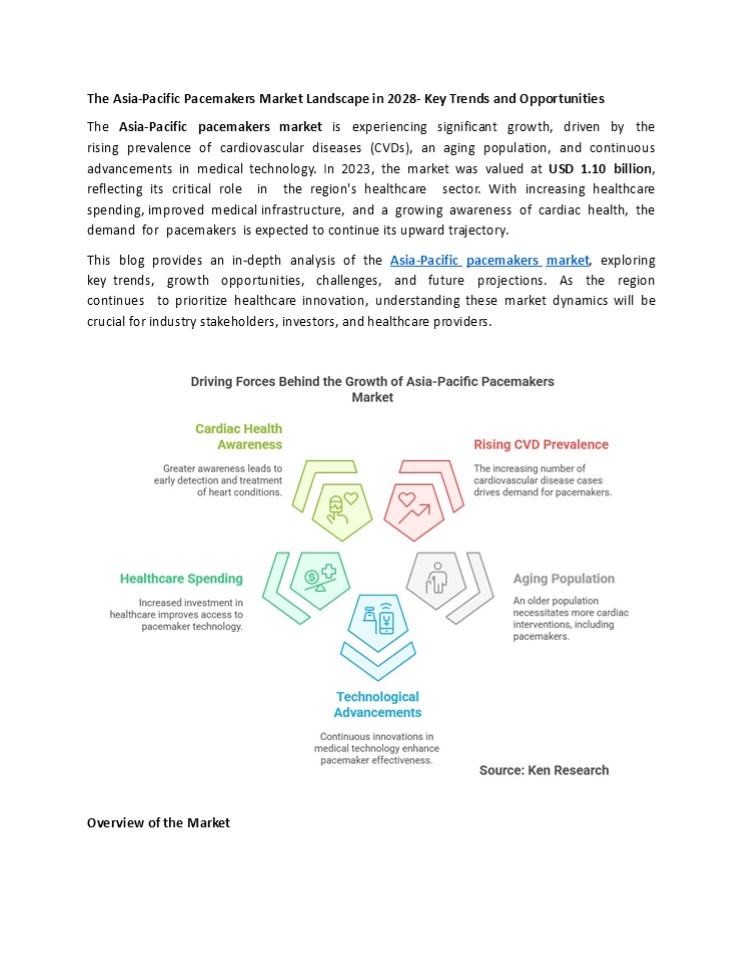
Asia-Pacific pacemakers market is
experiencing significant growth, driven by
the rising prevalence of cardiovascular diseases
(CVDs), an aging population, and continuous
advancements in medical technology. In 2023, the
market was valued at USD 1.10 billion, reflecting
its critical role in the region's healthcare
sector. With increasing healthcare spending,
improved medical infrastructure, and a
growing awareness of cardiac health, the
demand for pacemakers is expected to continue
its upward trajectory. This blog provides an
in-depth analysis of the Asia-Pacific
pacemakers market, exploring key trends,
growth opportunities, challenges, and future
projections. As the region continues to
prioritize healthcare innovation, understanding
these market dynamics will be crucial for
industry stakeholders, investors, and healthcare
providers.
Overview of the Market
2
- The Asia-Pacific pacemakers market is
projected to expand steadily, with a rising
compound annual growth rate (CAGR). The market
is segmented based on - Product Type Single-chamber, dual-chamber, and
biventricular pacemakers. - Technology Conventional and leadless pacemakers.
- End-Users Hospitals, cardiac centers, and
ambulatory surgical centers. - Geography Key markets include China, India,
Japan, South Korea, and Australia. - Market Drivers
- Several factors contribute to the markets
expansion - Increasing cases of CVDs due to sedentary
lifestyles, poor dietary habits, and rising
obesity rates. - Technological advancements in pacemakers,
including miniaturization and wireless
capabilities. - Higher healthcare expenditures in emerging
economies. - Government initiatives promoting cardiac care and
medical device adoption. - Key Market Trends
- Rise of Leadless Pacemakers Leadless pacemakers
are revolutionizing the market due to their
reduced risk of infection, ease of implantation,
and longer battery life. Their adoption is
accelerating, especially in developed economies
such as Japan and Australia. - AI and Remote Monitoring Integration The
incorporation of artificial intelligence (AI) and - remote monitoring systems in pacemakers enhances
real-time data collection and patient outcomes.
AI-driven diagnostics enable early detection
of heart rhythm abnormalities, improving
treatment effectiveness. - Increasing Demand in Emerging Markets Countries
like India and China are witnessing a surge in
demand for pacemakers due to
increasing healthcare accessibility and
affordability. Government policies supporting
medical device manufacturing further
contribute to market expansion. - Focus on Biocompatible and MRI-Compatible
Pacemakers The industry is moving - towards the development of biocompatible
materials that reduce complications.
Additionally, MRI-compatible pacemakers are
gaining traction, allowing patients to
undergo MRI scans safely without device
interference.
3
- 5. Strategic Collaborations and Investments
Global medical device companies are entering
partnerships with regional firms to enhance
distribution networks, ensuring wider
accessibility of advanced pacemaker technology
across Asia-Pacific. - Also read the market analysis of Europe Pacemaker
Industry Future Opportunities - Growth Opportunities
- Expansion in Rural Healthcare Infrastructure
Rural regions in Asia-Pacific often lack
access to advanced cardiac care. Investments in
healthcare infrastructure, telemedicine, and
portable pacemakers can bridge this gap. - Emerging Players in the Market Local
manufacturers are entering the market, offering - cost-effective pacemakers, which could lead to
increased competition and affordability,
especially in price-sensitive countries. - Government and Private Sector Investments
Public-private partnerships are fostering - innovation in the medical devices sector,
offering financial incentives for research
and development. - Challenges and Risks
- Regulatory Hurdles Stringent regulatory
approval processes in various Asia-Pacific
countries can delay product launches and market
penetration. - High Costs and Affordability Issues While
advancements are increasing, high pacemaker costs
remain a barrier for low-income
populations. Pricing strategies and insurance - coverage expansion are key to overcoming this
challenge. - Supply Chain Disruptions Global supply chain
issues, including component shortages and
logistics constraints, can impact pacemaker
availability and pricing. - Future Outlook
- Over the next 35 years, the Asia-Pacific
pacemakers market is expected to witness robust
growth due to continued technological
advancements, supportive government policies,
and rising healthcare investments. The shift
towards AI-powered devices and remote
monitoring will redefine patient care, making
pacemakers more efficient and accessible.
Additionally, increased local production and
international collaborations will play a
pivotal role in driving market expansion. - Conclusion
- The Asia-Pacific pacemakers market is set
for remarkable growth, driven by rising
healthcare needs, technological innovations, and
evolving consumer awareness. While challenges
such as affordability and regulatory hurdles
persist, opportunities in emerging markets
and rural healthcare infrastructure development
present significant growth potential.
4
Read my other blogs in North America Education
Technology Market Trends and Opportunities
Recommended

