

Root Canal Treatment: Procedure, Benefits, and Importance PowerPoint PPT Presentation
Title: Root Canal Treatment: Procedure, Benefits, and Importance
1
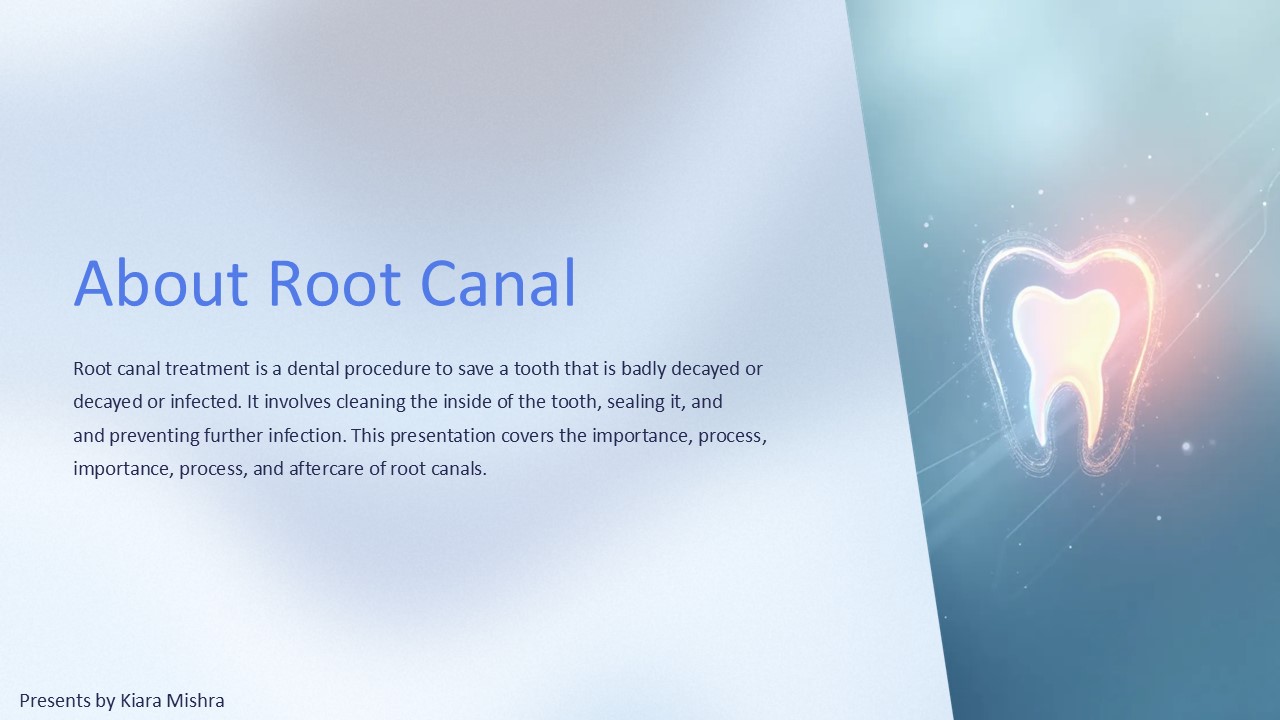
About Root Canal
Root canal treatment is a dental procedure to
save a tooth that is badly decayed or infected.
It involves cleaning the inside of the tooth,
sealing it, and preventing further infection.
This presentation covers the importance, process,
and aftercare of root canals.
Presents by Kiara Mishra
2
Importance of Root Canals
A root canal treatment is essential for saving
infected or damaged teeth, preventing extraction.
It relieves pain, removes infection, and
preserves natural teeth. Without treatment, the
infection can spread, leading to severe
complications. Maintaining oral hygiene helps
reduce the need for a root canal.
Preservation of Natural Teeth
Root canals allow for the conservation of natural
teeth which are vital for overall dental health
and functionality in chewing.
Pain Relief
Individuals suffering from severe tooth pain due
to infection often experience immediate relief
following the procedure.
Preventing Tooth Loss
Root canals address infection or decay to prevent
tooth extraction and complications.
3
The Root Canal Procedure
5
1
4
3
2
Diagnosis and Imaging
Cleaning the Canal
Anesthesia Administration
Restoration
Sealing the Canal
A crown or filling is placed for protection.
The canal is filled with gutta-percha.
Infected pulp is removed and canal cleaned.
Dentists use X-rays to assess infection.
Local anesthesia is applied for comfort.
4
Aftercare and Recovery
Dietary Recommendations
Oral Hygiene Practices
Monitoring
Post-Procedure Discomfort
Report any excessive pain or swelling to your
dentist.
Some patients may experience mild discomfort or
sensitivity.
Maintain good oral hygiene with regular brushing
and flossing.
Avoid hard or sticky foods to prevent damage to
fillings.
5
Risks and Complications
Allergic Reactions
Infection Recurrence
Tooth Fracture
In some cases, the infection may return if the
canal was not entirely cleaned or sealed,
necessitating further treatment.
Treated teeth can be more brittle, and without
proper restoration, they may be susceptible to
cracks or fractures.
While rare, some patients may have adverse
reactions to the materials used in the procedure,
which will need to be addressed by the dentist.
6
Conclusion
Root canal treatment is a safe and essential
procedure for preserving teeth affected by decay
or infection. It alleviates pain, prevents tooth
loss, and allows patients to maintain their
natural smile effectively.
Longevity of Teeth
Safe Procedure
Pain Relief
With care, treated teeth can last a lifetime.
Root canal treatment preserves affected teeth.
It alleviates pain and discomfort for patients.
7
FAQs
Pain Level
Duration of Treatment
Eating Post-Procedure
It's advised to wait until anesthesia wears off
before eating.
Most patients report little to no pain during
treatment.
A typical session lasts between 60 to 90 minutes.
8
Resources
American Association of Endodontists
1
Provides information on root canals and treatment
options.
Dental Health Websites
2
Online platforms offering insights on dental
health.
9
Thank You
Presents by Kiara Mishra
Recommended

