

Frequently Asked Questions And Common Misconceptions Regarding Thermodynamic Heat Pumps PowerPoint PPT Presentation
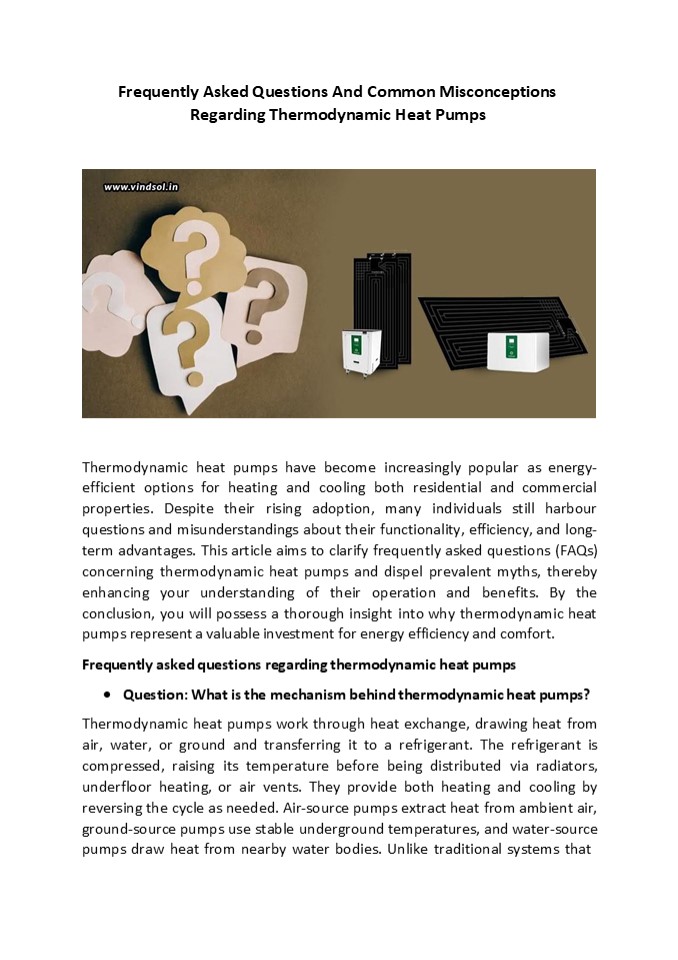
Title: Frequently Asked Questions And Common Misconceptions Regarding Thermodynamic Heat Pumps
1
Frequently Asked Questions And Common
Misconceptions Regarding Thermodynamic Heat Pumps
- Thermodynamic heat pumps have become increasingly
popular as energy- efficient options for heating
and cooling both residential and commercial
properties. Despite their rising adoption,
many individuals still harbour questions and
misunderstandings about their functionality,
efficiency, and long- term advantages. This
article aims to clarify frequently asked
questions (FAQs) concerning thermodynamic heat
pumps and dispel prevalent myths, thereby
enhancing your understanding of their
operation and benefits. By the conclusion,
you will possess a thorough insight into why
thermodynamic heat pumps represent a valuable
investment for energy efficiency and comfort. - Frequently asked questions regarding
thermodynamic heat pumps - Question What is the mechanism behind
thermodynamic heat pumps? - Thermodynamic heat pumps work through heat
exchange, drawing heat from air, water, or ground
and transferring it to a refrigerant. The
refrigerant is compressed, raising its
temperature before being distributed via
radiators, underfloor heating, or air vents. They
provide both heating and cooling by reversing the
cycle as needed. Air-source pumps extract heat
from ambient air, ground-source pumps use stable
underground temperatures, and water-source pumps
draw heat from nearby water bodies. Unlike
traditional systems that
2
- generate heat, thermodynamic heat pumps transfer
existing heat, making them more energy-efficient
and versatile across different environments. - Question Are thermodynamic heat pumps
appropriate for all climates? - Thermodynamic heat pumps are designed to work
effectively in various climates, though
efficiency may vary with environmental factors.
Air-source pumps can be less efficient in colder
climates, but modern models with defrost cycles
and advanced refrigerants enhance performance in
subzero conditions. Ground- source and
water-source pumps maintain consistent efficiency
in cold weather due to stable underground and
water temperatures. In hot and temperate
climates, thermodynamic heat pumps deliver
efficient heating and cooling with lower energy
consumption than traditional air conditioning.
Proper insulation and regular maintenance further
optimize their performance year-round. - Question How energy efficient are thermodynamic
heat pumps? - Thermodynamic heat pumps are highly efficient as
they transfer heat rather than generate it. Their
efficiency is measured by the Coefficient of
Performance (COP), which ranges from 3 to 5,
meaning they produce 3 to 5 units of heat for
each unit of electricity used. Seasonal changes
can affect the COP, but heat pumps generally
outperform traditional heating systems.
Ground-source and water- source pumps often
achieve higher COP values due to stable
underground and water temperatures. Over time,
the energy savings from heat pumps can
significantly reduce utility costs, offsetting
installation expenses. - Question How long do thermodynamic heat pumps
last? - The durability of thermodynamic heat pumps is
influenced by their type, quality, and the
frequency of maintenance. Typically, air-source
heat pumps have a lifespan ranging from 15 to 20
years, whereas ground-source and water-source
systems can endure for as long as 25 years when
properly maintained. Consistent upkeep, including
tasks such as cleaning or replacing filters,
checking refrigerant levels, and ensuring
adequate airflow, can enhance the longevity of a
heat pump and preserve its efficiency over the
years. - Dispelling common misconceptions about
thermodynamic heat pumps - Myth 1 Heat pumps are exclusively for heating
- Reality One widespread myth is that heat pumps
are limited to heating applications. In truth,
thermodynamic heat pumps serve a dual function,
providing both heating and cooling. By reversing
the refrigeration cycle, these
3
- systems can cool indoor environments during
warmer months, ensuring comfort throughout the
year while also promoting energy efficiency. - Myth 2 Heat pumps are ineffective in cold
weather - Reality A common myth is that heat pumps fail in
cold climates. While efficiency may drop at very
low temperatures, modern air-source pumps with
advanced compressors and defrost systems work
well even below freezing. Ground-source and
water-source pumps remain reliable due to stable
underground and water temperatures. - Myth 3 Heat pumps generate excessive noise
- Reality While older heat pump models may have
been noisy, modern systems are designed to
operate quietly. Enhanced fan technology, better
insulation, and vibration-dampening pads
significantly reduce noise levels. Most
high-quality heat pumps function at sound levels
similar to those of a typical household
refrigerator, making them suitable for both
residential and commercial settings. - Myth 4 Heat pumps are costly to maintain
- Reality Although the initial investment for a
heat pump installation may exceed that of
conventional heating or cooling systems, the
maintenance expenses are generally low. Most
maintenance activities, such as filter cleaning
and refrigerant level checks, are straightforward
and infrequent. Conducting annual professional
inspections ensures optimal functionality and
helps avert expensive repairs, rendering heat
pumps a cost-effective choice in the long run. - The Vindsol Advantage in Bangalore
- For those contemplating the installation of a
thermodynamic heat pump in Bangalore, Vindsol
provides high-quality solutions tailored to both
residential and commercial requirements.
Vindsols thermodynamic heat pump in
Bangalore is engineered for optimal efficiency,
even in diverse Indian climates. The skilled team
at Vindsol manages the entire process, from site
evaluation and system design to installation and
ongoing maintenance. Opting for Vindsol thus
guarantees reliable performance, long-term
energy savings, and expert assistance. - Resource Read more
Recommended

