

The Difference Between Metal Sheet and Plate PowerPoint PPT Presentation
Title: The Difference Between Metal Sheet and Plate
1
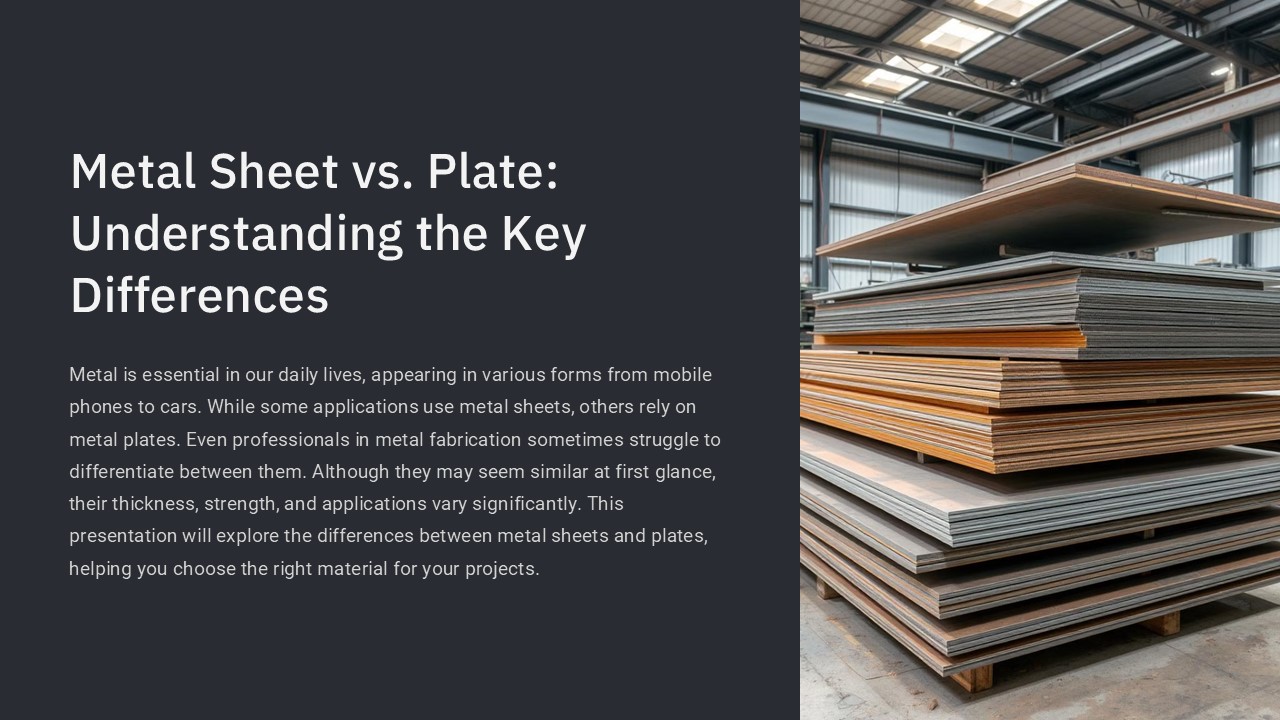
Metal Sheet vs. Plate Understanding the Key
Differences
Metal is essential in our daily lives, appearing
in various forms from mobile phones to cars.
While some applications use metal sheets, others
rely on metal plates. Even professionals in metal
fabrication sometimes struggle to differentiate
between them. Although they may seem similar at
first glance, their thickness, strength, and
applications vary significantly. This
presentation will explore the differences between
metal sheets and plates, helping you choose the
right material for your projects.
2
What is a Metal Sheet?
Properties
Applications
A metal sheet is a flat, thin piece of metal,
typically less than 6mm thick. Standard sizes
range from 4ft x 8ft to 5ft x 10ft, with custom
sizes available. Metal sheets are ideal for
projects requiring lightweight, flexible, and
easily workable materials.
Metal sheets are used in various applications,
including car bodies, roofing panels, and kitchen
appliances. They provide the structure for these
and other tools and appliances. For large-scale
industrial projects, metal sheets often undergo
metal plate rolling systems to achieve precise
shapes and dimensions.
3
Common Materials Used in Metal Sheets
Material Types
Material Details
Applications
Mild Steel (MS)
Affordable and strong, but needs robust protection
Automobiles, roofing, and general fabrication
Stainless Steel (SS)
Rust-free and easy-to-clean
Kitchen equipment, medical devices, and food
processing
Aluminium
It is lightweight and corrosion-resistance
Aerospace, signage, and packaging material
Copper and Brass
Good conductor of electricity and looks great
Electronic components and decorative accents
4
Pros and Cons of Metal Sheets
Advantages
Disadvantages
- Lightweight
- Lacks strength
- Easy to handle
- Can be easily dented
- Cost-effectiveness
- May require coating
- Flexible and easy to cut
- Versatile
Metal sheets are lightweight, versatile, and easy
to work with. However, they also have
limitations, such as lacking strength and being
easily dented. Depending on the application, they
may also require coating for protection.
5
What is a Metal Plate?
Properties
Applications
A metal plate is a thick and robust piece of
metal, with thickness ranging from 6mm to 200mm
or more. Unlike cutting sheets, handling and
shaping metal plates is not simple, primarily due
to their weight. Cranes, forklifts, or metal
plate rolling systems are used to move and shape
them.
Metal plates are designed for heavy-duty
applications where strength, durability, and
resistance to pressure or impact are crucial.
They are used to make ship hulls, bridges,
industrial machines, and military-grade vehicles.
Plates have the properties to withstand extreme
forces, unlike sheets.
6
Common Materials Used in Metal Plates
Steel
Aluminum
Alloy Steel
High tensile strength and durability for
structural applications.
Lightweight with good corrosion resistance for
aerospace and marine use.
Enhanced strength and hardness for heavy
machinery and tools.
The material of metal plates determines how well
it holds up in different temperatures,
environments, and applications. Steel, aluminum
and alloy steel are common choices.
7
Pros and Cons of Metal Plates
Advantages
Disadvantages
- High strength and durability
- Heavy and difficult to handle
- Excellent resistance to impact and pressure
- More expensive than metal sheets
- Suitable for heavy-duty applications
- Requires specialized equipment for shaping and
cutting
Metal plates offer high strength and durability,
making them suitable for heavy-duty applications.
However, they are heavy, more expensive, and
require specialized equipment for shaping and
cutting.
8
Metal Sheet vs. Plate Which One is Right For You?
Consider the Application
Determine the specific requirements of your
project.
Evaluate Strength and Durability
Assess the necessary strength and resistance to
impact.
Factor in Weight and Cost
Balance the need for strength with weight and
budget constraints.
Choose the Appropriate Material
Select the metal that best meets your project's
needs.
Choosing between metal sheets and plates depends
on the application, required strength, weight,
cost, and material. By considering these factors,
you can select the right metal for your project,
ensuring durability, efficiency, and
cost-effectiveness.
9
contact us info_at_himalayamachine.com 91-265-2643224
https//www.himalayamachine.com/
Recommended

