

The Importance of Brochure Layout and Structure PowerPoint PPT Presentation
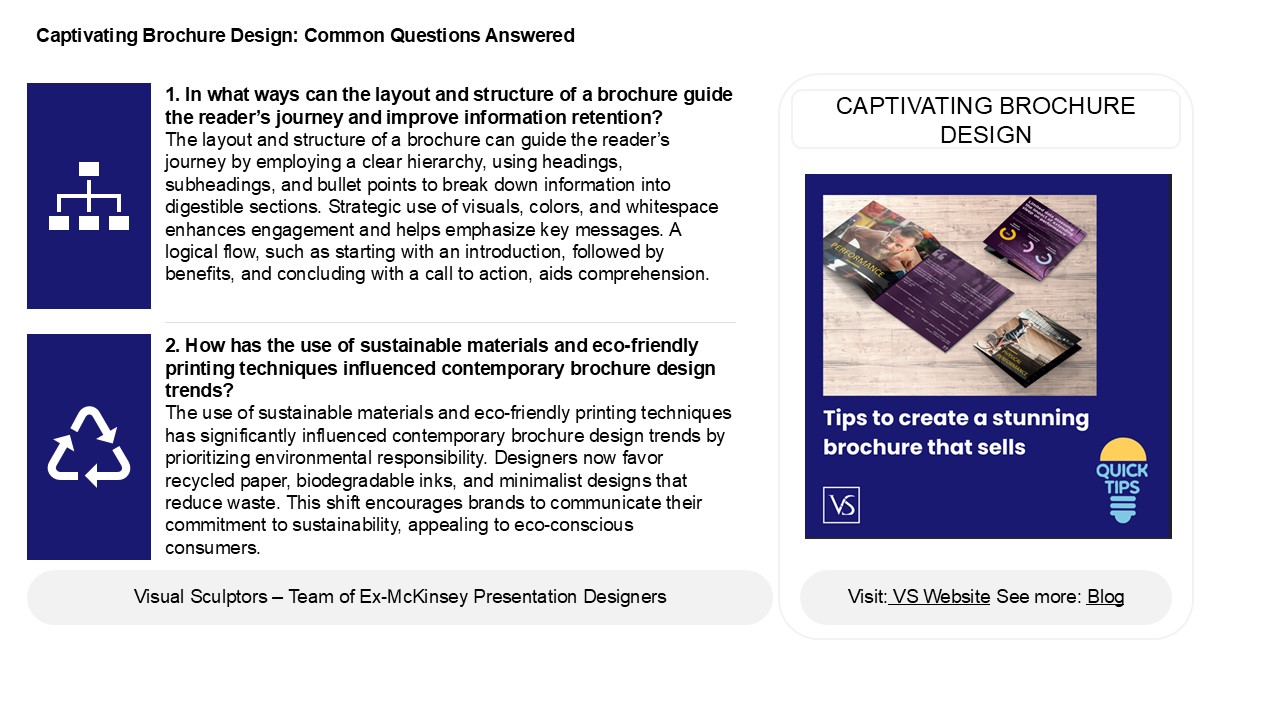
Title: The Importance of Brochure Layout and Structure
1
Captivating Brochure Design Common Questions
Answered
1. In what ways can the layout and structure of a
brochure guide the readers journey and improve
information retention? The layout and structure
of a brochure can guide the readers journey by
employing a clear hierarchy, using headings,
subheadings, and bullet points to break down
information into digestible sections. Strategic
use of visuals, colors, and whitespace enhances
engagement and helps emphasize key messages. A
logical flow, such as starting with an
introduction, followed by benefits, and
concluding with a call to action, aids
comprehension.
CAPTIVATING BROCHURE DESIGN
2. How has the use of sustainable materials and
eco-friendly printing techniques influenced
contemporary brochure design trends? The use of
sustainable materials and eco-friendly printing
techniques has significantly influenced
contemporary brochure design trends by
prioritizing environmental responsibility.
Designers now favor recycled paper, biodegradable
inks, and minimalist designs that reduce waste.
This shift encourages brands to communicate their
commitment to sustainability, appealing to
eco-conscious consumers.
2
Captivating Brochure Design Common Questions
Answered
3. In what ways do interactive elements, such as
QR codes and augmented reality features,
contribute to making brochures more engaging for
the audience? Interactive elements like QR codes
and augmented reality (AR) features enhance
brochures by providing dynamic, multimedia
experiences. QR codes can link to videos,
websites, or special offers, encouraging
immediate engagement and deeper exploration of
content. AR features enable users to visualize
products or experiences in 3D, creating a
memorable, immersive interaction. These tools
transform static information into an engaging
journey, fostering greater interest and retention
among the audience, ultimately leading to
increased brand awareness and customer connection.
4. What role does typography play in modern
brochure design, and what are some emerging
trends in font choices that capture attention
effectively? Typography is crucial in modern
brochure design, as it conveys brand identity,
enhances readability, and creates visual
hierarchy. Emerging trends include bold,
oversized fonts that command attention, playful
and unconventional typefaces that evoke emotion,
and variable fonts that adapt to different
layouts. Minimalistic sans-serifs remain popular
for clean aesthetics, while retro and vintage
styles are gaining traction for their nostalgic
appeal. Custom and hand-drawn fonts are also on
the rise, adding a personal touch. Overall,
effective typography balances creativity with
clarity, ensuring the message resonates with the
audience.
5. How can the integration of minimalism and
whitespace in brochure layouts improve
readability and focus on key messages? Integrating
minimalism and whitespace in brochure layouts
enhances readability by reducing visual clutter,
allowing the eye to focus on essential content.
Whitespace creates a sense of balance and guides
the reader's attention to key messages, making
them more impactful. This approach simplifies the
design, enabling clearer communication and easier
navigation through the material. By prioritizing
simplicity, brochures become more engaging,
ensuring that the audience absorbs the most
important information without distraction.
Ultimately, this design strategy fosters a more
effective and memorable experience for the reader.
Recommended

