

Smart Architecture: LED Tech Illuminating the Future PowerPoint PPT Presentation
Title: Smart Architecture: LED Tech Illuminating the Future
1
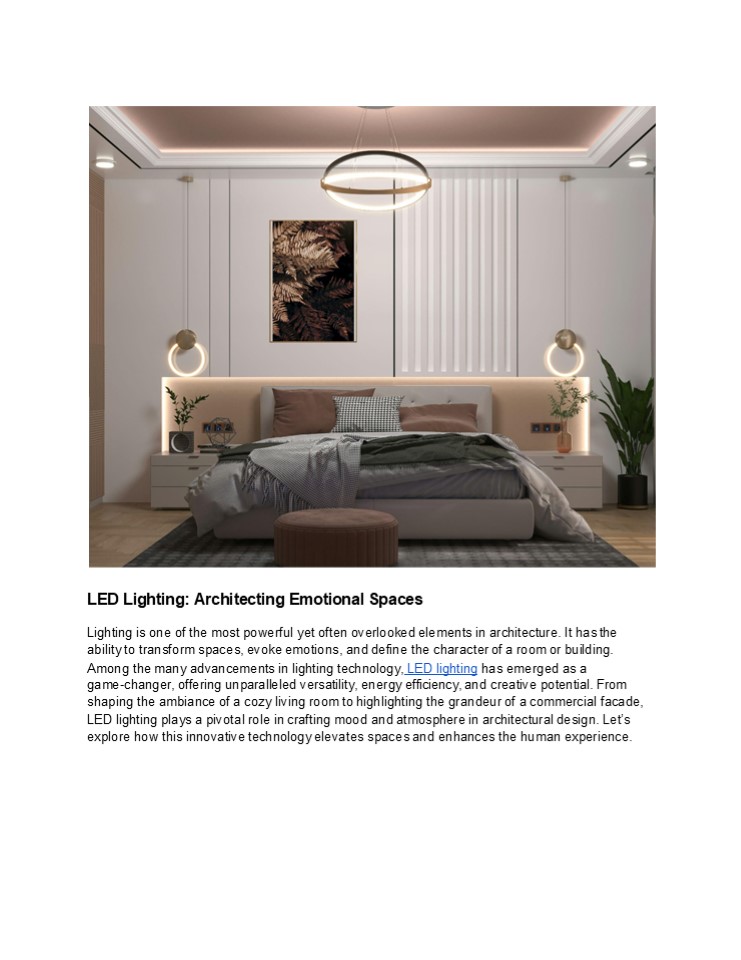
LED Lighting Architecting Emotional
Spaces Lighting is one of the most powerful yet
often overlooked elements in architecture. It has
the ability to transform spaces, evoke emotions,
and define the character of a room or
building. Among the many advancements in lighting
technology, LED lighting has emerged as
a game-changer, offering unparalleled
versatility, energy efficiency, and creative
potential. From shaping the ambiance of a cozy
living room to highlighting the grandeur of a
commercial facade, LED lighting plays a pivotal
role in crafting mood and atmosphere in
architectural design. Lets explore how this
innovative technology elevates spaces and
enhances the human experience.
2
The Magic of Mood Lighting At its core,
architecture is about creating environments that
resonate with their inhabitants. Mood lighting,
enabled by the flexibility of LEDs, allows
designers to tailor the emotional tone of a
space. Unlike traditional incandescent or
fluorescent bulbs, LEDs offer a spectrum of color
temperaturesfrom warm, golden hues that mimic
candlelight to cool, crisp tones reminiscent of
daylight. This range empowers architects and
homeowners alike to curate specific atmospheres.
For instance, a soft, warm glow in a bedroom can
foster relaxation, while a bright, neutral light
in a workspace can boost focus and
productivity. The dimmability of LED lights
further enhances their appeal. By adjusting
brightness levels, you can shift a space from
vibrant and lively to intimate and serene in an
instant. Imagine a dining area bathed in soft,
dim light for a romantic dinner, then brightened
for a casual family brunch the next day. This
adaptability makes LED lighting a cornerstone of
modern house lighting design, where functionality
meets emotional resonance.
3
Architectural Lighting Sculpting Spaces with
Light Beyond individual rooms, architectural
lighting uses LEDs to accentuate a buildings
structure and character. Whether its
illuminating a sleek office tower or highlighting
the intricate details of a historic landmark,
LEDs bring designs to life. Their small size and
directional precision allow for creative
applicationsthink recessed lights outlining a
staircase, or strategically placed fixtures
emphasizing a textured wall. This ability to
"sculpt" with light adds depth and drama, turning
static structures into dynamic experiences. One
standout feature of LEDs is their capacity for
color-changing capabilities. In public spaces
like museums or event venues, dynamic lighting
can shift the atmosphere to suit different
occasions. A gallery might use cool-toned lights
to showcase contemporary art, then switch to warm
tones for a classical exhibit. This interplay of
light and architecture not only enhances
aesthetics but also creates memorable moments for
visitors.
4
Outdoor LED Lighting Extending Atmosphere Beyond
Walls The influence of LED lighting doesnt stop
at interior spacesit extends outdoors, shaping
the way we perceive gardens, patios, and building
exteriors. Outdoor LED lighting has
revolutionized how architects approach landscapes
and facades. Energy-efficient and durable, these
lights withstand the elements while offering
endless design possibilities. Pathway lights can
guide guests with subtle elegance, while
uplighting can transform a plain wall into a
striking focal point. Consider a residential
courtyard a combination of warm-toned LEDs along
walkways and cool-toned spotlights on trees can
create a balanced, inviting atmosphere. For
commercial projects, such as hotels or retail
centers, well-placed outdoor LEDs can draw
attention to key features, enhancing curb appeal
and setting the tone before anyone steps inside.
This seamless integration of light and
environment blurs the lines between indoors and
out, crafting a cohesive experience.
5
The Practical and Emotional Benefits of LEDs LEDs
arent just about aestheticstheyre practical
too. Their energy efficiency reduces electricity
costs and environmental impact, making them a
sustainable choice for both homes and large-scale
projects. Additionally, their long lifespan means
fewer replacements, offering convenience and cost
savings over time. But beyond these tangible
benefits, its the emotional impact that truly
sets LEDs apart. Light influences how we feel,
think, and interact with our surroundings. A
well-lit space can reduce stress, improve mood,
and even inspire creativity. Architects and
designers understand this, which is why brands
like Lafit Lighting have embraced LEDs to deliver
innovative solutions. With over two decades of
expertise, Lafit subtly transforms spaces across
India, blending cutting-edge technology with
elegance to meet the growing demand for luxurious
house lighting design. Their work with top
architects showcases how LEDs can elevate both
form and feeling in architecture.
6
Personalizing Spaces with Atmosphere Light One of
the most exciting aspects of LED technology is
its ability to personalize. Atmosphere light, as
its often called, lets individuals tailor their
environments to reflect their personalities or
needs. Smart LED systems, controllable via apps
or voice commands, take this a step further. Want
your living room to glow in soothing blues after
a long day? Or perhaps a burst of vibrant reds
for a party? With LEDs, the possibilities are
endless. This customization extends to
architectural projects as well. In hospitality
settings, for instance, hotels use LEDs to create
distinct vibestranquil in spa areas, energetic
in lobbies. Retail stores leverage lighting to
guide customer behavior, drawing attention to
displays with focused beams or creating a
welcoming glow throughout. The precision and
adaptability of LEDs make them indispensable
tools for storytelling through design.
7
Challenges and Considerations While LED lighting
offers immense potential, its not without
challenges. Poorly designed systems can lead to
harsh glare or uneven illumination, disrupting
the intended mood. Color consistency is another
factorlow-quality LEDs may shift tones over
time, altering the atmosphere. To avoid these
pitfalls, architects and homeowners should invest
in high-quality products and work with
experienced professionals who understand the
nuances of lighting design. Budget is also a
consideration. While LEDs save money in the long
run, their upfront cost can be higher than
traditional options. However, as technology
advances and competition grows, prices are
becoming more accessible, making it easier for
everyone to embrace this transformative tool.
8
The Future of LED Lighting in Architecture As we
look ahead, the role of LEDs in architecture is
only set to expand. Innovations like
human-centric lighting, which adjusts to mimic
natural daylight cycles, promise to enhance
well-being in homes and workplaces. Integration
with smart cities could see outdoor LED lighting
adapt in real-time to weather, traffic, or
events, creating responsive urban environments.
Meanwhile, sustainable advancements will continue
to align LEDs with eco-conscious design
trends. For companies like Lafit Lighting, this
future is already in motion. Their commitment to
research and development ensures that LED
solutions remain at the forefront of
architectural innovation, illuminating iconic
projects with brilliance and precision. As
architects, designers, and homeowners embrace
these possibilities, LED lighting will keep
redefining how we experience the spaces around
us. Conclusion LED lighting is more than a
functional necessityits a creative force that
shapes mood and atmosphere in architecture. From
the intimate glow of mood lighting in homes to
the dramatic flair of architectural lighting on
grand structures, LEDs offer endless ways to
enhance our surroundings. Their versatility,
paired with practical benefits, makes them a
cornerstone of modern design. Whether youre
illuminating a quiet garden with outdoor LED
lighting or crafting a bespoke ambiance with
atmosphere light, LEDs empower us to seeand
feelspaces in new ways. As this technology
evolves, its clear the future of architecture
is brilliantly lit.
9
(No Transcript)
Recommended

