

Climate: The Hidden Force in Whiskey Aging PowerPoint PPT Presentation
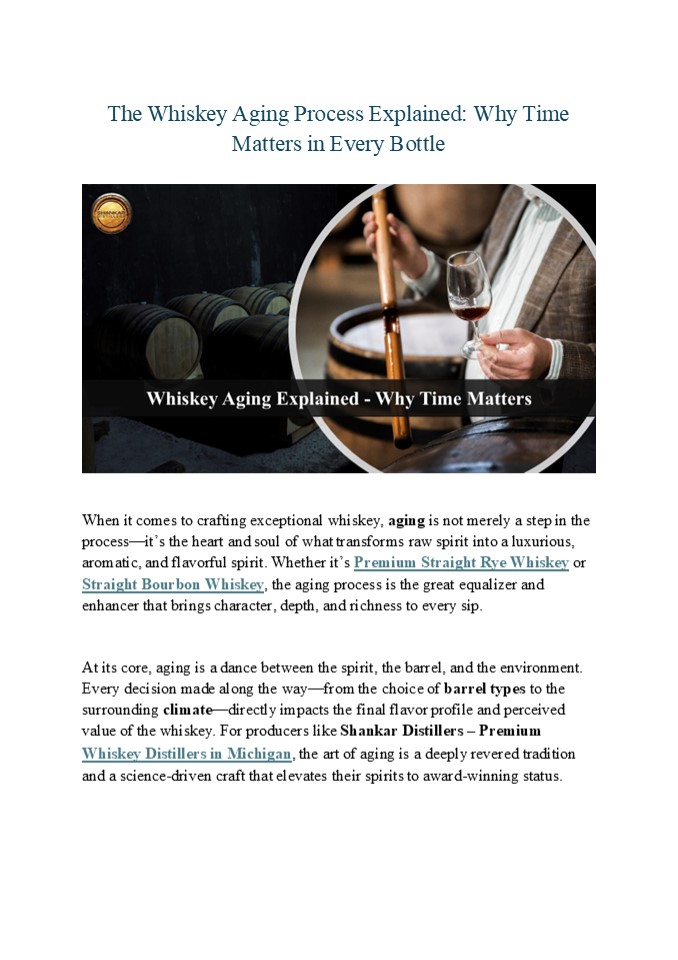
Title: Climate: The Hidden Force in Whiskey Aging
1
The Whiskey Aging Process Explained Why Time
Matters in Every Bottle
When it comes to crafting exceptional whiskey,
aging is not merely a step in the processits
the heart and soul of what transforms raw spirit
into a luxurious, aromatic, and flavorful spirit.
Whether its Premium Straight Rye Whiskey or
Straight Bourbon Whiskey, the aging process is
the great equalizer and enhancer that brings
character, depth, and richness to every sip. At
its core, aging is a dance between the spirit,
the barrel, and the environment. Every decision
made along the wayfrom the choice of barrel
types to the surrounding climatedirectly impacts
the final flavor profile and perceived value of
the whiskey. For producers like Shankar
Distillers Premium Whiskey Distillers in
Michigan, the art of aging is a deeply revered
tradition and a science-driven craft that
elevates their spirits to award-winning status.
2
- Why Whiskey Needs to Age
- Whiskey straight from the still is called white
dograw, harsh, and almost medicinal. Its the
aging process that mellows this aggressive
profile, allowing the spirit to absorb flavors
and characteristics from the oak barrels in which
it rests. Time, in essence, allows the whiskey to
develop complexity, smoothing out rough edges and
layering on nuanced aromas and flavors. - Aged whiskey gains a signature depth not found in
unaged spirits. This - transformation results in a sensory profile that
appeals to both casual drinkers and seasoned
connoisseurs who seek richness, balance, and a
story in every pour. - The Role of Barrel Types in Aging
- The type of barrel used is one of the most
critical factors in how a whiskey will mature. In
the U.S., both Premium Straight Rye Whiskey and
Straight Bourbon Whiskey are legally required to
age in new, charred American oak barrels. These
barrels are more than just containersthey are
active participants in the aging process. - American Oak vs. European Oak
- American Oak (Quercus alba) Offers sweeter notes
like vanilla, coconut, and caramel. Its wide
grain allows whiskey to penetrate deeply,
accelerating interaction. - European Oak (Quercus robur) Tends to impart
spicier, tannic characteristics. It is often used
in premium finishes or secondary maturation
stages. - Barrel Char Levels
- Charring the inside of barrels creates a layer of
charcoal, which acts as a natural filter and
flavor enhancer. Deeper chars (Level 3 or 4)
produce stronger vanilla and toasted flavors,
while lighter chars retain more of the woods
natural tones.
3
- Every barrel breathes with the climateexpanding
and contracting with - temperature changes. This interaction helps draw
the spirit into the wood and back out, infusing
it with those classic whiskey flavors. - Climate The Silent Influencer
- Climate plays a major role in how quickly or
slowly a whiskey matures. Warmer climates, like
those found in parts of Kentucky or Tennessee,
tend to accelerate aging, creating bold,
assertive profiles in a shorter amount of time.
Cooler - climates, such as Michigans, offer a slower,
more refined aging process, allowing delicate
notes to emerge. - This is one reason why a 6-year-old whiskey from
a cooler climate might taste significantly more
complex and balanced than a 4-year-old from a hot
environment. Its also why distilleries invest
heavily in location-specific - rickhouses, leveraging environmental factors to
shape the final character of their spirits. - How Aging Impacts Aroma and Flavor
- Aged whiskey is a symphony of flavors and aromas.
As the spirit spends time in the barrel, it picks
up esters, lactones, tannins, and other compounds
that contribute to its profile. - Aroma Evolution
- Young Whiskey Often smells of raw grain,
ethanol, and subtle sweetness. - Aged Whiskey Brings forth notes of vanilla,
caramel, spice, oak, leather, dried fruit, and
even floral hints depending on the mash bill and
barrel.
4
- Flavor Transformation
- The impact of aging on flavor is significant
- 13 Years Harsh edges, grain-forward, limited
complexity. - 46 Years Balanced sweetness, emerging spice,
deeper oak integration. - 7 Years Rich, full-bodied, with layered notes
and a long, elegant finish. A well-aged Straight
Bourbon Whiskey or Premium Straight Rye Whiskey - can offer flavors of toasted nuts, cinnamon,
toffee, dark chocolate, or stone fruitall
naturally extracted from the wood over time. - Whiskey Aging and Value
- Time doesnt just change whiskeyit increases its
value. Aged spirits are considered more premium
due to the time, storage, and evaporation loss
(commonly known as the angels share) involved
in the process. - Older whiskeys often carry higher price tags, not
simply because of scarcity but because of the
quality they offer. Connoisseurs willingly pay
more for a 10- or 12-year-old whiskey with
well-integrated flavors and aroma complexity than
for a younger spirit. - Whiskeys from brands known for expertise in
agingespecially those offering experiences like
a Premium Whiskey Tasting Roombenefit from both
consumer trust and sensory superiority. - Blending and Bottling The Final Touch
- Once aging is complete, whiskey undergoes a
blending process, especially in large-scale
production. Master blenders combine barrels to
maintain consistency or craft unique limited
editions. At this stage, producers might proof
the whiskey down with water, filter it, or bottle
it at cask strength.
5
- The final product reflects not just the time in
the barrel but every intentional decision made
along the journey. Aging is only as effective as
the care taken during selection, maintenance, and
observation of the barrels. - The Rise of Tasting Experiences
- In todays premium spirits market, brands
understand that whiskey isnt just a
beverageits an experience. The rise of Premium
Whiskey Tasting Room offerings has made aged
whiskey more accessible to consumers who want to
taste the journey for themselves. - Visitors can sample everything from youthful
blends to double-digit aged expressions, often
guided by distillers or whiskey educators. These
experiences deepen appreciation for the aging
process and the craftsmanship involved in every
bottle. - Conclusion Time is the Secret Ingredient
- In the world of whiskey, aging is the quiet force
behind greatness. Its what transforms clear
spirit into liquid gold, adding dimension,
richness, and an irreplaceable sense of time.
Whether its a robust Premium Straight Rye - Whiskey or a smooth, honeyed Straight Bourbon
Whiskey, every year spent in the barrel is a step
toward complexity, elegance, and excellence. - For producers like Shankar Distillers Premium
Whiskey Distillers in Michigan, aging is more
than a processits a philosophy. Its their - commitment to creating not just whiskey, but a
story in a bottle, where every drop reflects
time, tradition, and terroir. - So the next time you pour yourself a dram of
well-aged whiskey, know that youre not just
tasting a spirityoure tasting time well spent. - Useful Links
- Straight Bourbon recipes
- Rye recipes
Recommended

