

Pancreas Issues Explained: Diseases And Treatments PowerPoint PPT Presentation
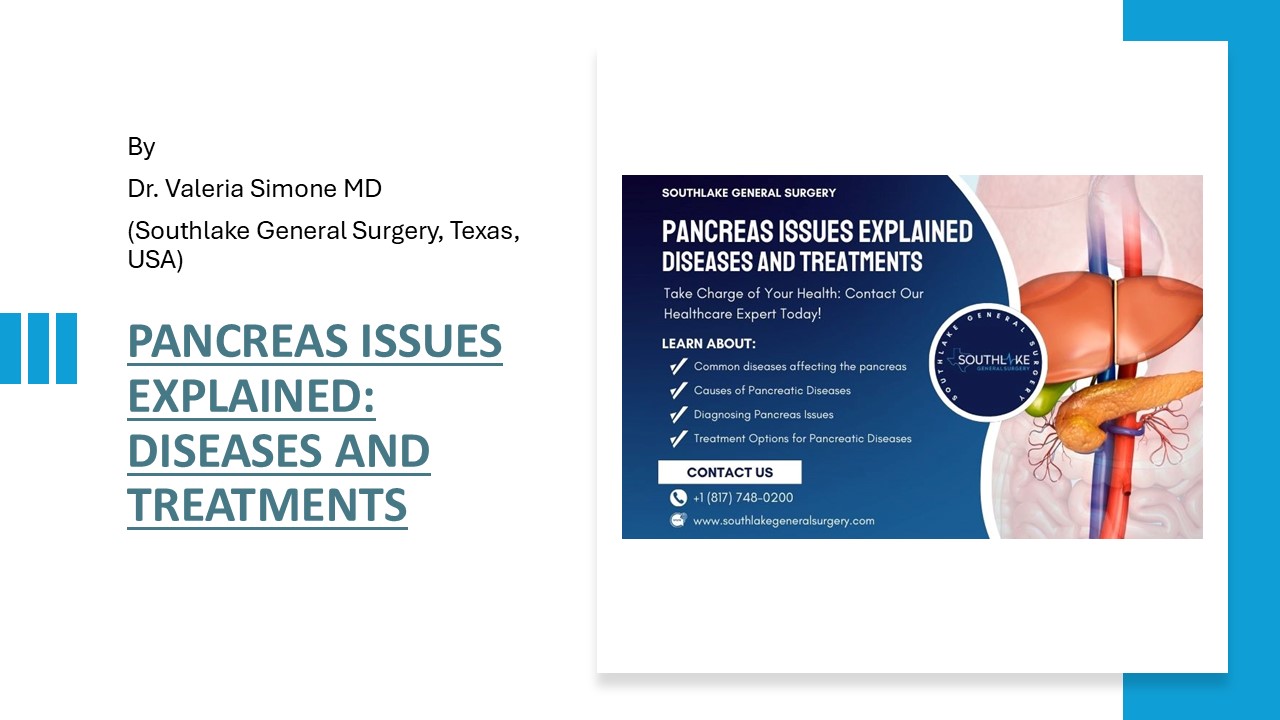
Title: Pancreas Issues Explained: Diseases And Treatments
1
PANCREAS ISSUES EXPLAINED DISEASES AND TREATMENTS
- By
- Dr. Valeria Simone MD
- (Southlake General Surgery, Texas, USA)
2
Overview
- Pancreas issues are serious and affect many
people around the world. The pancreas is key for
digestion and for controlling blood sugar levels.
This makes it essential for good health. - Its important to spot these issues early and
know more about them for proper care. With tests,
scans, and personalized treatment plans, people
with pancreas problems can manage their health
more effectively.
3
Key Highlights
- The pancreas is important for breaking down food
and managing blood sugar. It makes enzymes and
hormones. - Conditions like pancreatitis, pancreatic cancer,
and diabetes can hurt the pancreas. - It is important to look for early signs of
pancreas problems. These signs may be abdominal
pain, nausea, and changes in bowel movements. - Doctors usually use imaging tests like MRI and CT
scans, blood tests, and sometimes ERCP to find
pancreas issues. - Treatment for pancreas problems can change
depending on the problem and how serious it is.
It may include changes in lifestyle, medicines,
or surgery.
4
Understanding Pancreas Issues
- The pancreas is found deep inside the abdomen. It
is very important for our health. The pancreas
has two main roles. It helps with digestion and
also controls blood sugar levels. However, like
any part of our body, the pancreas can get sick.
Many diseases can affect the pancreas and change
how it works. - When the pancreas is swollen or not functioning
well, it can cause various health problems.
Recognizing the early signs is really important.
Getting medical help quickly can really improve
how we manage and treat any issues with the
pancreas.
5
What is the function of the pancreas?
- The pancreas plays a key role in digestion and
hormones. It generates enzymes that help in
digestion, including amylase, lipase, and
protease. These enzymes are essential for
breaking down fats, proteins, and carbohydrates
in the small intestine. By doing this, the body
can absorb nutrients from food more effectively. - The pancreas is important for digestion. It also
makes hormones, including insulin. These hormones
are released into the bloodstream. Insulin is
essential for managing blood sugar levels
effectively. It helps cells absorb glucose from
the blood. This process prevents blood sugar from
rising too high. - If the pancreas doesnt produce enough enzymes or
hormones, it can lead to serious health problems.
Thats why its important to keep the pancreas
healthy for your overall well-being.
6
Common diseases affecting the pancreas
- Many diseases can impact the pancreas. One such
disease is pancreatitis. This disease
causes inflammation of the pancreas. Pancreatitis
can be classified into two categories acute
pancreatitis and chronic pancreatitis. - Acute pancreatitis happens quickly and lasts for
a short time. On the other hand, chronic
pancreatitis persists over an extended period.
Acute pancreatitis usually gets better with
treatment. - However, chronic pancreatitis can cause lasting
damage. This damage affects how the pancreas
makes digestive enzymes and insulin. - Pancreatic cancer poses a significant challenge,
yet it occurs less frequently than pancreatitis.
At first, this cancer usually does not show any
signs. This makes it hard to detect early. When
signs do show up, they can be confusing. Possible
indications could involve pain in the abdomen,
weight loss, and a yellowing of the skin or eyes
(jaundice). - Diabetes affects the pancreas. In Type 1
diabetes, the pancreas doesnt make enough
insulin. Type 2 diabetes happens when the body
doesnt respond well to insulin. Both of these
conditions can lead to elevated blood sugar
levels. Without proper care, high blood sugar can
lead to several health problems.
7
Early Signs and Symptoms of Pancreas Problems
- The pancreas is very important for our body. It
is found deep in the abdomen, which makes it hard
to spot problems early. Its crucial to know the
warning signs. This is how any issues can be
discovered and treated quickly. Often, these
symptoms are mild. This makes some people think
they are not serious. - You should watch for symptoms like pain in your
upper abdomen, especially after eating. Notice if
you feel ongoing nausea or vomiting. Unplanned
weight loss and changes in your bowel habits,
like fatty stools, are important too. Do not
ignore these signs. Receiving timely medical
assistance can significantly impact your health
outcomes.
8
Recognizing the early signs of pancreas illness
- Finding problems with the pancreas early is very
important. If you ignore the first signs, it
could cause serious complications. A common early
sign is abdominal pain. This pain usually comes
across as a dull ache. It can also move to your
back. It may get worse after eating, especially
when you have a fatty meal. - A person who has abdominal pain may feel unwell
and might throw up. They could also stop wanting
to eat and lose weight quickly without clear
reasons. These problems can happen if the
pancreas does not make enough digestive enzymes.
When the body lacks these enzymes, digesting food
becomes more difficult. - If the pancreas does not make enough insulin, it
can lead to high glucose levels and various
symptoms. You might feel extremely thirsty, need
to go to the bathroom frequently, have blurry
vision, and notice sores that take time to heal.
It is important to spot these signs early.
Identifying them can assist you in obtaining
timely medical assistance.
9
Symptoms specific to acute and chronic
pancreatitis
- The signs of acute pancreatitis show up fast and
can feel very strong. A key sign is severe
abdominal pain. This pain can feel sharp or
burning, and it may spread to your back. It often
feels worse when you lie down and better when you
lean forward. Other signs of acute pancreatitis
are - Feeling sick and throwing up
- A high temperature
- A fast heartbeat
- Belly pain
- Chronic pancreatitis happens slowly and lasts a
long time. It is like acute pancreatitis, but the
symptoms are usually milder and may come and go. - A common sign is pain in the upper abdomen,
especially after you eat. As chronic pancreatitis
gets worse, it can cause scarring and damage to
the pancreas. This damage affects how well the
pancreas produces digestive juices. - Losing weight
- Steatorrhea (this is when stools are fatty and
smell bad) - Not getting enough nutrition
10
Causes of Pancreatic Diseases
- Pancreatic diseases can occur for several
reasons. Some of these reasons are genetics,
lifestyle choices, and environmental factors. The
primary factors leading to pancreatitis are
excessive alcohol consumption and the presence of
gallstones. There are also many other causes of
pancreatitis that can impact the pancreas. - These factors can be genetic risks, certain
medications, infections, and health problems such
as cystic fibrosis and autoimmune diseases. It is
important to identify these issues. This helps us
understand how pancreatic diseases start and
change over time.
11
Genetic and environmental factors
- Genetic traits can play a big role in some
diseases of the pancreas. If someone in your
family has had pancreatitis or pancreatic cancer,
you might have a higher risk for these diseases.
Some changes in genes are linked to hereditary
pancreatitis and increase the chance of getting
pancreatic cancer. - Environmental factors can lead to problems with
the pancreas. Being near harmful things, such as
those found in pesticides and industrial
cleaners, can raise the risk of pancreatic
cancer. - Additionally, long-term viral infections, like
chronic hepatitis B and C, can cause inflammation
of the pancreas. This inflammation can increase
the chances of getting pancreatitis and
pancreatic cancer. - Your lifestyle choices have a big impact on the
health of your pancreas. Smoking, drinking too
much alcohol, and eating lots of processed foods
or unhealthy fats can increase your risk of
pancreatitis and pancreatic cancer. However,
maintaining a healthy weight, eating nutritious
foods, and exercising regularly can help reduce
these risks.
12
Lifestyle contributions to pancreas health
- Having a healthy lifestyle is important for your
pancreas and overall health. Heavy alcohol use is
a major risk factor for pancreatitis. It can
cause inflammation and harm to the pancreas. To
protect your pancreas, it is essential to cut
back on alcohol use or stop drinking completely. - Smoking is a big risk factor for pancreatitis and
pancreatic cancer. It can harm the pancreas in
many ways. This damage can lead to more
inflammation and help cancer cells grow. Quitting
smoking is one of the best things you can do for
your pancreas and your health. - Good nutrition is very important for a healthy
pancreas. A balanced diet that includes fruits,
vegetables, and whole grains provides essential
nutrients. This type of diet also reduces stress
on the pancreas. Eating less processed food,
sugary drinks, and saturated fats helps keep the
pancreas healthy. This can help prevent
inflammation and damage.
13
Diagnosing Pancreas Issues
- To find out if there are any problems with your
pancreas, doctors typically review your medical
history. They will conduct a physical examination
and carry out several tests. - They will check for symptoms and ask if anyone in
your family has had pancreas issues. Following
that, they will arrange assessments to gain
further insights into the condition of your
pancreas.
14
Common diagnostic tests and procedures
- Pancreatic tests and procedures help find
problems accurately. - Imaging tests such as CT scans and MRIs deliver
precise visuals. They quickly show issues in the
pancreas. - Blood tests evaluate the concentrations of
pancreatic enzymes. This test helps diagnose
pancreatitis. - A procedure called endoscopic retrograde
cholangiopancreatography (ERCP) uses a camera to
look at the pancreas and bile ducts. This can
help find blockages or other problems. - Ultrasounds are used to check the health of the
gallbladder and pancreas. - These steps are important for diagnosing
gallstones. When these tests are combined with a
thorough review of medical history, they lead to
the right diagnoses for pancreatic issues.
15
The role of imaging and blood tests
- Imaging tests and blood tests play a big role in
finding and tracking issues with the pancreas. An
ultrasound is a reliable examination that employs
sound waves. This creates images of the pancreas.
The picture shows the pancreatic form and size.
It can also reveal if there are gallstones or any
blockages in the pancreatic duct. - Blood tests provide important details about the
pancreas. High amounts of pancreatic enzymes,
such as amylase and lipase, might indicate
pancreatitis. Unusual blood sugar levels can lead
to diabetes or problems with insulin. These
assessments also evaluate indicators of
inflammation, supporting physicians in
identifying problems. - Imaging tests and blood tests assist physicians
in assessing the condition of the pancreas. This
information allows them to choose the best
treatment for various issues related to the
pancreas.
16
Treatment Options for Pancreatic Diseases
- Treatment for pancreas issues can vary greatly.
It depends on the specific issue, how serious it
is, and the persons overall health. Initially,
the treatment usually focuses on stabilizing the
patient and providing support, mainly when
dealing with acute pancreatitis. - Lets explore more Pancreas Issues Diseases And
Treatments - Southlake General Surgery
17
Make an Appointment
- To help with your pancreas issues, schedule a
visit with Dr. Valeria Simone, MD. She is a
skilled expert at Southlake General Surgery in
Texas, USA. You can reach her office at 1 (817)
748-0200. You can contact our healthcare expert
today to Make an Appointment with Dr. Simone. - Dr. Simone focuses on pancreatitis, pancreatic
cancer, and other pancreas-related problems. She
offers complete care and designs treatment plans
for you. Take control of your health today by
making your appointment.
18
- Medically Reviewed By Dr. Valeria Simone, MD
- Board-certified General Surgeon at Southlake
General Surgery, Texas, USA. - Follow us on Facebook and YouTube.
- Source Pancreas Issues Diseases And Treatments
- Southlake General Surgery
19
THANK YOU!
SOUTHLAKE GENERAL SURGERY
1545 E. Southlake Blvd, Suite 270 Southlake, TX
EMAIL info_at_southlakegeneralsurgery.com
VISIT US AT www.southlakegeneralsurgery.com
Recommended

