

Intra and InterTherapist Reproducibility of Daily Isocenter Verification Using Prostatic Fiducial Ma PowerPoint PPT Presentation
1 / 1
Title: Intra and InterTherapist Reproducibility of Daily Isocenter Verification Using Prostatic Fiducial Ma
1
Intra and Inter-Therapist Reproducibility of
Daily Isocenter Verification Using Prostatic
Fiducial Markers Holly Ning, Karen L. Ullman,
Robert W. Miller, Asna Ayele, Lucresse Jocelyn,
Jan Havelos, Peter Guion, Hunchen Xie, Guang Li,
Barbara Arora, C. Norman Coleman, Cynthia
Ménard Radiation Oncology Branch, Center for
Cancer Research, National Cancer Institute, NIH,
DHHS
Introduction In 2004, 230,110 new cases of
prostate cancer and 29,900 prostatic cancer
deaths were projected in the United States (1).
External beam radiotherapy constitutes one of the
mainstays of therapy for patients with localized
disease. Given the relatively small treatment
fields used with conformal and intensity-modulated
radiotherapy, there is a greater need for
accurate targeting and daily localization of the
prostate gland. Radiopaque fiducial markers
(FM) can be safely implanted in the prostate
gland and used as an internal reference during
external beam radiotherapy. In theory, the
isocenter of the treatment field can be corrected
daily based on its position relative to the
radiopaque FM seen in portal films or electronic
images immediately prior to radiation delivery.
The purpose of this study is to determine the
reproducibility of a simple technique using
commercially available software that could be
applied in the clinic for daily isocenter set-up
verification and correction.
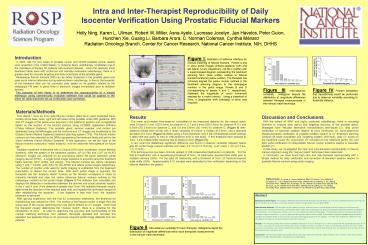
Figure I Illustration of software interface for
manual matching of fiducial markers. Panels A
and C show portal images (anterior-posterior (AP)
and left lateral (LLat) respectively, red MLC
profile) with a superimposed diagram representing
the treatment planning MLC (blue profile)
relative to fiducial markers locations (yellow
outline). The therapist has manually aligned the
yellow marker outlines in the treatment planning
diagram to the radiopaque markers in the portal
image. Panels B and D (corresponding to panels A
and C, respectively), represent the magnitude of
couch movement required for a match (arrow).
Using a threshold of 5mm, a longitudinal shift
(inferiorly) of 9mm was required.
Figure IV Percent probability that repositioning
would be performed due to observer variability
according to threshold distance
Figure III Inter-observer variability.
Histogram depicts the distribution of magnitude
differences between therapist measurements in the
manual match technique.
Materials/Methods Four sterile 1.2mm by 3mm
gold fiducial markers (Med-Tec?) were implanted
trans-rectally at the base, apex, right and left
lobes of the prostate under MRI guidance. MRI and
CT images of the pelvis were acquired in the
treatment position and co-registered based on the
location of the fiducial markers using ACQSIM
registration software (Philips Medical Systems).
The prostate gland, seminal vesicles, and rectum
are delineated using the MRimages and the
contours and CT images are transferred to the
Eclipse (Varian Medical Systems) treatment
planning system (TPS). The fiducial marker
contours are then attached to the DRRs
representing the treatment fields and sent to the
Vision software (Varian Medical Systems). In this
application, we set the type of the fiducial
markers contours to match anatomy, and we
create the field aperture for future use.
Radiation treatment is delivered with a
Clinac?21EX linear accelerator (Varian Medical
Systems). With the patient in the treatment
position, AP (or PA) and LLAT (or RLAT)
electronic images are acquired on an amorphous
silicon flat panel electronic portal imaging
device (EPID). A single portal image exposure is
acquired using the treatment fields aperture,
MLC profile, and energy. The fiducial markers
are clearly visualized using 5 and 7 monitor
units (MU) for the AP/PA and lateral portal
images respectively. The number of monitor units
used for portal imaging is subtracted from the
treatment prescription to deliver the correct
dose. After each portal image is acquired, the
therapists use the Anatomy Match function on
the Review workspace in Vision to manually
translate and align the yellow reference fiducial
markers outlines to the radiopaque markers on the
portal image. (Figure I) The software then
calculates and displays the distances in
centimeters between the planned and actual
isocenter location in the Y and X axis. If the
distance is greater than 5mm, the radiation
therapist visually determines the direction of
the required table shift, and repeats the
verification sequence after repositioning the
isocenter. If the distance is less than 5mm, the
radiation treatment is delivered. After
gaining experience with the first 83 consecutive
treatments, the threshold for repositioning was
reduced to 3mm. The contour of the fiducial
marker is larger than the actual size of the
marker stemming from the bloom artifact on CT
images. Given that the therapist visually
determines the manual match, there is a
potential for the introduction of error. In
order to determine the accuracy and
reproducibility of this manual matching
technique, four radiation therapists repeated and
recorded this operation two separate times on 20
previously acquired portal image datasets from
two patients.
Results The mean and median intra-observer
variabilities of the measured distance for the
manual match were 0.4 and 0.3 mm (SD 0.5mm) for
observer A, 0.7 and 0.4mm (SD 0.9mm) for observer
B, 0.5 and 0.5mm (SD 0.4mm) for observer C, and
0.9 and 0.6mm (SD 1mm) for observer D. (Figure
II) Inter-observer results were similar with a
mean variability of 0.9mm, a median of 0.6mm, and
a standard deviation of 0.7mm. (Figure III) When
using a 5mm threshold, only 0.5 of treatments
would undergo a table shift due solely to intra
or inter-observer error in this study. If this
threshold were reduced to 3mm, 2.4 of table
shifts would be due to observer error. (Figure
IV) A very small but statistically
significant difference was found in observer
variability between lateral and AP portal image
manual matches (AP mean 0.8 mm CI 0.75-0.84,
LLAT mean 1 mm CI 0.941.1, Plt0.01). This
technique has now been clinically applied in 166
consecutive treatments in 6 patients. For the
first 83 treatments, with a repositioning
threshold of 5mm, 30 treatments required table
shifts prior to radiation delivery (36). For
the latter 83 treatments, with a threshold of
3mm, 25 fractions required table shifts (30).
Approximately 5-10 minutes were dedicated to this
verification depending on the need to reposition
the patient.
Discussion and Conclusions With the advent of
IMRT and highly conformal radiotherapy, there is
mounting incentive to improve daily set-up and
targeting accuracy of the prostate gland.
Strategies have included alternative
immobilization techniques (2), daily portal
verification of isocenter position relative to
bony landmarks (3), trans-abdominal
ultrasound-based verification of prostate
position relative to CT treatment planning
contours (B-mode Acquisition and Targeting System
-BAT?)(4), daily CT scans on the treatment couch
(5), cone-beam CT mounted on the treatment gantry
(6), and daily portal verification of
intraprostatic fiducial marker locations relative
to isocenter position (7). In this study, we
investigated the inter and intra-therapist
reproducibility in fiducial marker alignment
using the manual match technique herein
described. In conclusion, we have found high
intra and inter-therapist reproducibility with a
simple method for daily verification and
correction of isocenter position relative to
prostatic fiducial markers using portal imaging.
References (1) Jemal, A, Cancer statistics,
2004. CA Cancer J Clin. 2004548. (2) Malone, S,
J. Int J Radiat Oncol Biol Phys. 200048105. (3)
Hatherly, K, Int J Radiat Oncol Biol Phys.
199945791. (4) Serago, CF, Int J Radiat Oncol
Biol Phys. 2002531130. (5) Court, LE, Int J
Radiat Oncol Biol Phys. 200459412. (6) Jaffray,
DA, Int J Radiat Oncol Biol Phys. 2002531337.
(7) Alasti, H, Int J Radiat Oncol Biol Phys.
200149869.
Abstract Background and Purpose We sought to
determine the intra and inter-therapist
reproducibility of a previously established
matching technique for daily verification and
correction of isocenter position relative to
intraprostatic fiducial markers (FM). Materials
and Methods With the patient in the treatment
position, anterior-posterior and left lateral
electronic images are acquired on an amorphous
silicon flat panel electronic portal imaging
device. After each portal image is acquired, the
therapist manually translates and aligns the
fiducial markers in the image to the marker
contours on the digitally reconstructed
radiograph. The distances between the planned
and actual isocenter location is displayed. In
order to determine the reproducibility of this
technique, four radiation therapists repeated and
recorded this operation two separate times on 20
previously acquired portal image datasets from
two patients. The data were analyzed to obtain
the mean variability in the distances measured
between and within observers. Results The mean
and median intra-observer variability ranged from
0.4 to 0.7mm and 0.3 to 0.6mm respectively with a
standard deviation of 0.4 to 1.0mm.
Inter-observer results were similar with a mean
variability of 0.9mm, a median of 0.6mm, and a
standard deviation of 0.7mm. When using a 5 mm
threshold, only 0.5 of treatments will undergo a
table shift due to intra or inter-observer error,
increasing to an error rate of 2.4 if this
threshold were reduced to 3mm. Conclusion We
have found high reproducibility with a previously
established method for daily verification and
correction of isocenter position relative to
prostatic fiducial markers using electronic
portal imaging.
Figure II Intra-observer variability for each
therapist. Histograms depict the distribution of
magnitude differences within each therapists
measurements in the manual match technique.
Recommended

