

4VINYLCYCLOHEXENE DIEPOXIDEINDUCED PRIMORDIAL FOLLICLE DEPLETION IN CANINE OVARIES Heidi J' Miers1, PowerPoint PPT Presentation
1 / 1
Title: 4VINYLCYCLOHEXENE DIEPOXIDEINDUCED PRIMORDIAL FOLLICLE DEPLETION IN CANINE OVARIES Heidi J' Miers1,
1
4-VINYLCYCLOHEXENE DIEPOXIDE-INDUCED PRIMORDIAL
FOLLICLE DEPLETION IN CANINE OVARIESHeidi J.
Miers1, Cheryl A. Dyer1, Royce B. Craig2, Doreen
Kalleco1, Katie R. Karr1, Zachary D. Robinson1,
Samual L. Marion3, Patricia B. Hoyer3, Clinton J.
Balok2 and Loretta P. Mayer1.1 Northern Arizona
University, Flagstaff, AZ 2 Crownpoint Institute
of Technology, Crownpoint, NM 3 University of
Arizona, Tucson, AZ.
ABSTRACT In rural America, especially on the
Navajo Reservation, abandoned dogs form feral
packs, roam at will and inflict severe damage to
flocks of sheep, goats, and poultry. Thousands of
feral dog attacks on livestock occur each year
causing staggering economic losses. Surgical spay
has not made a significant impact on controlling
the feral canine population indicating the need
to develop another strategy. After repeated daily
dosing the industrial chemical 4-vinylcyclohexene
diepoxide (VCD) depletes small pre-antral
(primordial and primary) ovarian follicles in
rodents via acceleration of atresia. Depletion of
the non-regenerating primordial and primary
follicle pool results in follicle depletion and
ovarian failure. This study was designed to
examine the feasibility of a modified VCD
protocol to induce chemical sterilization in
dogs. Following an approved IACUC protocol, mixed
breed puppies and aged dogs from the Navajo
Reservation were dosed daily for 6d with VCD
(80-240 mg/kg/d, s.c.) or sesame oil (n4 per
group). After the onset of dosing on d30 a flank
ovariohysterectomy was performed and ovaries and
uteri were collected and weighed. Serum samples
were collected at baseline and on d7, d15, and
d30. Ovarian follicles were counted by
histological analysis, plasma FSH levels were
measured by RIA, and clinical chemistry assessed
by ELISA. Ovarian and uterine weights in
VCD-treated animals were not significantly
different from controls. There was no evidence of
generalized toxicity, and plasma FSH levels were
unchanged on d7 and d30. The non-regenerating
primordial follicle pool on d30 was reduced
(control plt0.05) in all dose groups compared to
controls. However antral follicle populations
were still evident giving a probable explanation
for why FSH levels had not increased. All animals
in the study were adopted to foster families for
continued monitoring. These data suggest that a
direct method of chemical sterilization that
targets the non-regenerating primordial follicle
pool is feasible and has the potential to reduce
feral canine populations on the Navajo
Reservation and worldwide.
- MATERIALS AND METHODS
- Mixed age, mixed breed dogs from the Navajo
Reservation were randomly assigned to one of four
treatment groups (Control sesame oil, n4 VCD
80 mg/kg, n4 160 mg/kg, n3 or 240
mg/kg, n4). - Body weights, blood chemistries, and FSH levels
were assessed on day 0, day 7, day 15, and day 30
following onset of dosing. - Dogs received daily subcutaneous injections of
proprietary compound including VCD for 6 days. - On day 30, following onset of dosing, ovaries and
uteri were removed and weighed. Largest ovary was
placed in 10 NBF, paraffin embedded and
sectioned at 6 µm. Every 10th section was
collected for hematoxylin and eosin staining. - Primordial follicles were counted if nucleus or
nucleoli were present. Total follicle numbers
were normalized to ovarian weight. Averages were
taken and the means in control versus treatment
were analyzed for significant differences using
ANOVA. Significance was set at plt0.05
TOTAL
PUPPY CONTROL
PUPPY 240 mg/kg/day
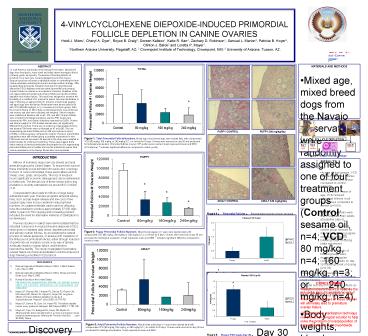
Figure 1 Total Primordial Follicle Numbers.
Mixed age, mixed breed dogs were treated daily
with compounded VCD (80 mg/kg, 160 mg/kg, or 240
mg/kg S.C.) or vehicle for 6 days. Ovaries were
removed on day 30 and processed for histological
evaluation. Primordial follicles in every 10th
section were counted. Graph represents mean and
SEM (n3-4/group). indicates significant
difference compared to control (plt0.05)
Figure 7 Experimental Design
INTRODUCTION Millions of homeless dogs roam
city streets and rural areas throughout the
United States. To ensure their survival these
inherently social animals form packs and
scavenge for food. In rural communities, these
packs attack and kill sheep, cows, goats, and
poultry. The loss of livestock incurs significant
economic damage and can be detrimental to
livelihoods. The annual cost of these losses due
to dog predation is recently estimated to be
around 12.3 million (1-2). Overpopulation
also leads to millions of dogs being euthanized
each year. Humane programs aimed at saving lives,
such as trap-neuter-release and low-cost or free
surgical spay, have not succeeded in reducing
these numbers. An unaltered female canine and her
offspring have the potential to produce
approximately 67,000 dogs within 6 years (3).This
ongoing and increasing problem indicates the need
for alternative methods of sterilization to be
developed. Previous studies in rodents have
demonstrated that the industrial compound,
4-vinylcyclohexene diepoxide (VCD), when given in
repeated daily doses, depletes primordial and
primary ovarian follicles, by accelerating the
natural process of cellular apoptosis, or atresia
(4-6). Depletion of the finite pool of primordial
follicles, either through induction of growth
into an ovulatory oocyte or by way of atresia,
eventually leads to ovarian failure, and
therefore, reproductive sterility. This study
investigated if premature ovarian failure via
chemical sterilization could be induced in dogs
following a modified VCD protocol.
PUPPY
- RESULTS
- Primordial Follicles
- Across all age groups, VCD reduced primordial
follicles in the highest dose group compared to
control (plt0.05). - In dogs under 1 year of age, VCD reduced
primordial follicles in all dose groups compared
to control (plt0.05). - FSH
- Plasma FSH levels were less in puppies than
adults at baseline (day 0). - Plasma FSH levels of control group showed no
difference between puppies and adults on day 30
following onset of dosing (data not shown) - Plasma FSH levels of treated groups were
increased in puppies compared to adults on day 30
following onset of dosing (plt0.05). - Ovarian and uterine weights were not different
among groups on day 30 following onset of dosing. - VCD did not result in chemotoxic effects as
evidenced by normal values of Alkphos, ALT, CREA,
GLU, TP, and BUN for each of the time points
(data not shown).
ADULT
ADULT CONTROL
ADULT 240 mg/kg/day
Figure 4 Primordial Follicles. Representative
pictures of puppy and adult dog ovaries of
control and 240 mg/kg/day VCD group. Primordial
follicles are seen on outer cortex. (Hematoxylin
and eosin stain pictures taken at 10X
magnification)
Figure 2 Puppy Primordial Follicle Numbers.
Mixed breed puppies (lt1 year) were injected daily
with compounded VCD (80 mg/kg, 160 mg/kg, or 240
mg/kg S.C.) or vehicle for 6 days. Ovaries were
removed on day 30 and processed for histological
evaluation. Graph represents mean and SEM.
indicates significant difference compared to
control (p lt0.05)
ADULT
- REFERENCES
- National Agricultural Statistics Board. USDA.
Cattle Predator Loss. May 4, 2001. - National Agricultural Statistics Board. USDA.
Sheep and Goat Death Loss. May 6, 2005. - Humane Society of the United States.
http//www.hsus.org/pets/issues_affecting_our_pets
/pet_overpopulation_and_ownership_statistics/hsus_
pet_overpopulation_estimates.html - Mayer LP, Pearsall NA, Christian PJ, Devine PJ,
Payne CM, McCuskey MK, Marion SL, Sipes IG, Hoyer
PB. Long-term effects of ovarian follicular
depletion in rats by 4-vinylcyclohexene. Reprod
Toxicol 2002 16775-781. - Mayer LP, Devine PJ, Dyer CA, Hoyer PB. The
follicle-deplete mouse ovary produces androgen.
Biol Reprod 2004 71130-138. - Mayer LP, Dyer CA, Eastgard RL, Hoyer PB, Banka
CL. Atherosclerotic lesion development in a novel
ovary-intact mouse model of perimenopause.
Arterioscler Thromb Vasc Biol. June 30 2005,
Online.
Figure 5 Plasma FSH levels Day 0. Baseline FSH
concentrations from Canine FSH IRMA Kit from
ALPCO INC.
- CONCLUSIONS
- Results indicate that VCD reduces the primordial
follicle population in dogs. - The accelerated loss of these follicles will
ultimately lead to premature ovarian failure. - This alternative sterilization technique could be
a non-surgical solution to help solve the problem
of overpopulation of dogs within the U.S. and
worldwide.
Figure 3 Adult Primordial Follicle Numbers.
Mixed breed adult dogs (gt1 year) were injected
daily with compounded VCD (80 mg/kg, 160 mg/kg,
or 240 mg/kg S.C.) or vehicle for 6 days. Ovaries
were removed on day 30 and processed for
histological evaluation. Graph represents mean
and SEM.
ACKNOWLEDMENTS Discovery Research Laboratories
Imaging and Histology Core Facility at NAU Treva
Jim and Wilson DeVore at C.I.T. Work funded by
USDA Tribal College Research Program and
SenesTech, Inc.
Figure 6 Plasma FSH levels Day 30. Day 30 FSH
concentrations from Canine FSH IRMA KIT from
ALPCO INC. indicates significant difference
compared to adult (plt0.05)
Recommended

