

InSitu, Inc' Ft' Collins, Colorado PowerPoint PPT Presentation
1 / 2
Title: InSitu, Inc' Ft' Collins, Colorado
1
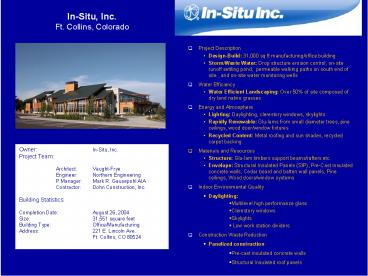
In-Situ, Inc.Ft. Collins, Colorado
- Project Description
- Design-Build 31,000 sq ft manufacturing/office
building - Storm/Waste Water Drop structure erosion
control, on-site runoff settling pond, permeable
walking paths on south end of site , and on-site
water monitoring wells - Water Efficiency
- Water Efficient Landscaping Over 50 of site
composed of dry land native grasses - Energy and Atmosphere
- Lighting Daylighting, clerestory windows,
skylights - Rapidly Renewable Glu-lams from small diameter
trees, pine ceilings, wood door/window fixtures - Recycled Content Metal roofing and sun shades,
recycled carpet backing - Materials and Resources
- Structure Glu-lam timbers support beams/rafters
etc. - Envelope Structural Insulated Panels (SIP),
Pre-Cast insulated concrete walls, Cedar board
and batten wall panels, Pine ceilings, Wood
doors/window systems - Indoor Environmental Quality
- Daylighting
- Multilevel high performance glass
- Clerestory windows
- Skylights
- Low work station dividers
- Construction Waste Reduction
Owner In-Situ, Inc. Project
Team Architect Vaught-Frye Engineer Northe
rn Engineering P.Manager Mark R. Gausepohl
AIA Contractor Dohn Construction,
Inc. Building Statistics Completion
Date August 26, 2004 Size 31,551 square
feet Building Type Office/Manufacturing Address
221 E. Lincoln Ave. Ft. Collins, CO 80524
2
In-Situ, Inc.Ft. Collins, Colorado
- Sustainable Features
- Water Efficient Landscaping
- 50 of site is dry land native grass
- Low-Emitting Carpet and Recycled Carpet Backing
- Daylighting
- Outdoor Conference Rooms
- Improve working conditions
- Alternative Transportation
- On bus route
- Bicycle storage/Showers and Changing rooms
- Low Auto Parking Capacity
- Car pool parking, below zoning requirements for
parking spaces - Storm Water Management
- Rock drop structure erosion control
- On-site runoff detention pond
- Light Pollution Reduction
- 100 cut-off exterior fixtures
- Aluminum Sun Shades
- Provide shade near building, reduce solar heat
gain inside
Case study compiled by Eric Farrington, Colorado
State University February 2006
Recommended

